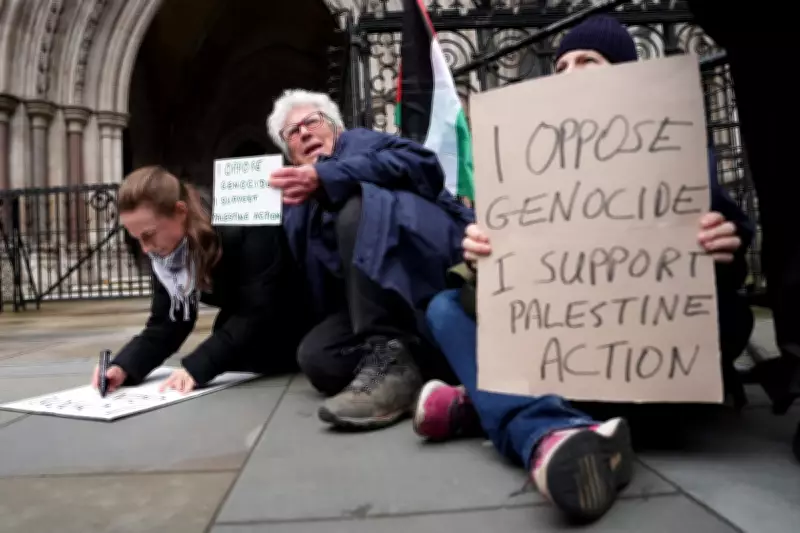
Foreign Secretary Stands Firm on Palestine Action Ban After Court Deems It Unlawful
Foreign Secretary Yvette Cooper has robustly defended her controversial decision to proscribe Palestine Action as a terrorist organisation, despite a High Court ruling that declared the move unlawful and "disproportionate." The current Foreign Secretary, who served as Home Secretary when she banned the group in July last year, spoke out following the judgment delivered on Friday.
High Court Ruling and Its Implications
The High Court's decision, which resulted from a legal challenge brought by Palestine Action, could have significant ramifications for thousands of individuals arrested for supporting the group at protests across the United Kingdom. While the ban remains in effect for now, Cooper's successor as Home Secretary, Shabana Mahmood, has confirmed the government's intention to appeal against the court's ruling. Proscription under the Terrorism Act 2000 makes it a criminal offence to belong to or support Palestine Action, carrying a potential prison sentence of up to 14 years.
Appearing on the Sunday Morning With Trevor Phillips programme on Sky News, Cooper elaborated on her rationale. She stated, "I followed the clear advice and recommendations, going through a serious process that the Home Office undertakes, involving different agencies and police advice as well, which was very clear about the recommendation for proscription of this group."

Cooper's Justification and Court Findings
She added, "And the court has also concluded that this is not a normal protest group, that it has found that this group has committed acts of terrorism, that this group is not simply in line with democratic values, and has promoted violence." When pressed to disclose the specific advice that informed her decision, Cooper declined, instead saying, "So I was given significant evidence and advice around risks of violence and risks from public safety, and that is what you take seriously." She further emphasised, "If you ignore advice that you are given about risks to public safety then you’re really not taking seriously the responsibilities of home secretary."
According to police figures, Palestine Action has carried out 385 direct actions since 2020, protesting the situation in Palestine and the actions of the Israeli government. The High Court acknowledged that a "very small number" of these actions amounted to terrorism. In a 46-page ruling, Dame Victoria Sharp, sitting with Mr Justice Swift and Mrs Justice Steyn, concluded, "We are satisfied that the decision to proscribe Palestine Action was disproportionate. At its core, Palestine Action is an organisation that promotes its political cause through criminality and encouragement of criminality. A very small number of its actions have amounted to terrorist action."
Legal Challenge and Political Reactions
Palestine Action’s co-founder, Huda Ammori, initiated legal action against the Home Office following Cooper’s decision to proscribe the group. The ban was announced shortly after the group claimed responsibility for causing an estimated £7 million in damage to military tanker planes at RAF Brize Norton in Oxfordshire.
Shadow foreign secretary Dame Priti Patel expressed her dismay at the High Court ruling, telling Sky News it was "right that it should be appealed." She added, "I think the public would be absolutely horrified to see that these individuals have been able to essentially get away with the type of activity that they have been able to thus far."
Conversely, a group of 26 Labour MPs and peers, including Blair-era former minister Lord Peter Hain and senior MP John McDonnell, have written to the Government, urging it not to proceed with its planned appeal. This internal party division highlights the contentious nature of the issue, with some arguing for upholding democratic protest rights while others prioritise national security concerns.
The ongoing legal battle and political debate underscore the complex balance between counter-terrorism measures and civil liberties in the UK. As the government prepares its appeal, the case continues to spark widespread discussion about the limits of protest and the definition of terrorism in modern Britain.