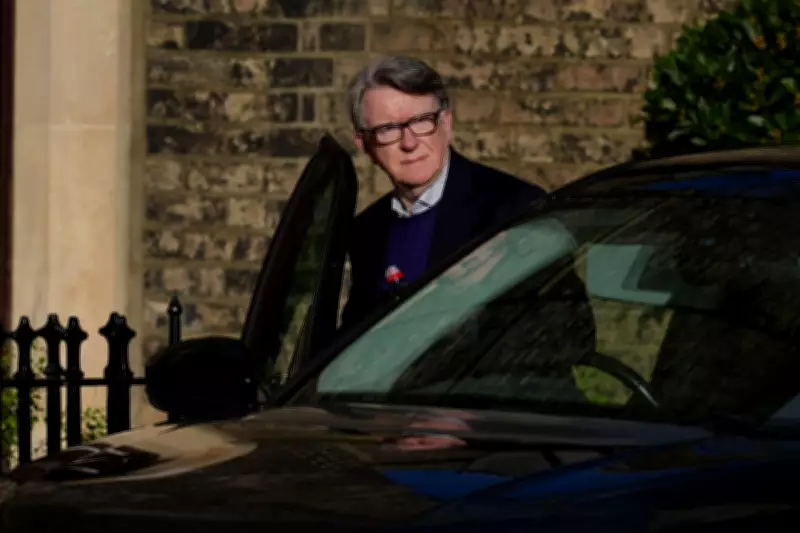
Foreign Secretary Voices Fury Over Mandelson's Diplomatic Posting
Foreign Secretary Yvette Cooper has publicly expressed significant anger regarding the controversial appointment of Peter Mandelson as Britain's ambassador to Washington DC. The senior Cabinet minister made her feelings clear during a television interview, marking one of the strongest reactions from within the Labour government to the ongoing appointment scandals.
Defending the Prime Minister's International Address
Cooper also firmly dismissed suggestions that Prime Minister Keir Starmer appeared weak by attacking domestic political opponents during a major speech at the Munich Security Conference. The Foreign Secretary insisted that Starmer's leadership remains respected internationally despite recent controversies.
Prime Minister's Authority Under Pressure

Sir Keir Starmer's authority has faced substantial challenges in recent weeks, with multiple controversies creating significant political turbulence. The appointments of both Lord Mandelson and Lord Matthew Doyle have drawn criticism due to their associations with convicted sex offenders, creating what some describe as a pattern of problematic decision-making.
The situation has been further complicated by three high-profile departures from Downing Street and public calls from Scottish Labour leader Anas Sarwar for Starmer to resign from his position. These developments have created what many observers describe as the most difficult period of Starmer's premiership to date.
Culture Concerns Within Government
Senior Labour women, including prominent figure Baroness Harriet Harman, have suggested that a "boys' club" culture within government circles may have contributed to the current problems facing the Prime Minister. When questioned about this potential cultural issue during her BBC appearance, Cooper acknowledged the seriousness of the concerns while redirecting focus to policy matters.
"I do actually feel, I mean, I feel really actually quite angry about some of the issues that we've had around," Cooper stated during her interview on Sunday With Laura Kuenssberg. "Look, Peter Mandelson should never have been appointed. We have had, obviously, debates in Westminster, but actually the real focus should be on Jeffrey Epstein's victims, and also the work that this Labour Government has been doing to tackle violence against women and girls."
Starmer's Defense and Political Attacks
Speaking at the Munich Security Conference on Saturday, Prime Minister Starmer acknowledged the domestic challenges he has recently faced but insisted he "ended the week much stronger" than he began it. In a separate interview with The Sun On Sunday, Starmer confirmed his intention to lead Labour into the next general election despite internal party pressure.
During his Munich address, the Prime Minister launched pointed criticism at both the Green Party and Reform UK, questioning their defense credentials and suggesting that "the lamps would go out across Europe once again" should either party achieve electoral success. Both opposition parties are currently campaigning vigorously to overturn Labour's majority in the upcoming Gorton and Denton by-election.
International Standing vs Domestic Criticism
When questioned on Sky News about whether Starmer's attacks on political rivals during an international gathering indicated concern about their rising popularity in opinion polls, Cooper offered a robust defense of the Prime Minister's approach.
"I don't think that's the case at all," the Foreign Secretary responded. "The partnerships that Keir Starmer has built with other leaders, the work that we are doing together, is immensely important. That's what I see here at the Munich Security Conference, is the respect towards the UK, towards the Prime Minister for the work that he's done, the leadership he's shown."
The ongoing controversies represent a significant test for the Labour government, with the Mandelson appointment serving as a focal point for broader concerns about judgment and governance within the administration. As the political situation continues to develop, both domestic and international observers will be watching closely to see how the government navigates these challenging circumstances.