Congressional Stock Trading Scandal: Lawmakers Profit from Insider Knowledge
The evidence is overwhelming and impossible to dismiss. A House Representative who co-chairs the national semiconductor policy caucus has executed trades exceeding one million dollars in chip-related stocks. Another legislator purchased shares in a major US oil corporation for the first time just weeks before American military actions in Iran triggered a surge in energy stock values. A Senator responsible for overseeing anti-trust enforcement holds investments worth up to five million dollars in the world's most valuable company. These conspicuous transactions are not isolated incidents but represent a systemic pattern, according to financial transparency experts monitoring the trades of America's most influential lawmakers.
Despite the strong appearance of misconduct, all these trades remain entirely legal under current regulations. 'Congress had an opportunity to prove it could trade individual stocks without betraying public trust,' stated Matt Saincome, CEO of the financial transparency platform Unusual Whales, in an interview with the Daily Mail. 'It failed. It's time to ban all congressional stock trading.' Public sentiment is shifting, with Americans increasingly demanding that Congress enact reforms to outlaw this controversial practice.
Specific Cases Highlighting Ethical Concerns
A Democratic member of Congress traded Exxon stock for the first time since taking office, just weeks before the Iran conflict began, which subsequently drove oil stocks higher. This individual also serves on the House Intelligence Committee, which receives regular briefings from agencies like the CIA, FBI, and Pentagon. A Republican lawmaker overseeing AI and semiconductor initiatives on Capitol Hill has traded up to $1.1 million in NVIDIA stock, as per an analysis by Unusual Whales. Additionally, a Democratic Senator on the Senate Agriculture Committee, which regulates national nutrition standards and grain subsidies, traded up to $500,000 in General Mills stock, according to the same source.

The latest Daily Mail/JL Partners poll of 1,000 US voters found that 61 percent of respondents support a ban on insider trading in Congress, including the use of prediction markets. More alarmingly, many of the most profitable traders in Congress invest directly in sectors they regulate through their committee assignments. 'I find it particularly offensive that members of Congress are more likely to trade stocks in industries and companies they directly regulate through committee work,' Saincome continued. 'These committees are regularly presented with information before it becomes public, giving lawmakers an easy opportunity to reposition their portfolios — and then face only a small fine.' That penalty is a mere $200 under the 2012 STOCK Act.
Detailed Analysis of Key Trades
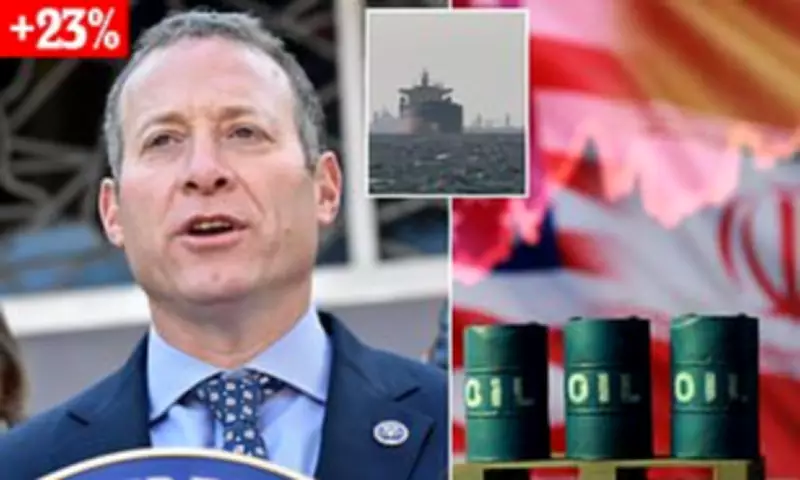
Christopher Kardatzke, Co-Founder of Quiver Quantitative, a congressional and DC insider stock tracker, highlighted a recent trade that he believes should raise serious questions. 'I think the most interesting recent trade might be Josh Gottheimer's Exxon purchase,' Kardatzke told the Daily Mail. 'It was the first time we had seen him buy the stock, and it is now up over 23 percent since he bought in.' Gottheimer, a New Jersey Democrat who sits on the House Intelligence Committee—a panel briefed by the CIA, DNI, and other top intelligence officials—purchased Exxon stock for the first time since entering office on February 4, 2026.
This trade, valued between $1,001 and $15,000, was not disclosed until March 16, which falls within the 45-day mandated timeline for lawmakers to report their transactions. Although the Democrat did not violate any rules, the timing is notably suspicious, Kardatzke noted. Exxon shares have significantly outperformed the broader stock market since the Strait of Hormuz has been largely restricted by Iran's military amid the ongoing war.

Republican Representative Michael McCaul, the Co-Chair of the Congressional Semiconductor Caucus and the Congressional AI Caucus, is heavily invested in NVIDIA, the world's largest company focusing on chip manufacturing and AI. McCaul has disclosed up to $1.1 million in this company, which symbolizes America's dominance in AI and semiconductors, according to an Unusual Whales analysis. Also invested in this tech behemoth is Senator Sheldon Whitehouse, a Rhode Island Democrat, who serves on the Senate Judiciary Committee tasked with antitrust enforcement and Big Tech scrutiny. He held up to $5 million of NVIDIA stock as of 2024, though he sold around $250,000 in shares in 2025 and even more in 2026, per Unusual Whales.
Meanwhile, Whitehouse's Republican colleague, Senator Dave McCormick, a member of the Senate Banking Committee, executed one of the largest individual sector moves in 2025 by selling up to $5 million worth of stock in Goldman Sachs. Further, Senator Tina Smith, a Democrat from Minnesota and member of the Senate Agriculture Committee, disclosed a sale of up to $500,000 in General Mills, according to Unusual Whales. This trade raised concerns for Saincome due to the Agriculture Committee's authority over national nutrition standards and grain subsidies.
Historical Context and Legislative Inaction
While no alleged wrongdoing has been proven in any of these instances, the peculiar trades underscore how members of Congress can legally trade stocks in companies they help regulate. Lawmakers have vigorously defended this privilege for years. Since the STOCK Act was passed in 2012, there have been numerous proposals to limit or outright ban trading among legislators. Last year alone, there were at least two dozen proposals aimed at restricting the practice. This year, at least four bills have already been introduced to curb members' trading abilities.
However, given the historical precedent and the substantial profits involved, significant changes are unlikely to occur in the near future. The ongoing scandal highlights a critical gap in ethical governance, fueling public distrust and calls for urgent reform to restore integrity in congressional financial dealings.