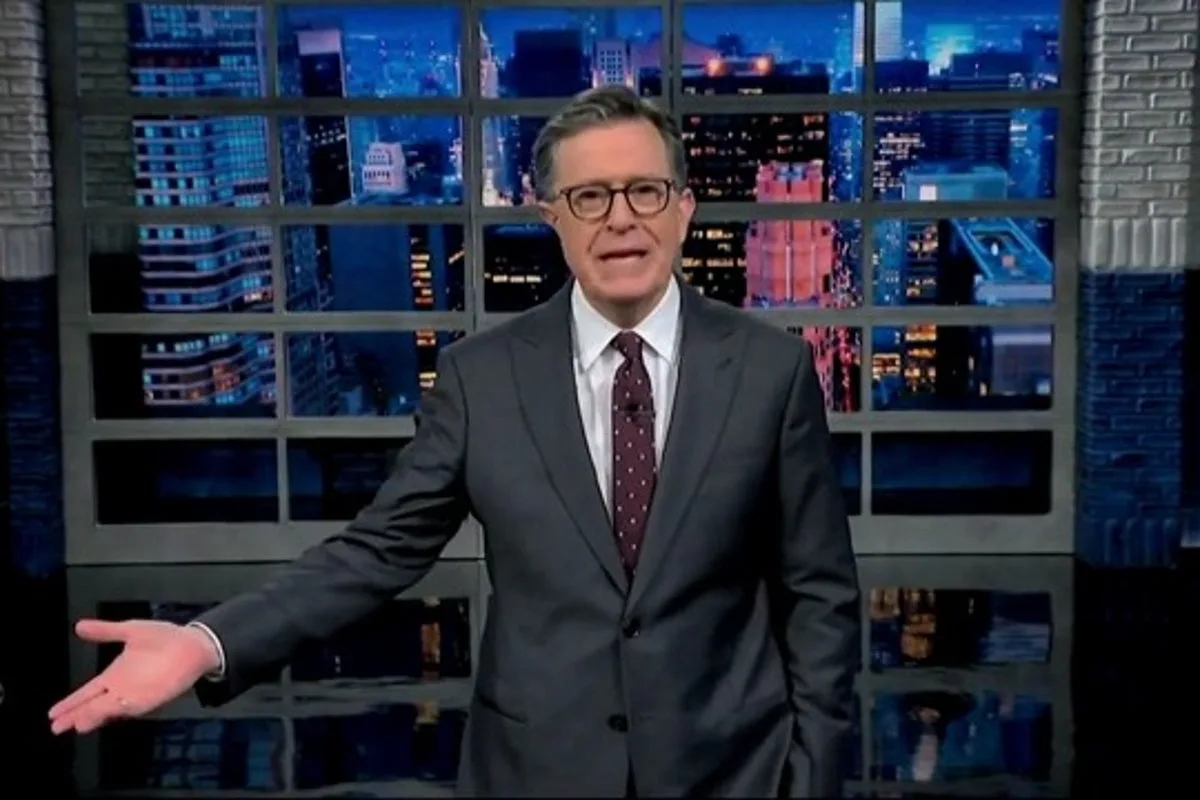
Stephen Colbert Mocks Trump's 'Board of Peace' Fee While Taunting CBS Over $16 Million Settlement
Colbert Mocks Trump's Board of Peace Fee and CBS Settlement

Stephen Colbert's Final Monologues Target Trump and Corporate Bosses

In a characteristically sharp opening monologue on Thursday night, Stephen Colbert delivered a dual-pronged critique, simultaneously mocking former President Donald Trump's newly launched "Board of Peace" and taking pointed shots at his own network's corporate leadership. The Late Show host, who is departing in May following Paramount's decision to cancel his program, used his platform to highlight what he views as corporate capitulation to political pressure.

The Billion-Dollar Peace Premium

Colbert dedicated significant airtime to ridiculing Trump's international initiative, which proposes that nations pay $1 billion for a permanent seat on what the former president bills as a conflict-resolution charter. "Trump's next mission in Davos was debuting a new international club that he calls the Board of Peace, where nations can pay $1 billion for a permanent seat. No surprise that peace has a price," Colbert began, setting the tone for his satirical examination.

The late-night star questioned the financial transparency of the arrangement, suggesting funds might end up in "Trump's personal piggy bank, the Canklebankle." He further derided the board's governance structure, noting that according to the charter, "the board will have one man in charge" before adding sarcastically, "And I'll give you a hint. He's in the diaper." Colbert dismissed the entire enterprise as Trump "literally just doing model UN."

Wide Pickt banner — collaborative shopping lists app for Telegram, phone mockup with grocery list

The Sixteen Million Dollar Comparison

Colbert's most biting commentary came when he connected Trump's billion-dollar peace initiative to his own network's financial dealings with the former president. "Now, admittedly, the idea of paying a billion dollars to obey Donald Trump seems a little steep; after all, CBS got to do it for just $16 million," the comedian quipped, referencing the settlement Paramount paid to Trump just weeks before the FCC approved the Skydance-Paramount merger.

The host reminded viewers that he had previously characterized this settlement as a "big, fat bribe," noting that legal experts had dismissed Trump's lawsuit over a 60 Minutes interview as frivolous and without merit. Colbert's commentary suggested a direct connection between this corporate settlement and the subsequent cancellation of his show, despite its top-rated status in the late-night landscape.

Corporate Decisions and Political Pressure

Colbert's monologue occurred against the backdrop of his impending departure from CBS, which the network attributes to declining advertising revenues for late-night programming. However, the host and some CBS staffers have suggested alternative motivations, characterizing the cancellation as a continuation of what they term the "Trump shakedown" that began with the $16 million settlement.

The timing of these events has raised eyebrows, with Colbert's show being canceled just days before the Trump administration approved Paramount's merger with David Ellison's Skydance. The former president had made no secret of his desire to see Colbert removed from the airwaves, having repeatedly called for his dismissal over the years.

Broader Implications for Media Freedom

Colbert also addressed recent developments at the Federal Communications Commission, specifically chairman Brendan Carr's push to enforce long-dormant guidance regarding political candidates appearing on talk shows. The host interpreted this as a direct attempt to silence critical voices, stating, "This is clearly an attempt to silence me, Jimmy, and Seth," referencing fellow late-night hosts Jimmy Kimmel and Seth Meyers.

In a defiant response to the FCC chairman, Colbert declared, "I'm flattered you think that appearing on my show has the power to affect politics in any way, but I've been doing this job for 21 years, and let me tell you something, buddy—if our government had turned out the way I had chosen, you would not have the power to make this announcement."

Legal experts have noted potential unintended consequences of Carr's enforcement push, suggesting it could raise questions about whether conservative talk radio hosts would similarly need to provide equal time to political candidates, creating a complex regulatory landscape for all political commentary across broadcast media.

Pickt after-article banner — collaborative shopping lists app with family illustration

As Colbert approaches his final broadcast in May, his Thursday night monologue demonstrated his continued willingness to challenge both political and corporate power structures, using humor as his primary weapon while highlighting what he perceives as troubling intersections between media, politics, and corporate decision-making.




