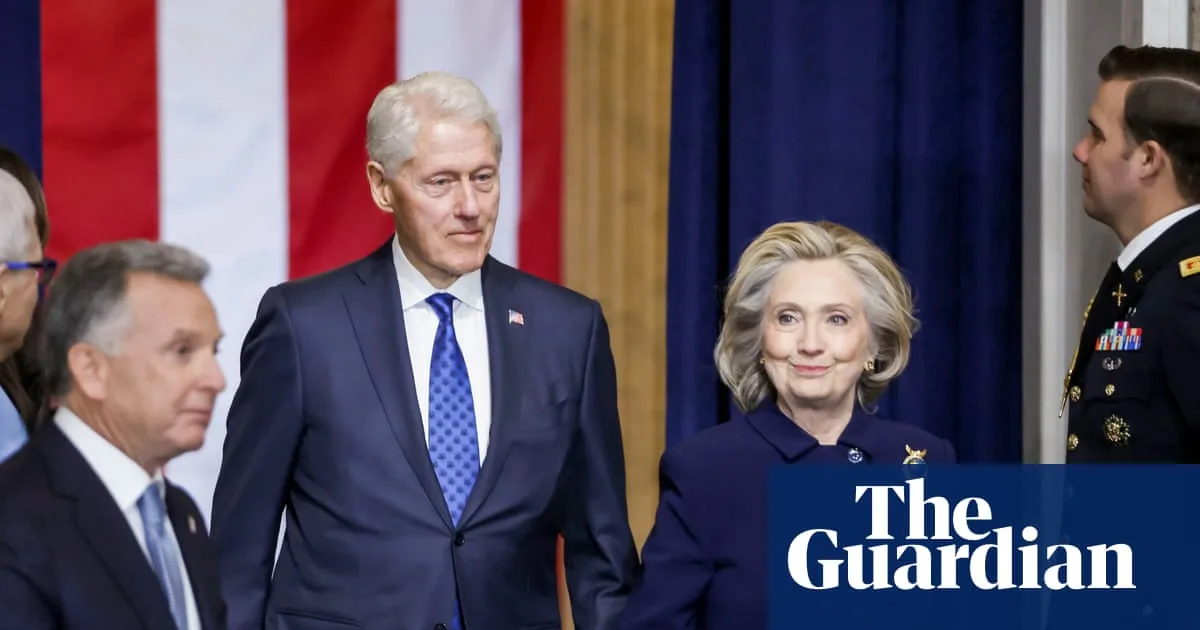
Bill and Hillary Clinton have agreed to testify in a House investigation into convicted child sex offender Jeffrey Epstein, days before the chamber was expected to vote on holding them in contempt of Congress. The decision follows a tense exchange with Republican Representative James Comer, chair of the House oversight committee, who insisted both Clintons sit for a sworn deposition.
“They negotiated in good faith. You did not,” said Angel Ureña, a spokesman for the Clintons, in a social media post. “They told you under oath what they know, but you don’t care. But the former president and former secretary of state will be there. They look forward to setting a precedent that applies to everyone.” The House had been moving toward potential votes on criminal contempt charges, which could have led to fines or imprisonment.
For months, the Clintons had refused to appear before the Republican-led panel, arguing the subpoenas were “invalid” and “unenforceable” and accusing Comer of targeting them as part of Donald Trump’s retribution campaign. A committee letter indicates they offered for Bill Clinton to give a transcribed interview on matters related to Epstein and for Hillary Clinton to submit a sworn declaration.
The Republican-controlled oversight committee had advanced criminal contempt charges last month after the Clintons’ refusal to testify. Their attorneys had called the subpoenas “invalid and legally unenforceable” and “an unprecedented infringement on the separation of powers.” Nine of the committee’s 21 Democrats joined Republicans in supporting charges against Bill Clinton, and three Democrats supported charges against Hillary Clinton.
Bill Clinton’s relationship with Epstein has become a focal point for Republicans. Clinton had a well-documented social relationship with Epstein in the late 1990s and early 2000s but has not been accused of wrongdoing. On Friday, the Department of Justice released more than three million files related to Epstein, including emails between Elon Musk and Epstein. Democrats have pledged to fight what they call a “full-blown cover-up,” arguing that millions more pages are being withheld.