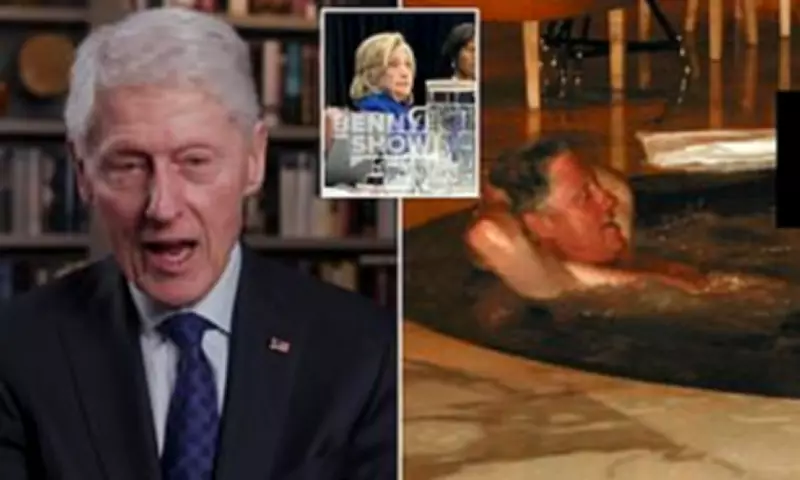
Former President Bill Clinton has spoken publicly for the first time following his extensive six-hour testimony before the House Oversight Committee concerning his connections to the deceased sex trafficker Jeffrey Epstein. The 79-year-old Democrat's voice appeared strained after the marathon session, during which he firmly denied any knowledge of Epstein's criminal enterprise.
Clinton's Public Statement and Key Denials
In a social media clip recorded near his Chappaqua, New York home, Clinton reiterated much of his opening statement from the deposition. He emphasized that he testified because "I love my country, especially our Constitution" and that "no person is above the law, even presidents - especially presidents." The former president maintained he had only "limited interactions" with Epstein, despite his name appearing thousands of times in recent Department of Justice releases related to the convicted sex criminal.
"Though my brief acquaintance with Epstein ended years before his crimes came to light, and though I never witnessed during our limited interactions any indication of what was truly going on, I offered the little I do know in hopes that it might prevent anything like this from ever happening again," Clinton stated in his three-minute video address.

Defending Hillary Clinton and Addressing Photographic Evidence
Clinton made a personal statement regarding Republican demands that his wife Hillary testify, asserting she "had nothing to do with Jeffrey Epstein, nothing. She has no memory of even meeting him" and calling the demand for her testimony "simply not right." He further declared, "I saw nothing and I did nothing wrong. I had no idea of the crimes Epstein was committing."
Addressing photographic evidence showing him with Epstein, Clinton stated, "No matter how many photos you show me, I have two things that at the end of the day matter more than any interpretation of 20-year-old photos." He referenced his childhood experience with domestic abuse as evidence he would never have associated with Epstein had he known about his criminal activities.
New Revelations and Calls for Transparency
In the only new passage of his video statement, Clinton urged others with Epstein connections to testify before Congress and called for the Department of Justice to release all Epstein files. "When the video of my testimony today is released, I hope it will motivate everyone to go in front of Congress and say what they know," he said. "I hope it will motivate the Justice Department to finally release all the files and to ensure this never happens again. The survivors deserve that."
Trump Connection and Historical Context
During his testimony, Clinton reportedly stated that Donald Trump told him he was no longer friends with Epstein over two decades ago at a golf tournament, according to three sources familiar with the deposition. This aligns with Trump's previous statements that he hadn't spoken to Epstein in over 15 years and had thrown him out of Mar-a-Lago for "being a creep."
Records show Epstein visited the White House 17 times between 1993 and 1995 during Clinton's presidency and that Clinton flew at least 27 times on Epstein's private jet. However, Clinton has consistently denied any misconduct, and his appearance in Epstein files does not imply wrongdoing.
Political Implications and Precedent Setting
The closed-door deposition ended after more than six hours of questioning, with lawmakers stating Clinton answered every question posed. Democrats argue this sets a precedent that should apply equally to Trump, who had his own documented relationship with Epstein. Representative Robert Garcia, top Democrat on the oversight committee, called on Trump and First Lady Melania Trump to testify under oath.
House Oversight Committee Chair James Comer has pledged extensive questioning and noted that when asked if Trump should testify, Clinton responded, "That's for you to decide." The deposition was recorded by cameras, with testimony expected to be released after review by the Clintons' legal team.

Historical Context and Legal Precedents
Only four ex-presidents - Trump, Harry Truman, John Tyler, and John Quincy Adams - and one sitting president, Richard Nixon, have been formally subpoenaed by Congress to testify. Trump, Truman, Nixon, and Quincy Adams all refused to comply, while Tyler agreed to appear. The Supreme Court has never definitively ruled on whether a president can be compelled to testify before Congress.
Republicans have sought to question Clinton about Epstein for years, with calls intensifying following Epstein's 2019 suicide in a New York jail cell and the release of new DOJ photos revealing deeper connections than previously known. Clinton admitted in a declaration last month to flying on Epstein's plane in 2002 and 2003 for Clinton Foundation work but denied visiting Epstein's private Caribbean island.