Cleverly Breaks Ranks Over Timothy's 'Act of Domination' Remarks on Muslim Prayer
James Cleverly has openly disagreed with his Conservative frontbench colleague Nick Timothy's controversial assertion that public Muslim prayers constitute an "act of domination". This disagreement emerges as another senior Tory figure calls for the party to respect the fundamental right to worship, highlighting deepening internal divisions over religious freedom and public expression.
Timothy's Comments Spark Widespread Condemnation
Nick Timothy, the shadow justice secretary, ignited significant controversy after posting images of mass prayer at a Ramadan event in Trafalgar Square on Monday evening. He described the gathering as "an act of domination" and claimed it was "straight from the Islamist playbook". These remarks drew immediate condemnation from political opponents, with Labour leader Keir Starmer demanding that Kemi Badenoch sack Timothy. Attorney General Richard Hermer further challenged Conservative leadership to clarify whether they would object to Jewish prayer in public settings.
Cleverly's Nuanced Position on BBC Interview
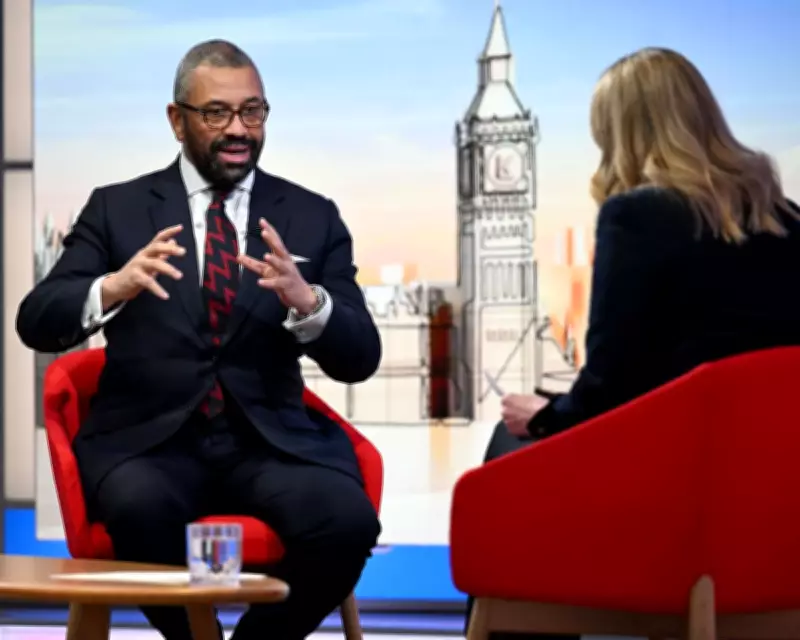
Speaking on BBC One's Sunday with Laura Kuenssberg, Cleverly, the shadow communities secretary, acknowledged that Timothy had correctly initiated a debate about the "Open Iftar" event. This was the last of eighteen public gatherings where individuals could join in breaking the Ramadan fast at dusk. However, when pressed on whether he agreed with Timothy's characterization of large-scale Muslim prayer as an act of domination, Cleverly stated unequivocally: "So, that wouldn't be my personal take."

Cleverly continued to address the issue by focusing on gender segregation, a point raised by Badenoch and other Conservatives. He argued that ceremonies in public spaces where women are segregated from men conflict with many UK norms and traditions. However, this characterization was later disputed by Emma Best, the party's deputy leader on the London assembly, who noted that the prayer constituted only a small part of the overall event and that many attendees chose not to participate in it.
Internal Tory Rifts Over Religious Freedom
Emma Best delivered the most open criticism of Timothy from within the Conservative ranks, emphasizing that prayer is "a fundamental right of every UK citizen". She asserted that if individuals disapprove of public prayer, it is their personal issue to manage. Best highlighted that numerous London Conservatives attended the Trafalgar Square event without concern, and she rejected the notion of banning public prayer, advocating instead for a society where everyone can freely practice their religion.
Kemi Badenoch has defended Timothy, framing objections around gender segregation rather than the prayer itself. Timothy argued that the distinction between the Muslim event and earlier Christian, Sikh, and Jewish gatherings in Trafalgar Square lay in the segregation of women. However, Best countered this by clarifying that while men and women prayed separately, they otherwise mixed freely throughout the event, suggesting a misrepresentation of the facts.
Broader Implications for Conservative Unity
This public disagreement underscores significant tensions within the Conservative Party regarding religious expression, secularism, and multiculturalism. Cleverly's divergence from Timothy's stance signals a potential rift in party messaging, particularly as the Conservatives navigate issues of identity and inclusion ahead of future elections. The debate also raises questions about the party's commitment to protecting religious liberties while addressing concerns about integration and public norms.
As the controversy unfolds, the Conservative leadership faces mounting pressure to clarify its position on public religious events and to reconcile internal differences. The outcome of this dispute may influence the party's approach to faith-based communities and its broader electoral strategy in diverse urban areas like London.