

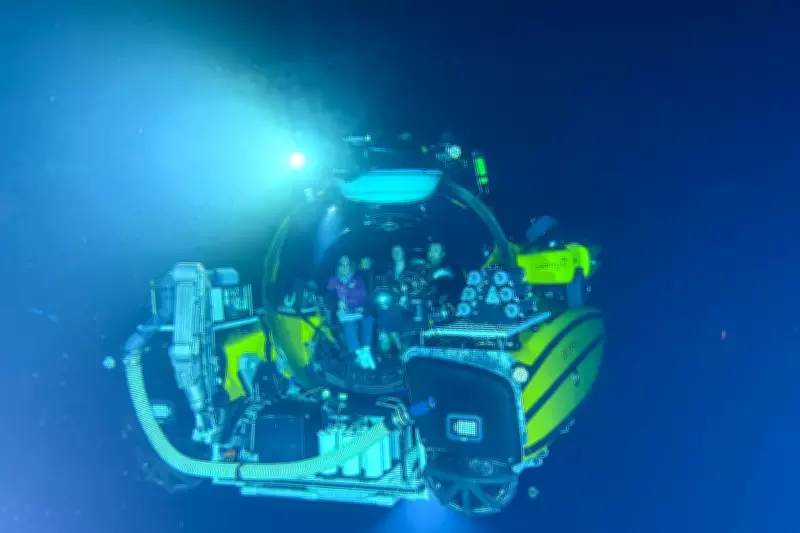
China is actively working to launch its inaugural deep-sea tourist submersible, designed to transport explorers to depths of up to 1,000 meters by the year 2030. This ambitious initiative positions China as a direct competitor to a select group of predominantly Western ventures that currently dominate this exclusive sector of the travel industry.
Prototype Development and Technical Specifications
Engineers at the China Ship Scientific Research Centre, located in Wuxi, Jiangsu province, have been diligently developing this tourist submersible for nearly four years. According to reports from local media, the vessel is being designed to accommodate three passengers and one crew member per expedition. The prototype is anticipated to be completed and launched by the conclusion of this year.
"People will be able to travel to a depth of about 1,000 meters in the submersible," stated Ye Cong, the director of the research centre, in an interview with China Daily. He elaborated that after more than four years of intensive research, engineers have successfully finalised the structural design of the submersible.

Engineering Challenges and Future Plans
Once the prototype is fully prepared, the team plans to conduct comprehensive sea trials. These trials will be crucial for evaluating the vessel's performance and safety. Based on the results obtained, engineers intend to make necessary improvements and refinements to the design.
A particularly challenging structural feature of the submersible is its panoramic viewport. Developing this component has required significant engineering expertise to ensure it can withstand the immense pressures encountered at such extreme depths while providing passengers with an unobstructed view of the underwater environment.
Current State of Deep-Sea Tourism in China
Presently, China operates dozens of tourism submersibles, but these are limited to much shallower depths, typically around 20 meters. Their operations are confined to relatively safe environments such as reservoirs, lakes, and coastal waters. The new 1,000-meter-capable submersible represents a substantial leap forward, enabling access to the profound and largely unexplored regions of the deep ocean.
The Exclusive and Risky Nature of Deep-Sea Tourism
Deep-sea submersible tourism remains one of the most exclusive and least regulated segments within the global travel industry. It primarily attracts wealthy travellers eager to explore the mysterious worlds beneath the ocean's surface. To date, only a handful of countries have ventured into this domain, with Western private enterprises maintaining a stronghold.
However, this sector is not without significant risks and tragedies. A stark reminder occurred in June 2023, when Ocean Gate's experimental submersible, the Titan, imploded at a depth of nearly 4,000 meters. This catastrophic event resulted in the deaths of all five individuals on board, including the company's chief executive. Subsequent investigations revealed that the implosion was caused by poor engineering practices and multiple failures to adequately test the vessel. This incident raised serious concerns regarding safety standards and regulatory oversight in deep-sea tourism operations.
Global Context and Competing Ventures
China's entry into deep-sea tourism is part of a broader global interest in underwater exploration. For instance, India is currently conducting a series of "wet tests" for its new deep-sea submersible, the Matsya-6000. Reports indicate this vessel is capable of carrying three people to depths exceeding 6,000 meters, which is almost twice the depth of the Titanic wreck, located at approximately 3,600 meters.
Meanwhile, private providers such as EYOS Expeditions continue to organise underwater dives for ultra-wealthy clients. These expeditions typically utilise high-end submersibles manufactured by Triton Submarines, allowing dives to depths ranging from 300 to 1,000 meters. China's forthcoming submersible aims to directly compete with these established Western offerings, potentially reshaping the landscape of deep-sea adventure tourism.






