Landmark Court Ruling Grants Chagossians Right to Return to Islands
A major judicial decision has delivered a significant setback to Prime Minister Keir Starmer's controversial agreement to hand over the Chagos Islands to Mauritius. Justice James Lewis, presiding over the British Indian Ocean Territory (BIOT) Court, has ruled that Chagossians possess a legal right of abode on their ancestral homeland. This judgment directly challenges decades of previous legal positions and could effectively derail the proposed sovereignty transfer.
Overturning Decades of Legal Precedent
In his comprehensive ruling, Justice Lewis has overturned the 2004 legislation enacted by Tony Blair's government, which explicitly prohibited Chagossians from returning to the islands. Furthermore, the judge has reversed prior decisions by the Law Lords that validated the original forced removals of islanders during the 1960s and 1970s. The case was initiated after four Chagossians occupied one of the islands earlier this year, attempting to reclaim their homes, prompting the BIOT governor to seek their removal.
The judge concluded that the government's longstanding argument against resettlement on national security or defence grounds is no longer valid. This shift is attributed to the proposed deal with Mauritius, which implicitly accepts that the islands can be inhabited. Additionally, Justice Lewis highlighted that the estimated cost to UK taxpayers for the Mauritius agreement—pegged at a staggering £51 billion, exceeding all previous forecasts—invalidates the claim that facilitating the Chagossians' return is financially prohibitive.
Implications for Sovereignty and International Relations
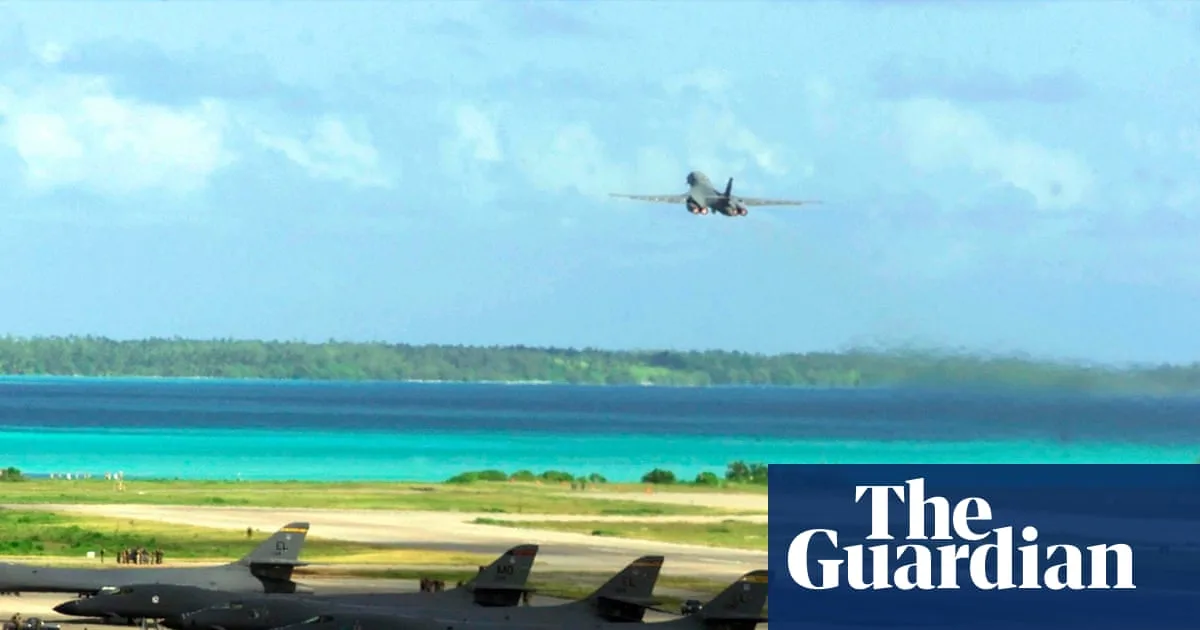
Drawing upon the United Kingdom's obligations under international law, Justice Lewis asserted that the islanders' right to reside on their homeland makes it nearly impossible to proceed with transferring the islands to Mauritius. This ruling represents another substantial blow to Prime Minister Starmer, whose efforts to resolve the future of the Chagos Islands have unraveled almost six decades of established legal judgments. The islands are strategically crucial, housing the vital US-UK airbase on Diego Garcia.
The deal was already facing significant challenges due to opposition from former US President Donald Trump, following disputes over potential US use of the airbase for attacks on Iran. This latest judicial decision could potentially finalize the deal's demise. The government has promptly lodged an appeal against the judgment, which has been granted and will be heard by the BIOT Court of Appeal.
Historical Context and Political Reactions
The original impetus for negotiating with Mauritius stemmed from a non-binding ruling by the International Court of Justice (ICJ), which stated that the islands rightfully belong to Mauritius. However, this determination was based on Mauritius serving as the former colonial administrative centre for the islands. Notably, other territories administered from Mauritius gained independence because they were populated, unlike the Chagos Islands at the time.
James Tumbridge, the legal representative for the Chagossians, emphasized to The Independent: "Once a population is established on the islands, it changes the entire legal status and means that they should be looked at as their own entity." The recent return expedition was funded by Reform's largest donor, Christopher Harborne, and led by former Conservative MP and Reform defector Adam Holloway. In his ruling, Justice Lewis appeared critical of figures like Nigel Farage and other Reform members, explicitly stating they lack the right to visit the islands, after Mr. Farage attempted to join the Chagossians last month.