CBS Faces Backlash Over Alleged 'Capitulation' to Trump Administration
Late-night host Stephen Colbert has publicly criticised CBS News, accusing the network of "capitulating" to pressure from the Trump administration after lawyers prevented the broadcast of an interview with a Democratic politician. The incident has sparked a fierce debate about media freedom and political interference in broadcasting.
Colbert's On-Air Accusation Against Network Lawyers
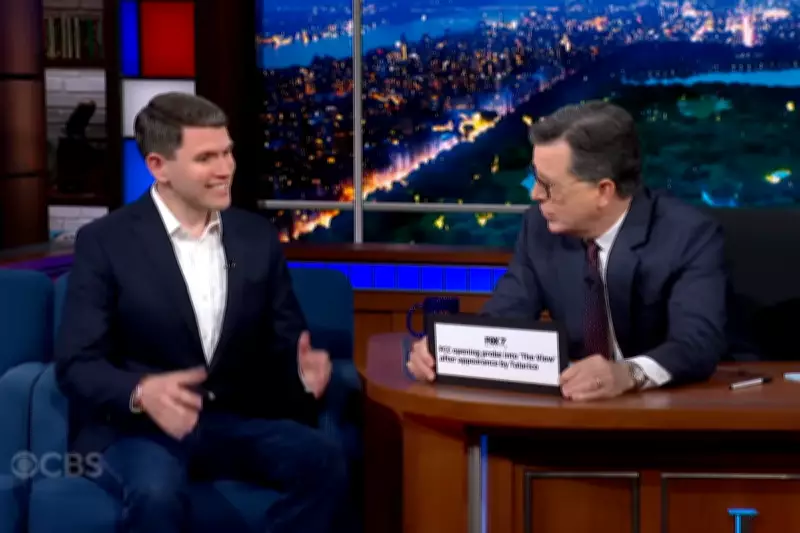
During his Monday night show, Colbert revealed that CBS lawyers directly intervened to stop the broadcast of his interview with James Talarico, a Texas state representative running for the U.S. Senate. "He was supposed to be here," Colbert stated emphatically. "But we were told in no uncertain terms by our network's lawyers, who called us directly, that we could not have him on the broadcast."
The host explained that the decision was linked to the Federal Communications Commission's equal time rule, which mandates that broadcasters provide equal airtime opportunities to candidates for the same public office. However, Colbert noted there has traditionally been an exemption for news interviews and talk shows featuring politicians.

FCC Chairman's Controversial Proposal
Colbert pointed to recent comments from FCC Chairman Brendan Carr, who earlier this year announced he was considering removing the talk show exemption, claiming such programs were "motivated by partisan purposes." This potential regulatory change appears to have influenced CBS's decision-making process.
"Well, sir, you're chairman of the FCC, so FCC you," Colbert retorted on air. "Because I think you are motivated by partisan purposes yourself." The host's blunt criticism highlighted growing tensions between media figures and regulatory authorities.
Allegations of Political Silencing
Colbert framed the incident as part of a broader pattern of attempted censorship. "Let's just call this what it is: Donald Trump's administration wants to silence anyone who says anything bad about Trump on TV, because all Trump does is watch TV," he asserted during his broadcast.
The late-night host suggested that the move represented an effort to stifle dissenting voices and control political discourse through regulatory pressure on broadcast networks.
YouTube Broadcast and Political Response
Despite the broadcast ban, Colbert's interview with Talarico was aired on "The Late Show with Stephen Colbert"'s YouTube channel, where it garnered approximately 635,000 views. The digital workaround demonstrated how media figures can circumvent traditional broadcast restrictions.
Talarico, who is competing in the Democratic primary for a Texas Senate seat, reposted the interview on social media platform X with a pointed message: "This is the interview Donald Trump didn't want you to see. His FCC refused to air my interview with Stephen Colbert. Trump is worried we're about to flip Texas."
Broader Implications for Media Freedom
The controversy raises significant questions about the future of political discourse on broadcast television. If the FCC proceeds with removing the talk show exemption, it could fundamentally alter how political figures are interviewed on entertainment programs.
Media analysts suggest this incident may represent a testing ground for more aggressive enforcement of equal time rules, potentially chilling political commentary across broadcast networks. The clash between regulatory authority and journalistic independence continues to evolve in an increasingly polarized media landscape.