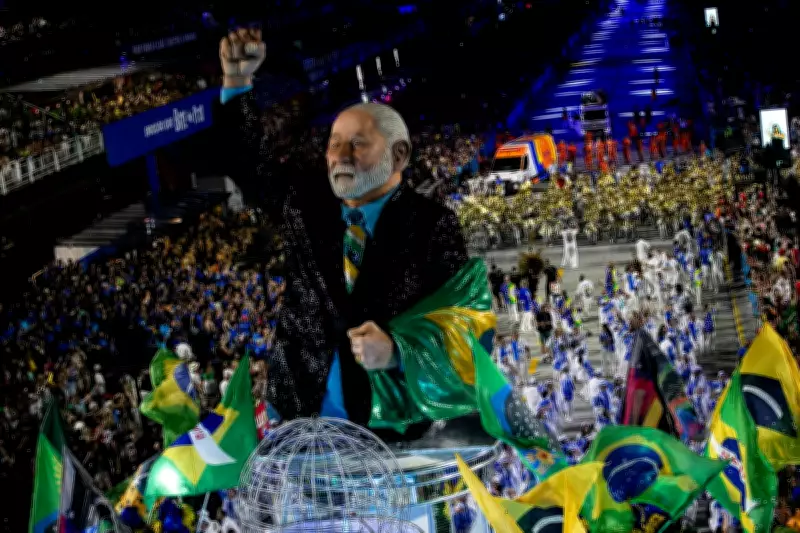
A lavish Carnival parade tribute to Brazilian President Luiz Inácio Lula da Silva has ignited a fierce political row and significant legal scrutiny, with opponents alleging it constitutes an illegal early campaign launch in the lead-up to the presidential election. The glitzy spectacle, staged at Rio de Janeiro's iconic Sambadrome by the renowned Academicos de Niteroi samba school, charted Lula's remarkable journey from humble beginnings in Brazil's impoverished northeast to his current stature as one of Latin America's most influential leaders.
Parade Details and Political Context
The parade, which took place on Sunday, featured floats, costumes, and songs replete with praise for President Lula, who is currently seeking a fourth non-consecutive term in office. Lula attended the spectacle alongside Vice President Geraldo Alckmin and their wives, despite warnings from legal analysts about potential lawsuits in Brazil's electoral court. The president watched from the Rio de Janeiro city hall box alongside Mayor Eduardo Paes, first lady Rosângela da Silva, and other guests as revelers sang his historic campaign jingle.
Organiser's Perspective and Legal Denials
Tiago Martins, the parade's chief organiser, stated that Academicos do Niteroi initially intended to focus on the country's northeast for their 2025 theme, later deciding that Lula's personal story perfectly suited this purpose. "Lula deserves a tribute like this, just like any other Brazilian who does a lot for our people," Martins told The Associated Press, firmly denying any intention for the lyrics, floats, or costumes to serve as campaign material. He confirmed that school executives had presented their vision to Lula in Brasilia months prior, which the president accepted.

Political Backlash and Legal Concerns
Right-leaning politicians immediately sought to block the parade, arguing it granted Lula an unfair early campaigning advantage, particularly given that samba schools receive public funding. Lawmaker Kim Kataguiri posted on social media: "Samba schools are not meant to campaign for anyone. I filed a complaint to stop your money from being used to finance electoral campaigns disguised as tributes." Brazil's top electoral court rejected these complaints, ruling they could not censor a samba school pre-emptively, though they reserved the right to review the case if electoral law violations occurred during the performance.
Electoral Implications and Strategic Risks
João Santana, who managed Lula's 2006 re-election campaign, expressed doubts about any electoral gains from the tribute, suggesting it could alienate moderate and evangelical voters who disapprove of the intersection of Carnival and politics. Santana highlighted the "unnecessary legal risks," stating, "The president and the first lady have dangerously approached this parade. This could all backfire." Political analyst Thomas Traumann noted that while Lula is already popular in the samba world and unlikely to gain votes from the tribute, the primary legal concern revolves around whether the administration allowed a link between the celebration and the election, particularly if public resources were misused for travel or accommodation.
Legal Consequences and Historical Precedent
Traumann warned of potential consequences: "There could be fines, the loss of free airtime during the campaign. That matters in a close election." While Carnival parades have honoured Lula before – notably in 2003 and 2012 – this marks the first such tribute in a presidential election year, occurring under the close scrutiny of the electoral court. Aware of potential penalties, Academicos de Niteroi had instructed its 3,000-plus revelers to avoid making "L" hand gestures or encouraging votes for Lula during the performance.

Broader Political Landscape and Future Scrutiny
The political stakes remain exceptionally high for Lula, whose closest rival in the upcoming election is Senator Flávio Bolsonaro, son of former president Jair Bolsonaro. Recent polls indicate Lula as the front-runner, but suggest a tight contest that could be influenced by the ongoing controversy. Further scrutiny awaits as the leadership of the electoral court will soon pass to Supreme Court Justice Kássio Nunes, an appointee of Lula's political adversary Jair Bolsonaro and a known critic of Carnival. Justice Nunes will oversee the presidential election in October, ensuring the legal implications of Sunday's parade will continue to resonate throughout the campaign season.