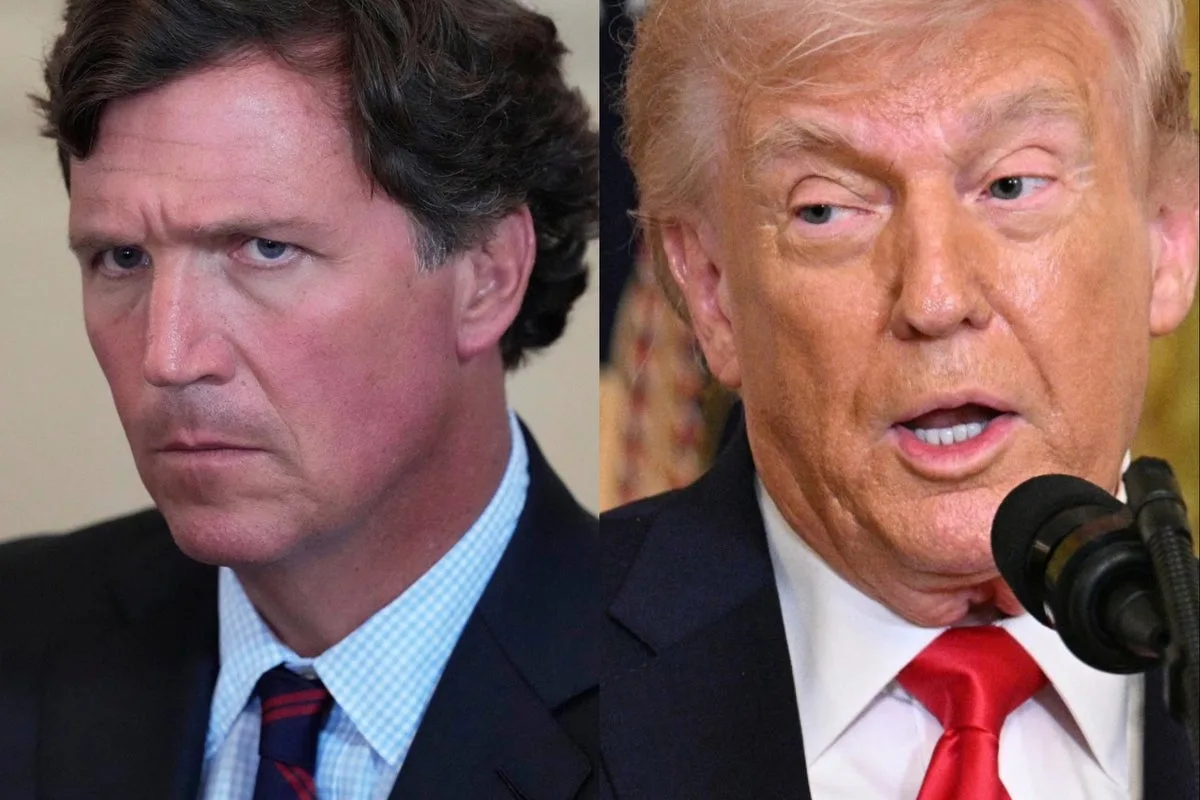
Buckley Carlson Resigns from White House Role Amid Family Feud with President
Buckley Carlson, the son of prominent conservative commentator Tucker Carlson, has formally stepped down from his position as deputy press secretary to Vice President JD Vance. This departure from the White House staff occurs against the backdrop of an increasingly bitter and public feud between his father and President Donald Trump, which has escalated dramatically in recent weeks.
Planned Exit Amid Political Turmoil
According to initial reports from Politico, Buckley Carlson's resignation was not a sudden decision. A spokesperson for Vice President Vance confirmed that Carlson first notified the office of his intention to leave back in December. He remained in his role for several additional months to facilitate a seamless transition of duties. The official stated his departure was to pursue the launch of his own political consulting firm.
The timing, however, is conspicuous. It coincides precisely with a severe deterioration in the relationship between Tucker Carlson and President Trump. Once considered one of Trump's most powerful and influential media allies, the elder Carlson has transformed into one of the administration's most vocal and fierce critics.
The Iran Policy Dispute Ignites the Feud
The core of the conflict stems from sharp disagreements over U.S. foreign policy, specifically the military campaign against Iran. Behind closed doors, Tucker Carlson was reportedly among a very small group actively lobbying President Trump to avoid military action in the days leading up to the strikes.
As detailed by The New York Times, Carlson personally warned the president of significant risks, including threats to U.S. military personnel, potential spikes in global energy prices, and damage to relationships with Arab partners in the region. He also urged Trump not to be "boxed in by Israel," arguing that Israeli advocacy for confrontation was unduly driving American policy.
When his counsel was disregarded, Tucker Carlson launched a sustained public critique. He has accused the administration of waging war on Israel's behalf and denounced the joint U.S.-Israeli airstrikes that killed Iranian Supreme Leader Ali Khamenei as "absolutely disgusting and evil."
Trump's Furious Counterattack and Religious Controversy
President Trump has responded with characteristic vigor and personal vitriol. In a series of public statements and social media posts, he has repeatedly mocked Tucker Carlson's intelligence, labeling him a "low IQ" individual. In one Truth Social post, Trump grouped Carlson with other conservative commentators like Megyn Kelly and Alex Jones, calling them all "stupid people" and "NUT JOBS." He later doubled down, calling Carlson a "LOSER" who should seek psychiatric help.
The feud reached an unprecedented theological dimension following a post by Trump that featured AI-generated imagery depicting him being embraced by Jesus Christ. On his program, The Tucker Carlson Show, the commentator issued a stark rebuke, accusing Trump of "mocking" Christianity.
Carlson referenced biblical passages describing a future "man of lawlessness" who exalts himself above all that is worshipped. He then posed a question that reverberated through conservative circles: "Could this be the antichrist?" Carlson suggested that to many Christians, Trump's actions—sharing imagery that places him alongside or as a divine figure—seem to align with these prophetic warnings.
Ripple Effects and Vance's Delicate Position
The fallout from this very public schism has created waves throughout the conservative movement and placed Vice President JD Vance in a politically delicate situation. Vance, whose political rise was partly aided by Tucker Carlson's platform, now faces pressure to distance himself.
Right-wing commentator Ben Shapiro, who has his own ongoing disputes with Carlson, recently suggested people should "feel a little bit bad" for Vance. Shapiro argued that the Vice President must now separate himself from Carlson's rhetoric, warning that continuing to "honor garbage" risks fracturing the Republican coalition needed to win future elections.
While there is no direct evidence linking Buckley Carlson's departure to his father's incendiary comments, the overlapping timelines are striking. The convergence of his exit, the intensifying Trump-Carlson feud, and the explosive "antichrist" remarks highlights a growing instability within a political movement once defined by its unified support for Donald Trump. This fracture now appears to have reached inside the administration itself.






