Brendan Carr's FCC: A Powerful Regulator or a Paper Tiger in the Spotlight?
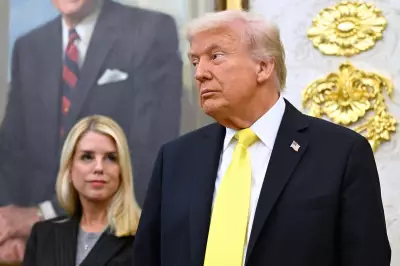
During a White House ceremony honoring the US Naval Academy football team, former President Donald Trump singled out Brendan Carr, the Federal Communications Commission (FCC) chairman, as "perhaps the most powerful man in this room." Trump praised Carr's efforts, stating, "He's trying to make the fake news real and respected again, which is not an easy job." This endorsement has thrust Carr, 47, into an unusual level of national attention for a regulator typically focused on telecommunications and spectrum allocation.
Controversial Threats and Media Backlash
Carr recently generated headlines by reposting Trump's complaints about media coverage of the Iran war, seemingly threatening broadcasters with license revocation for "running hoaxes and news distortions." In a widely shared post on X, he asserted, "Broadcasters must operate in the public interest, and they will lose their licenses if they do not." This statement drew condemnation from congressional Democrats and even Republican Senator Ron Johnson, who emphasized support for press freedom and criticized government overreach.
This is not the first instance of Carr's confrontational approach. In September 2025, he faced bipartisan backlash for pressuring television stations over comments made by ABC late-night host Jimmy Kimmel about conservative activist Charlie Kirk. Although Carr later claimed he never "threatened" networks, his actions have raised concerns about regulatory intimidation.

Legal and Political Implications
Television licenses are granted to local stations, not national networks, and none are up for renewal until at least 2028. However, Carr has argued that the FCC can "call in licenses for early renewal," potentially targeting stations owned by conglomerates like Disney-owned ABC and NBC. Anna M Gomez, the lone Democrat-appointed FCC commissioner, warned in an interview, "Even though these threats are very legally weak and really there's no legal basis for these threats, it doesn't mean they're harmless. Newsrooms are feeling the pressure."
During an FCC meeting last month, Carr confirmed an investigation into ABC's The View for allegedly violating equal time rules by hosting Democratic Senate candidate James Talarico without his rivals. Since then, the number of politicians appearing on the show has reportedly declined, highlighting the chilling effect of such probes.
Alignment with Trump and Media Criticism
Like Trump, Carr shows no regret for comments perceived as retaliatory against critical reporting. In fact, outrage from mainstream media and Democrats seems to bolster Trump's support for him. Carr has creatively bashed the media, stating in February that "the American people have more trust in gas station sushi than they do in the national news media," a jab he has used before.
Daniel Suhr, president of the conservative Center for American Rights, defended Carr, saying, "The networks should not be an arm of the Democratic party. Saying so isn't an attack on press freedom – it's a comparison between reality and the longstanding FCC goal of viewpoint diversity on the public airwaves."
Public Demonstrations and Regulatory Actions
Ahead of a recent FCC meeting, the advocacy group Free Press displayed a billboard labeling Carr as "Censorship Czar." Carr, known for his gregarious nature, joked with reporters about the old photo used. During a press conference, he emphasized his goal to "constrain the power of these national programmers and re-empower local broadcasts," while reiterating that license revocation remains an option for stations not operating in the public interest.
Controversial Mergers and Fear Tactics
Many of Carr's controversial actions occur outside open meetings. On 19 March, the FCC approved Nexstar's $6.2 billion merger with TEGNA without a full commission vote, despite rules limiting ownership to 39% of stations. The deal, which would create a giant owning 265 stations, faces legal challenges for potentially harming local news and consumer prices. Republican Senator Ted Cruz criticized the lack of a full vote, though Carr noted it could still occur.

Alfred C Sikes, a former FCC chairman appointed by George HW Bush, observed that Carr creates fear without taking enforceable actions, saying, "He creates fear, and in the world in which we live, things are pretty fragile." Carr has previously accused Sikes and others of having "Trump Derangement Syndrome."
Personal Ties and Future Outlook
Unlike past FCC chairmen who maintained distance from appointing presidents, Carr has visited Trump's Mar-a-Lago Club multiple times, including a dinner in December. Gomez, while maintaining a "cordial" relationship with Carr, has denounced his leadership and urged broadcasters not to be intimidated. She predicted, "Ultimately, the era of the FCC as a paper tiger will come to an end. But what the public will remember is which company capitulated and which broadcaster complied in advance."
As Carr continues to wield his regulatory power, the debate over whether he is a uniquely influential figure or merely a paper tiger persists, with significant implications for media freedom and governance in the United States.