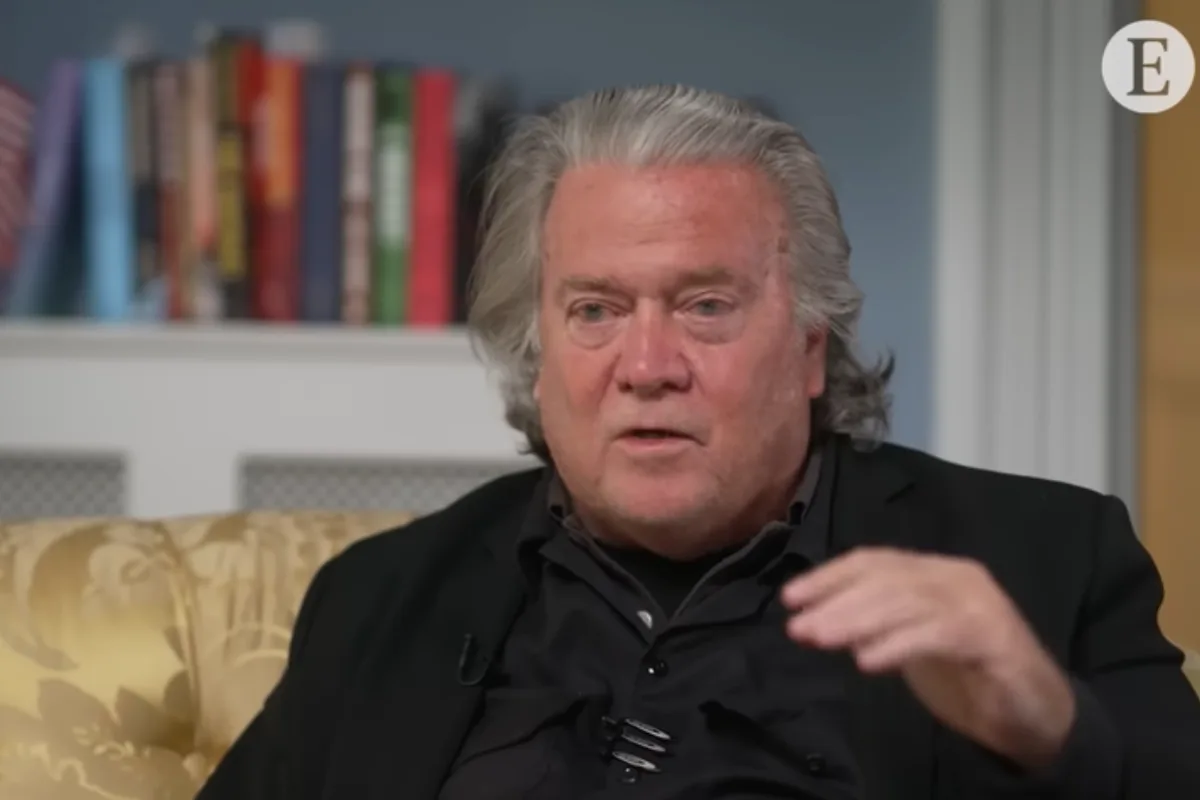
Steve Bannon Boasts of No Resistance to Trump's Second Term Agenda
Bannon: No Resistance to Trump's Second Term

Former Trump strategist turned influential MAGA media figure Steve Bannon has openly celebrated what he describes as a notable absence of meaningful resistance to President Donald Trump's agenda during his second term in office. In a recent interview with The Atlantic, Bannon boasted that the administration is pushing forward with a "maximalist strategy" without encountering significant opposition from either the media or the general American public.

Bannon's Bold Claims on Trump's Unchecked Power

During the discussion, Bannon dismissed the concept of the Overton window—the idea of gradual societal change—with a blunt declaration: "F*** the Overton window." He elaborated on the administration's approach, stating, "You have to take it however deep you can take it and, quite frankly, until you meet resistance. And we haven't met any resistance." This sentiment underscores Bannon's view that Trump's policies are advancing unimpeded, despite controversies surrounding civil rights and democratic norms.

The Context of Trump's Second Year in Office

Bannon's comments come as Trump enters his second year of his second term, a period marked by several high-profile actions. These include the U.S. military's involvement in capturing Venezuelan leader Nicolas Maduro, renewed efforts to acquire Greenland, protests following ICE-related incidents, and a Justice Department probe into the Federal Reserve chair. Bannon expressed elation at the perceived lack of obstacles, suggesting the administration feels emboldened by the shifting political landscape.

Despite Trump's job approval ratings hitting new lows and his support among independent voters declining, Bannon argued that the absence of effective pushback allows the president to continue his strategies. He noted, "You move it, and you do it, and no one complains—or MSNBC and The Atlantic complain and nobody gives a f***—and then you do it again, and push it again." This reflects a belief that media criticism has little impact on the administration's trajectory.

The Maximalist Strategy and Its Implications

Bannon emphasised the "maximalist strategy" he advocates, which involves pushing policies to their limits until resistance is encountered. He reiterated, "He's driving deep. Remember, our strategy—I say it every day—is maximalist, a maximalist strategy. You have to take it however deep you can take it and, quite frankly, until you meet resistance. And we haven't met any resistance." This approach has raised concerns about the erosion of democratic standards and civil liberties over the past year.

Allies of the president have suggested to The Atlantic that Trump's success in reshaping political boundaries stems from his ability to frame actions as necessary to combat perceived threats. A former senior administration official close to Trump explained, "Trump is a master at getting his enemies to defend things that are politically damaging to them. So if you are going out and defending the principle of due process—or whatever high-minded legal and constitutional things—even if your constitutional argument is strong, you are still effectively defending a narco-terrorist."

Broader Political and Social Reactions

The lack of resistance highlighted by Bannon coincides with a series of contentious events during Trump's second term. These include:

  • National Guard troops being deployed in American cities.
  • U.S. military actions abroad without full Congressional oversight.
  • Mass arrests and deportations of immigrants, sometimes affecting U.S. citizens.
  • Administration funding cuts to universities deemed too "woke."
  • Perceived influence of the Justice Department by the president.

Bannon, who has previously floated the idea of Trump running for a third term despite constitutional barriers, remains a vocal supporter. His comments reflect a confidence that the administration can continue to advance its agenda without substantial opposition, challenging traditional political norms and sparking debates about the future of American democracy.




