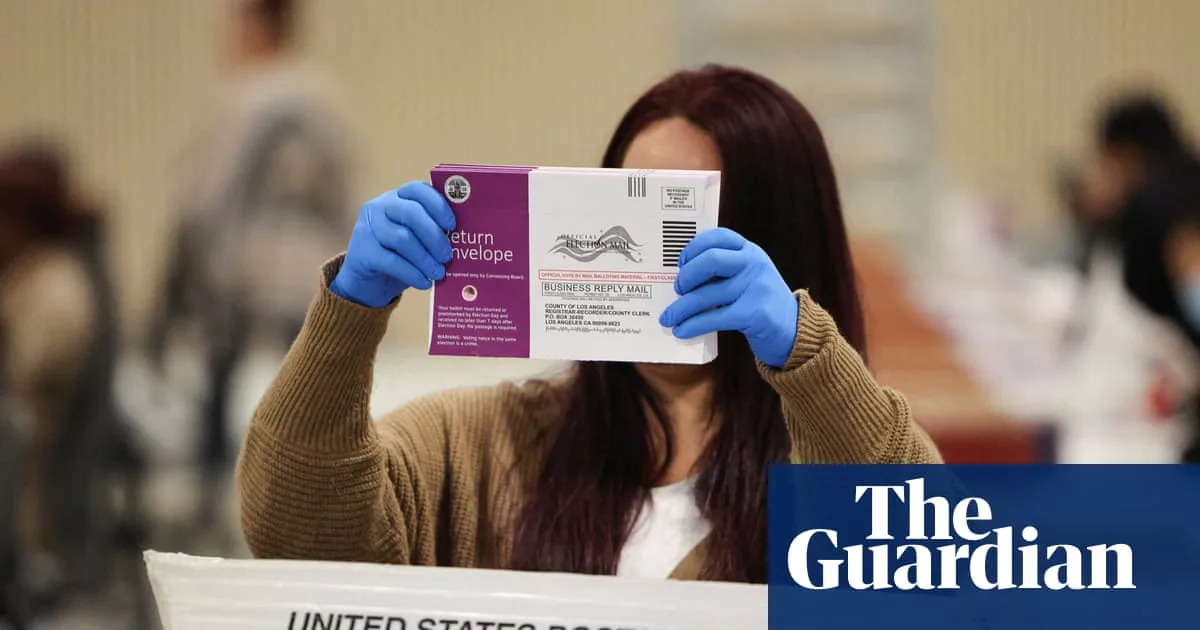
A federal judge in the United States has delivered a significant blow to the Trump administration's controversial efforts to obtain sensitive information on millions of California voters, dismissing a lawsuit and warning the initiative poses a direct threat to American democracy.
A Sweeping and Unprecedented Request
In the summer of 2025, the US Justice Department demanded that California hand over its entire voter registration list, including voters' dates of birth and the last four digits of their Social Security numbers. Officials claimed this intrusive data sweep was necessary to ensure the state was properly removing ineligible individuals from its electoral rolls.
California's Secretary of State refused to comply fully, offering instead to provide a redacted version of the list for inspection. In response, the Justice Department filed a lawsuit against the state. This legal action was part of a broader national campaign, with similar litigation launched in 23 other states and the District of Columbia.
Judge's Blistering Ruling: A Defence of Democratic Principles
US District Judge David Carter, an appointee of former President Bill Clinton, issued a forceful ruling on Thursday, 4th November 2025, dismissing the department's case. He stated unequivocally that the federal government was not entitled to the sensitive data it sought.
Judge Carter argued that centralising such personal information would have a "chilling effect on voter registration" and lead to decreased turnout, as citizens would fear their data was being used for inappropriate or unlawful purposes. "This risk threatens the right to vote which is the cornerstone of American democracy," he wrote.
The judge was particularly scathing about the Justice Department's legal arguments, which invoked the National Voter Registration Act and a provision from the landmark 1960 Civil Rights Act. Carter noted that public statements by officials suggested the true intent was to compare voter data with Department of Homeland Security (DHS) immigration records for enforcement purposes.
"The court is not required to accept pretextual, formalistic explanations untethered to the reality of what the government has said outside of the courtroom," Carter stated, adding that the effort appeared to be more about "comprehensive data collection" than a simple compliance check.
Broader Implications and a Pattern of Alarm
The ruling represents a major setback for the administration's voter integrity drive, which experts have criticised for its weak legal foundations. Voting rights activists have long viewed the lawsuits with considerable alarm, seeing them as a vehicle to make exaggerated claims about non-citizen voting and to sow doubt about election integrity ahead of crucial midterm elections.
Dax Goldstein, Election Protection Program Director at the non-profit States United Democracy Center, hailed the decision. "Today the court sent a clear message: states run elections, not the administration," he said. "The Justice Department’s enforcement authority has limits – it does not extend to hijacking state election authority."
The data, where it has been examined, does not support claims of widespread fraud. DHS has reportedly run around 50 million voter records through an immigration database. While a spokesman said "tens of thousands" of potential non-citizens were flagged, follow-up reports suggest the number is closer to 10,000—approximately 0.02% of the records checked.
In a powerful concluding warning, Judge Carter framed the case as part of a dangerous erosion of democratic norms. "The taking of democracy does not occur in one fell swoop; it is chipped away piece by piece until there is nothing left. The case before the court is one of these cuts that imperils all Americans," he wrote.
The Justice Department did not immediately comment on the ruling. A federal judge in Oregon has also reportedly indicated he intends to block a similar request for voter information in that state.




