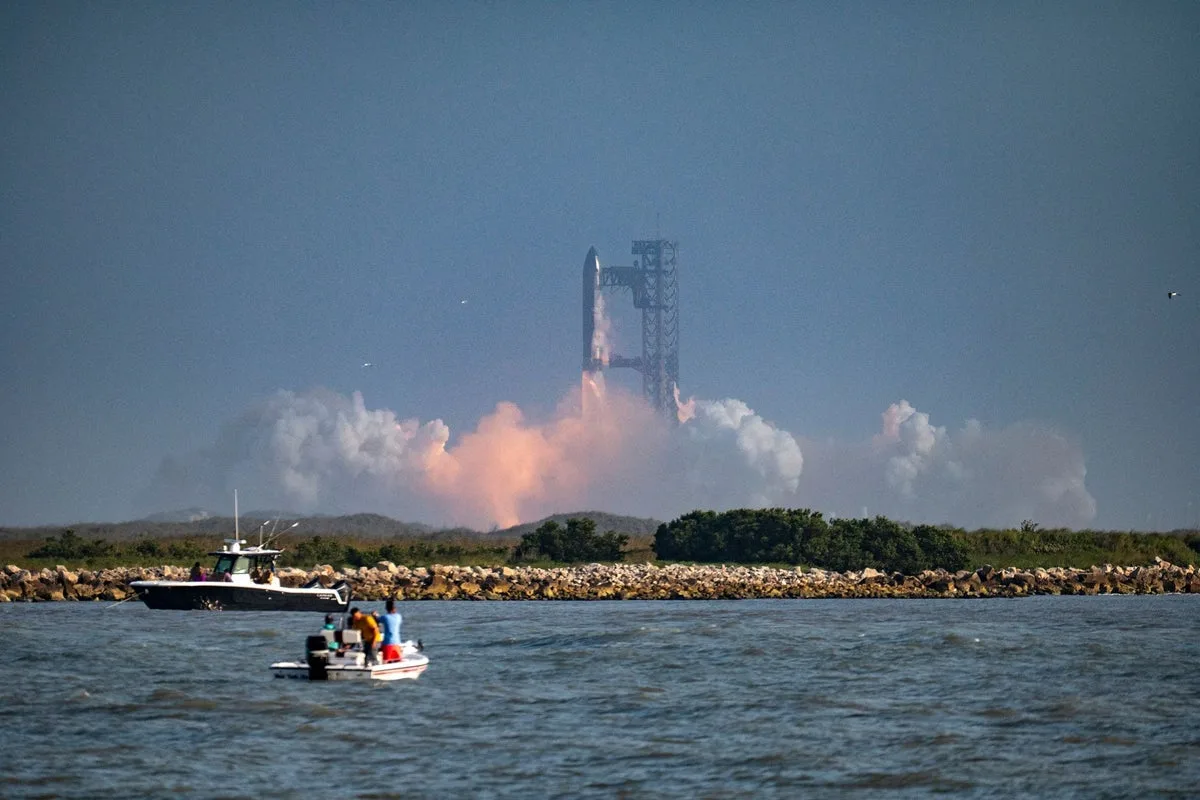
Dozens of homeowners in South Texas are suing Elon Musk's SpaceX, claiming that sonic booms from rocket testing have caused damage to their properties.
The lawsuit, filed in federal court last week, involves 80 residents who accuse SpaceX of gross negligence and trespassing. The booms occurred during 11 rocket tests between April 2023 and October 2025, according to the Texas Tribune.
A sonic boom is a wave created when an object travels faster than the speed of sound. The US Air Force notes that strong sonic booms can shatter glass. The residents allege that prolonged exposure to these booms during launches and landings has damaged walls, windows and roofs.

The suit states that during a Starship launch in 2023, the force from the 33-engine booster destroyed the launch pad and sent debris up to three-quarters of a mile away. Specific damage to homes was not detailed in the filing.
In 2025, the Federal Aviation Administration authorised SpaceX to launch up to 25 rockets per year from South Texas, five times the previous annual limit. The company has also grown significantly in the region, with employees founding the city of Starbase, Texas, in May 2025.
Separately, beach closures near the launch pad have led to another lawsuit regarding access. SpaceX was founded in 2002 and Musk remains CEO. A recent SEC filing revealed that only Musk has the power to remove himself from the company, as SpaceX prepares for a potential stock offering.