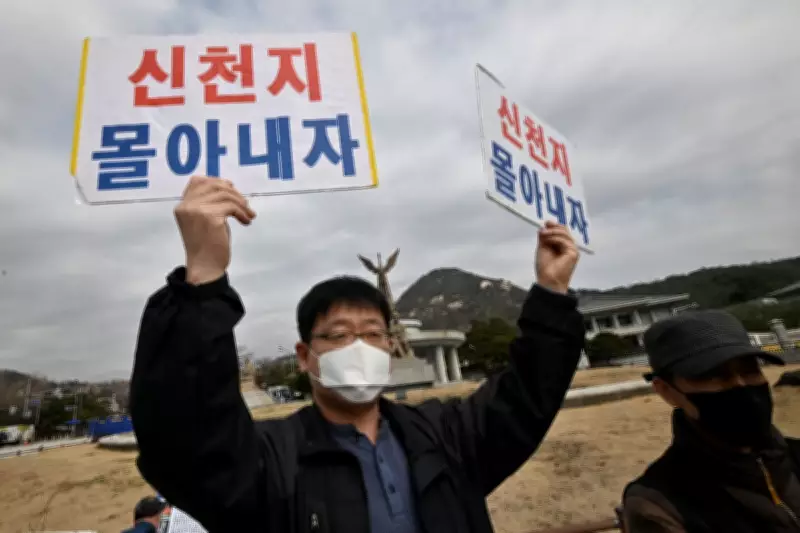
South Korean authorities have initiated a formal investigation into a controversial religious organisation accused of orchestrating a campaign to influence the nation's electoral processes. The probe represents a significant escalation in scrutiny over the relationship between political figures and influential religious groups within the country.
Police Raid Church Headquarters
According to reports from broadcaster KBS, police and prosecutors conducted coordinated raids on the headquarters of the Shincheonji Church of Jesus, located in Gyeonggi province, on Friday. The operation marks the beginning of a comprehensive inquiry into suspected collusion between religious entities and political parties.
Search and seizure warrants executed during the raids reportedly cited potential violations of the Political Parties Act and legislation concerning business interference. This legal framework forms the basis for examining whether improper coordination occurred.

Founder Lee Man Hee at Centre of Allegations
The investigation focuses primarily on church founder Lee Man Hee, who stands accused of systematically pressuring Shincheonji members to enrol in the People Power Party associated with ousted president Yoon Suk Yeol. Authorities are examining allegations that this pressure was applied to influence both the 2021 presidential election and the 2024 general election.
Investigators are scrutinising claims that substantial numbers of church followers were encouraged to join the political party en masse. This alleged mass enrolment could have distorted internal party processes, including candidate selection and leadership contests, by creating artificial voting blocs within the organisation.
Church Denies All Wrongdoing
The Shincheonji Church has issued a firm denial of all allegations through an official statement. The religious organisation maintains there is no evidence supporting claims that it directed members to participate in political activities or join specific parties.
"There are no facts showing that we ordered our members to join any political party or engage in political activities," the statement declared. The church further argued that "organisational involvement in elections is structurally and practically impossible," suggesting the allegations lack foundation.
Broader Context of Religious Influence
This investigation emerges against a backdrop of heightened public concern in South Korea regarding the political sway of religious organisations. Recent years have witnessed multiple scandals involving faith-based groups and senior political figures, creating a climate of suspicion around church-political relationships.
South Korean media outlets have reported that former Shincheonji executives and officials have already undergone questioning as part of the expanding investigation. The scope of these interviews suggests authorities are pursuing multiple lines of inquiry.
Uncertain Timeline and Outcome
Investigators have not provided a timeline for when the probe might conclude, nor have they indicated whether formal charges are likely to follow the initial investigation phase. The complexity of examining potential election interference and organisational coordination suggests the inquiry may extend for some time.
This case represents a critical test of South Korea's ability to regulate the intersection of religious activity and political participation, particularly as the nation continues to grapple with questions about institutional influence in democratic processes.