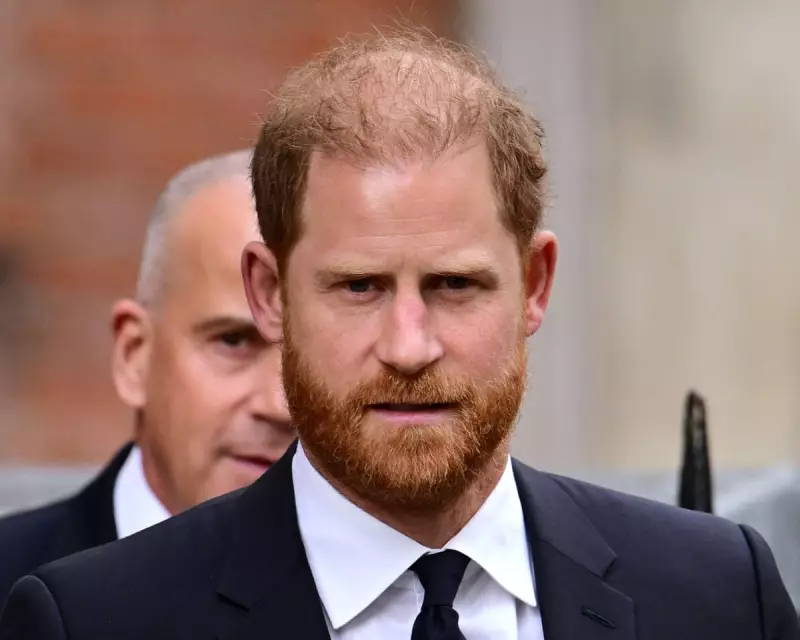
The Duke of Sussex, Prince Harry, has expressed feeling targeted for having "the temerity to stand up" to the publisher of the Daily Mail, as heard in the high court this week. Lawyers representing the duke have outlined 14 articles about him that they allege were secured through unlawful information-gathering practices by Associated Newspapers Ltd, the publisher behind the Daily Mail and the Mail on Sunday.
Prince Harry's Distress and Allegations of a Sustained Campaign
David Sherborne, the barrister acting for Prince Harry and six other prominent figures in the case, detailed the emotional impact on the duke. In his witness statement, Prince Harry described experiencing distress, paranoia, and other feelings due to the alleged unlawful activities. Sherborne emphasised that this reaction is understandable, given what he termed a "sustained campaign of attacks" against Harry for publicly challenging Associated Newspapers.
Details of the Alleged Unlawful Information-Gathering
The 14 articles in question were published between 2001 and 2013, with most featuring bylines from Katie Nicholl, a former Mail on Sunday royal correspondent, or Rebecca English, the Daily Mail's royal editor. Sherborne highlighted specific instances where sensitive information was allegedly obtained unlawfully. For example, one article revealed that Prince Harry had been chosen as godfather to the child of his former nanny, Tiggy Legge-Bourke, a detail not shared with wider family members, including King Charles.

Other stories contained intimate details about Harry's relationship with his former girlfriend, Chelsy Davy. Sherborne told the court that a private investigator, Mike Behr, was paid £200 in cash by Rebecca English for a "Chelsy tip," which included Davy's exact flight details. He argued that such information could not have come from legitimate sources, pointing to an article from 2010 that disclosed Harry's private preferences, such as where he liked to spend the night.
Associated Newspapers' Defence and Counterarguments
In response, Antony White, leading the defence for Associated Newspapers, asserted that the stories were obtained legitimately from contacts within Prince Harry's social circle, press officers, publicists, freelance journalists, photographers, and prior reports. White noted that Harry's social circle was known to be a source of leaks to the media about his private life, and the articles built on previously reported information.
White also highlighted that Associated Newspapers has a "full roster" of journalists, including longtime Daily Mail editor Paul Dacre, willing to give evidence to address the allegations. He described this as speaking volumes about the publisher's culture and argued that it is improbable for so many journalists to be lying about their activities. Additionally, White mentioned that an effective ban on using private investigators was implemented by Dacre in 2007 and that the claimants have provided little evidence linking payments to private investigators with the content of the stories.
Legal Arguments and Trial Proceedings
Sherborne addressed claims from Associated Newspapers that the legal action was brought too late, stating that each claimant discovered they had a serious case after October 2016, the cutoff date for such actions. He dismissed allegations that the claimants' legal team engineered "watershed moments" to enable the case as "offensive" and untrue.
The trial continues, with Prince Harry expected to give evidence later this week. The outcome could have significant implications for media practices and privacy rights in the UK.