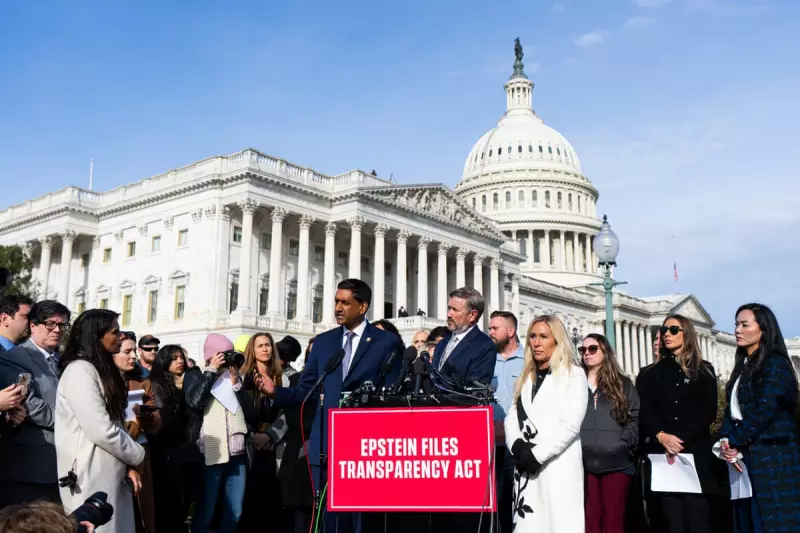
Victims' advocates have voiced profound outrage after the US Department of Justice failed to meet a congressionally mandated deadline for the full disclosure of investigative files related to the late financier and convicted sex offender Jeffrey Epstein.
Legal Deadline Passes with Millions of Documents Withheld
Under the Epstein Files Transparency Act, signed into law by President Donald Trump, the Justice Department was legally required to release all relevant files by 19 December 2025. This date was set as 30 days after the act's passage. However, one month after this deadline lapsed, officials have admitted that only a fraction of the material has been made public, with millions of pages still unreleased.
Prominent attorneys representing survivors have condemned the delay as a blatant violation of federal law and a breach of public trust. Gloria Allred, who has represented more than 20 Epstein survivors, stated, "The act could not have been clearer. It is clear that the Justice Department has violated the act." She echoed the legal maxim that "justice delayed is justice denied," noting a three-decade pattern of denied justice for survivors.

Advocates Decry 'Cover-Up' and Demand Oversight
Lisa Bloom, lawyer for 11 survivors, accused powerful institutions of perpetuating a cover-up. "It has never been about the victims. It's about powerful men covering up for each other, and that cover-up continues," she said. Jennifer Plotkin of Merson Law, representing dozens of survivors, criticised the government's approach: "The government continues to avoid accountability and disregards the victims."
In a court filing on 5 January 2026, Justice Department lawyers revealed they had uploaded approximately 125,575 pages across 12,285 documents. Crucially, they also disclosed identifying more than 2 million additional documents that are still under review. This admission has fuelled demands for the appointment of a special master or inspector general to oversee compliance, a move supported by the act's bipartisan co-sponsors, Democratic Representative Ro Khanna and Republican Representative Thomas Massie.
Political Pressure and Unfulfilled Promises
The passage of the Transparency Act followed months of bipartisan pressure. During his campaign and early presidency, Trump had vowed to release the Epstein files, a pledge particularly significant to parts of his political base who link Epstein's crimes to his associations with elite figures. After signing the act, Trump claimed, "We have nothing to hide," framing the issue as a "Democrat Hoax."
Jennifer Freeman of Marsh Law, representing victim Maria Farmer, argued for urgent transparency: "The Justice Department's failure to abide by the 30-day deadline is a direct, flat violation of the statutory requirement. It is also a breach of the public trust." She emphasised that oversight is needed to audit the timeliness, redactions, and completeness of the eventual production.
With a judge now seeking explanations from the Justice Department and public demands growing, survivors and their advocates brace for a continued fight. As Allred concluded, "Victims and survivors will need to continue to fight for justice or they will never achieve it."