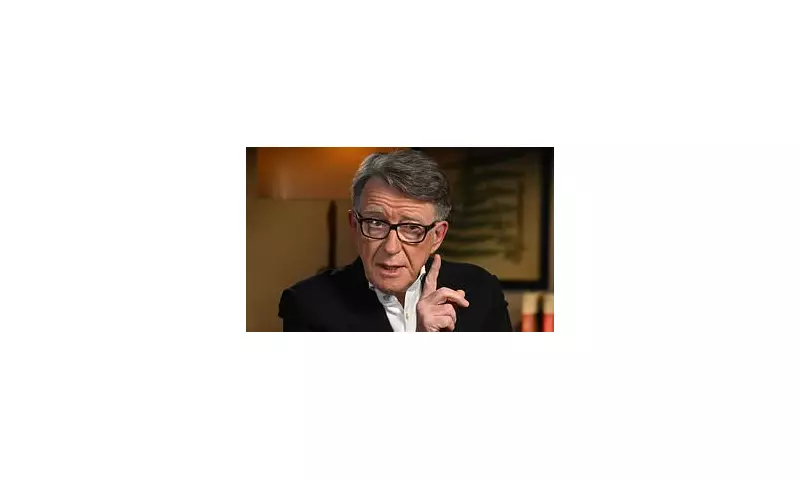
The political world was left stunned and appalled this week after Lord Peter Mandelson, the veteran Labour figure and former cabinet minister, gave a widely criticised interview to the BBC's Laura Kuenssberg. In it, he attempted to address his long-standing friendship with the convicted paedophile financier Jeffrey Epstein, a relationship that previously cost him his role as British ambassador to the United States.
A Clumsy Defence and a Refusal to Apologise
During the Sunday interview, Mandelson, 72, offered what many have described as a "toe-curling" and "tone-deaf" defence. He flatly refused to apologise to Epstein's victims, some of whom were as young as 14 when the abuse began. "If I had known if I was in any way complicit or culpable, of course I would apologise for it," he declared. "But I was not culpable, I was not knowledgeable of what he was doing."
This stance drew immediate and unfavourable comparisons to the disastrous BBC interview given by the former Prince Andrew, who also refused to apologise to victims. Critics labelled Mandelson's performance as arrogant and lacking in judgment, a significant fall for a man once considered a master of political media operations.

The 'Gay Defence' and Continued Friendship Post-Conviction
Perhaps the most controversial element of Mandelson's explanation was his claim that his sexuality shielded him from Epstein's crimes. He argued that because he is a gay man, he was kept separate from the sexual side of Epstein's life within his social circle. This assertion has been widely dismissed as nonsensical and offensive.
More damningly, evidence shows Mandelson maintained his close friendship with Epstein long after the financier's 2008 conviction for procuring a child for prostitution. Leaked emails reveal that as the powerful EU Trade Commissioner, Mandelson urged Epstein to "fight for early release" and later described him as his "best pal." He even offered strategic advice, referencing "The Art of War."
Shockingly, Mandelson stayed in one of Epstein's homes while the financier was in prison, a period during which Mandelson served as Business Secretary in Gordon Brown's Cabinet. Their association continued after Epstein's release, with Mandelson allowing him to help broker a financial deal involving JP Morgan and RBS in 2010.
A Career Defined by Controversy and a Final Comeback Blocked?
This episode is the latest in a career marked by controversy for the so-called "Prince of Darkness." He holds the dubious record of being sacked from senior roles three times by two Labour prime ministers. The Epstein friendship ultimately led to his humiliating dismissal as US ambassador just seven months into the role.
Associates suggested the ill-fated BBC interview was intended as the first step on "the long road to yet another comeback." However, the widespread condemnation from across the political spectrum, including from Labour ministers, suggests this graceless performance may have permanently ended his hopes of a return to public life. The interview has forced a painful re-examination of how a figure of Mandelson's intelligence and perception could have remained so wilfully blind to the atrocities committed by his close friend over two decades.