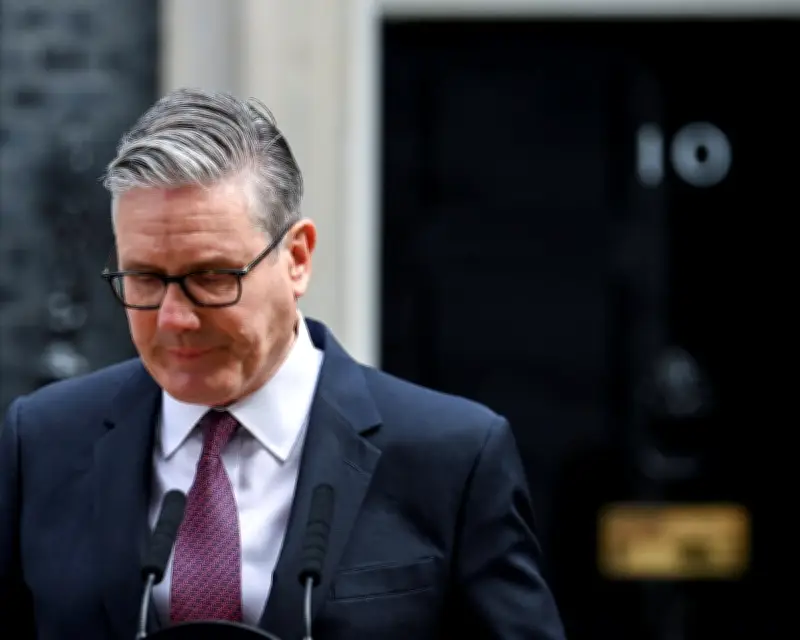
Keir Starmer resigned as leader of the Labour Party on Thursday evening following a calamitous conference speech that has been widely dubbed the 'Podium of Doom'. The speech, delivered at the party's annual conference in Liverpool, was marred by technical glitches, heckling, and a perceived lack of direction, leading to immediate calls for his resignation from within the party.
Speech Goes Wrong
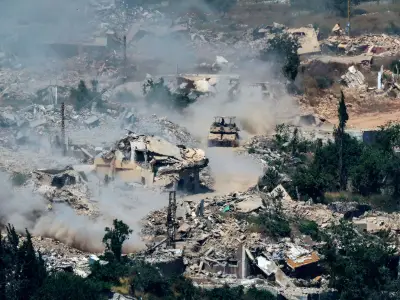
Starmer's address, intended to rally the party ahead of the next general election, descended into chaos within minutes. The autocue failed repeatedly, forcing Starmer to ad-lib for extended periods. At one point, a protester stormed the stage, shouting about the party's stance on Gaza, before being dragged away by security. The speech was also punctuated by loud boos from sections of the audience, particularly when Starmer mentioned his commitment to fiscal responsibility.
According to multiple sources inside the conference hall, the atmosphere turned toxic as Starmer struggled to regain control. One Labour MP described the scene as 'a car crash in slow motion,' while another said it was 'the worst conference speech in living memory.' The speech was watched by millions on live television, and within hours, the hashtag #PodiumOfDoom was trending on social media.

Resignation Statement
In a brief statement issued from his office later that evening, Starmer said: 'I have always put the country first, and I believe it is now in the best interests of the Labour Party and the country for me to step aside. The speech today was not good enough, and I take full responsibility. I will remain as leader until a successor is elected.'
Starmer's resignation came as a shock to many, as he had previously insisted he would fight on despite poor polling numbers. The Labour Party has been trailing the Conservatives by an average of 15 points in opinion polls for the past six months, and internal divisions over Brexit, the green agenda, and immigration have deepened.
Leadership Contest Looms
The resignation triggers a leadership contest that is expected to be highly contested. Early frontrunners include shadow chancellor Rachel Reeves, who is seen as the continuity candidate, and Angela Rayner, the deputy leader, who represents the party's left wing. Other potential candidates include shadow health secretary Wes Streeting and former shadow home secretary Yvette Cooper.
Labour's National Executive Committee (NEC) will meet next week to set the timetable for the contest. Under party rules, candidates need the support of 20% of the parliamentary party to stand, which amounts to 40 MPs. The contest is expected to conclude by early September.
Reactions
Prime Minister Rishi Sunak said Starmer's resignation was 'a matter for the Labour Party,' but added that 'the British people deserve a government that focuses on their priorities, not internal party squabbles.' Former Labour leader Jeremy Corbyn, who was expelled from the parliamentary party in 2020, said Starmer's departure was 'inevitable' and called for 'a fundamental change in direction.'
Political analysts have described the 'Podium of Doom' as one of the most consequential moments in recent British political history. Professor Tim Bale of Queen Mary University of London said: 'This is a watershed moment for Labour. The party is now facing an existential crisis, and the next leader will have to heal deep wounds if they are to have any chance of winning the next election.'