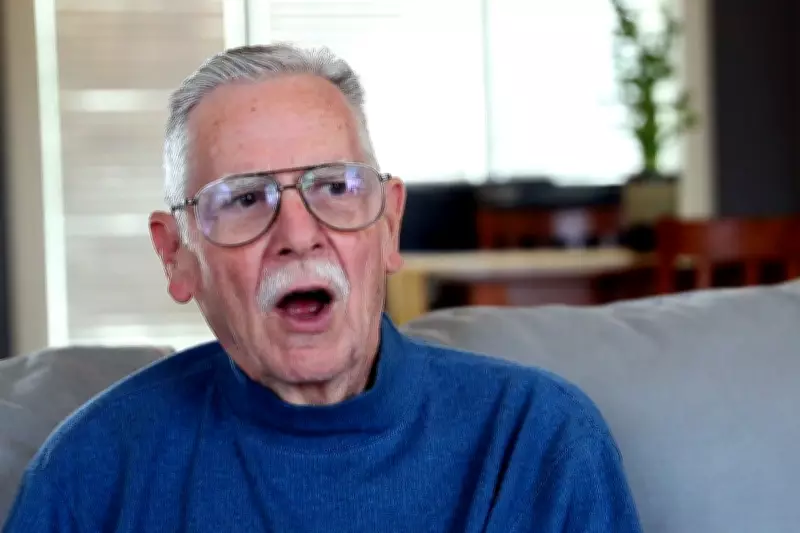
Jack Thornell, the Associated Press photographer whose Pulitzer Prize-winning photograph of a shotgun-wounded James Meredith during a 1966 civil rights march became an enduring symbol of the struggle for racial equality, has died at age 86.
Thornell died Thursday at a hospital in Metairie, a New Orleans suburb, from complications of kidney disease, his son Jay Thornell confirmed on Friday.
Thornell worked for the AP from 1964 to 2004, covering a wide range of assignments including politicians, natural disasters, and crime scenes. However, the fight for racial justice defined his career from the very beginning. On his first day at the AP's New Orleans bureau, he photographed the integration of a Mississippi Gulf Coast school.

In June 1966, the then-26-year-old Thornell was assigned to cover a civil rights march led by James Meredith, who had previously integrated the University of Mississippi in 1962 and was now undertaking a “March Against Fear” to encourage Black voter registration across the state.
While Meredith walked along U.S. Highway 51 near Hernando, Mississippi, Thornell and a rival photographer waited in a parked car. The sound of a shotgun blast sent them scrambling. Thornell captured a series of images, one of which became the Pulitzer-winning shot: Meredith lies on the ground at the edge of the highway, his arms extended and hands on the pavement, turning his head to look toward his would-be assassin, visible at the far left of the frame amid roadside foliage.
Meredith was hospitalized and recovered. His attacker, Aubrey James Norvell, pleaded guilty and served 18 months of a five-year sentence.
Initially, Thornell feared he might be fired because he thought he lacked an image of the gunman. Instead, he won the Pulitzer Prize for Photography in 1967.
In 1964, Thornell photographed the burned-out station wagon belonging to civil rights workers Michael Schwerner, James Chaney, and Andrew Goodman, whose bodies were later found buried in an earthen dam. He also captured the arrest of the local sheriff on conspiracy charges, snapping the photo while backing away as a knife-wielding supporter threatened him.
Thornell documented violence during school integration in Grenada, Mississippi, in 1966, including an image of a Black man covering his ears as a cherry bomb was thrown by angry white protesters. He photographed Martin Luther King Jr. multiple times, including during the 1965 Selma-to-Montgomery march and the 1968 Memphis sanitation workers' strike, just a week before King's assassination.
Thornell was not present in Memphis when King was killed, but he was dispatched to Atlanta, where he photographed King's family viewing the body at Spelman College. Arriving late, he climbed over pews to get into position. “I was shaken when I left there,” he recalled in a 2018 interview. “But I didn’t leave without the picture.”
In 1977, Thornell was on hand when King's assassin, James Earl Ray, was recaptured after escaping from a Tennessee prison.
Thornell was born and raised in Vicksburg, Mississippi. His photography career began by chance: while serving in the Army in the late 1950s, a mix-up sent him to photographic school instead of radio repair training.
After leaving the Army, Thornell worked for the Jackson Daily News before joining the AP in New Orleans. Despite the dangers of covering the civil rights movement, he said his greatest fear was not physical harm but “coming back without the photograph.” He added, “Your success depended on how well you did that day. Because tomorrow there’s always another newspaper coming out.”
Thornell is survived by his son Jay, daughter Candy Gros, and a granddaughter.