Grenfell Tower Handprints: Families Fight to Preserve Haunting Evidence
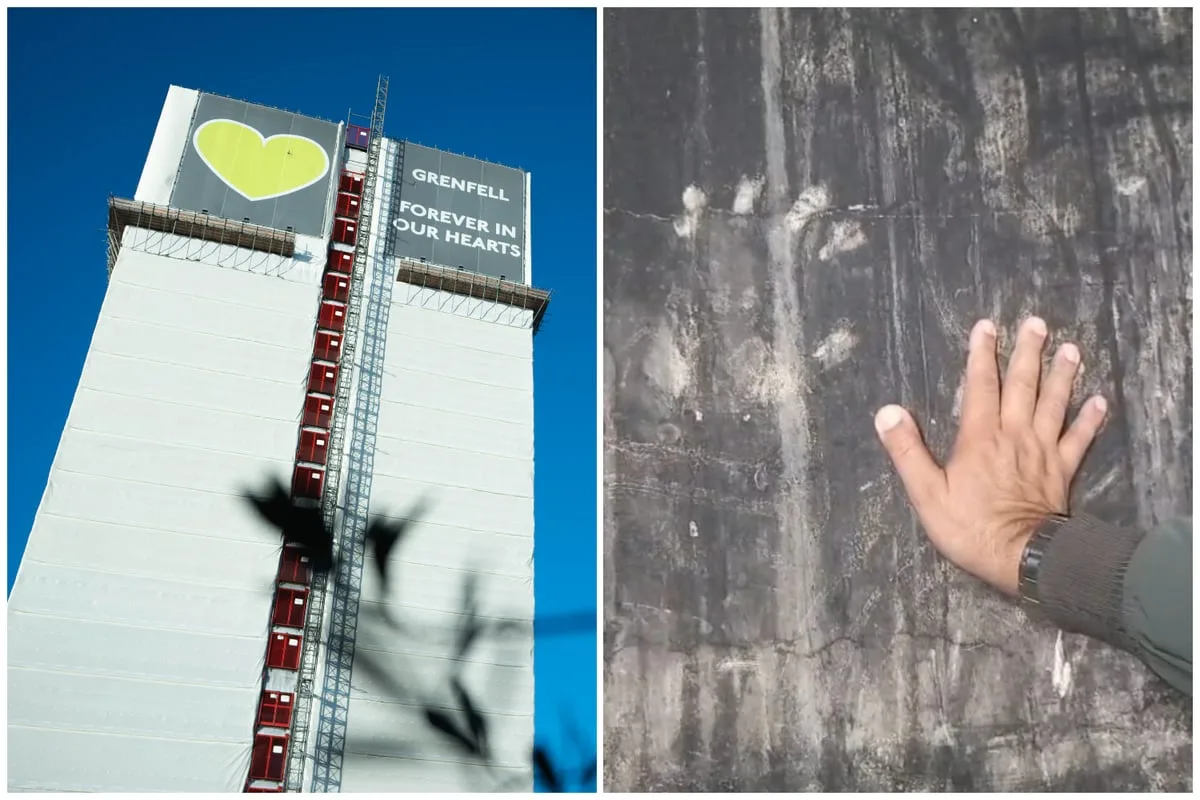
A haunting photograph has revealed the handprints of Grenfell Tower victims who were trapped inside the building as the devastating fire raged. The image captures a stark reminder of the tragedy that unfolded on June 14, 2017, when a vicious blaze tore through the 24-storey social housing block in North Kensington, west London, claiming 72 lives.
National Outrage and Inquiry Findings
The Grenfell disaster sparked national outrage after investigations found that highly flammable exterior cladding contributed to the rapid spread of flames from an electrical fault. The Grenfell Inquiry commenced in September 2017, with its final report published in February 2025, just before demolition began that September.
During pre-demolition visits, families of the victims made a chilling discovery: sections of walls bearing handprints from those who were trapped inside during the fire. A powerful photograph of the stairwell between floors 12 and 14 shows the space completely blackened with smoke and marked with prints of various sizes.
Discovery and Destruction
The group also found an Arabic inscription between floors 17 and 18, reading 'Allahu Akbar', meaning 'God is greatest'. They urgently appealed to the government to save these parts of the building from demolition. However, an official stated that no sections above the ninth floor could be preserved, citing concerns about the sensitivity of the upper levels and the lives lost there.
Both the handprints and the inscription are located above this level. The Arabic writing has already been destroyed, but bereaved relatives are now fighting to preserve the handprints as crucial historical evidence.
Legal Action and Government Response
Lawyers for one of the families filed a pre-action letter last week seeking a judicial review of the government's decision to demolish everything above the ninth floor. They referenced former deputy prime minister Angela Rayner's promise in February last year that 'parts of the tower or materials from the site' could be preserved for a memorial if the community wished.
In September, just ten days after her resignation, families were informed of the government's decision not to preserve anything above the ninth floor. Their lawyers have urged ministers to protect the heart-rending handprints while further discussions with loved ones and memorial designers take place.
They emphasized the harm that destroying these marks would cause to those affected by the disaster and to public faith in the memorialisation process. Members of Grenfell Next of Kin (GNK), a group for bereaved family members, travelled to Parliament on Wednesday to implore MPs to save the markings.
Community Voices and Emotional Appeals
A spokesperson for the government ministry responsible for Grenfell said: 'Due to ongoing legal action, we have paused deconstruction works in the relevant areas.' However, GNK argued this pause only occurred because bereaved families were forced to take legal action.
The government's legal department stated that sections between the 12th and 14th floors would be cordoned off, pending a response to the pre-action letter. Meanwhile, demolition continues elsewhere in the tower.
According to The Telegraph, the group of relatives of 13 victims discovered the marks during a tour of the block last July, invited by then housing secretary Angela Rayner before demolition work began. Karim Khalloufi, whose sister Khadijah Khalloufi died in the fire, said the handprints 'hold the voices of that night'.
'We will not let them be erased, silenced, or this tragedy be sanitised,' he declared. 'History must record what happened.' Shah Aghlani, who lost his mother and aunt, Sakineh and Fatemeh Afrasehabi, added: 'We have no choice but to fight for our loved ones to preserve this for history.'
Political Context and Memorial Plans
Members of GNK praised Ms Rayner's approach as former housing secretary, noting her direct communication with communities and allowing them to lead decision-making. They felt her departure keenly, as she was deeply engaged with the details and in close contact with her department about the disaster.
Housing secretary Steve Reed told Parliament on Wednesday: 'It is emotional to see the tower coming down slowly, brick by brick, but it is important for the community, and for all concerned about what happened, to know that the memorial commission is working with the community to secure a design for the memorial, which will be a lasting testament to what happened on that fateful night, and will honour the memory of those who lost their lives and their loved ones.'
A spokesperson for the Ministry of Housing, Communities and Local Government said: 'Grenfell Tower has a deep personal significance to the community and we are committed to ensuring what happened at the tower is remembered, with the community’s voice at the heart of our work. Work to take down the tower carefully is being handled with continuous engagement with the bereaved families, survivors and all those affected in what we know is a sensitive time.'