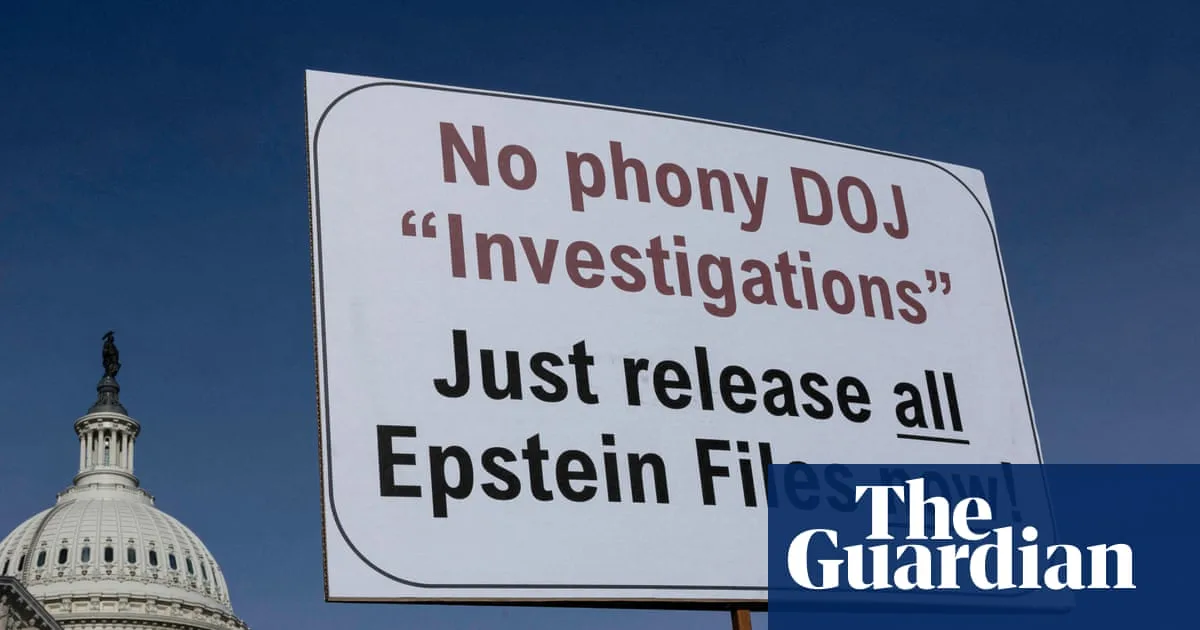
More than a month after a congressional deadline, the US Department of Justice (DoJ) has released only a fraction of investigative files on Jeffrey Epstein, despite a legal obligation under the Epstein Files Transparency Act. The law, signed by Donald Trump, required the DoJ to disclose all relevant documents by 19 December 2025, with limited exceptions.
In a 5 January court filing, DoJ attorneys stated that approximately 12,285 documents – around 125,575 pages – had been posted online. However, they acknowledged that over two million documents potentially responsive to the act remain under review. Survivors’ advocates and lawmakers have expressed frustration, describing the delay as a failure of transparency.
Attorney Spencer Kuvin, who has represented dozens of Epstein survivors, said: “Congress did not create a discretionary timeline – it created a legal obligation. Every day these records remain withheld sends a message to victims that transparency is optional when powerful interests are involved.” He added that continued secrecy “retraumatises victims and undermines public confidence in the justice system”.

Democratic Representative Ro Khanna and Republican Thomas Massie, co-sponsors of the act, have asked a Manhattan federal judge to appoint a special master to compel the DoJ to comply. In an 8 January letter to Judge Paul Engelmayer, they wrote: “We have urgent and grave concerns about DOJ’s failure to comply with the Act as well as the Department’s violations of this Court’s order.” They noted that the DoJ had also failed to provide a required report summarising redactions and withheld records.
The DoJ has opposed the appointment of a special master, filing a request last week for Judge Engelmayer to reject the bid. Meanwhile, some are calling for judicial intervention, including a special master who could facilitate the release of documents. News website Radar Online, which filed a civil suit over the FBI’s handling of the case more than eight years ago, has also supported the idea.