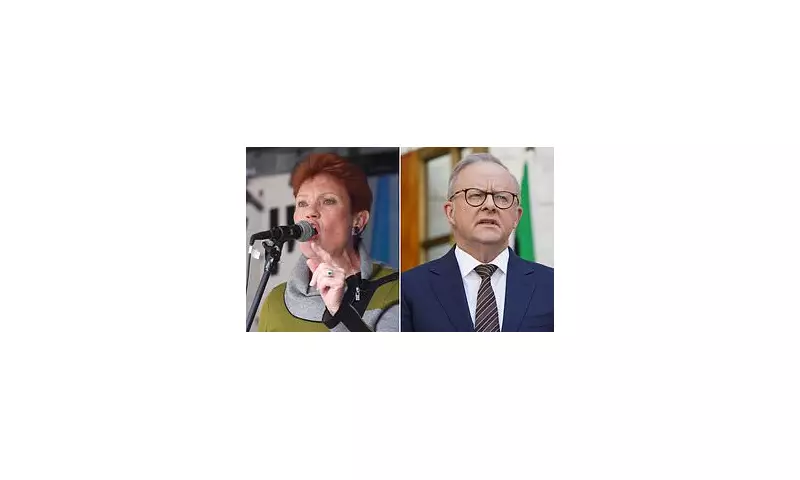
In a seismic shift for Australian politics, the far-right One Nation party has drawn level with the established Coalition in a major national poll for the first time. The survey, the first significant one of 2026, reveals a dramatic surge in support for Pauline Hanson's populist movement, signalling a potential end to the country's long-standing two-party dominance.
Polling Data Reveals a Political Earthquake
The poll, conducted by Demos AU for Capital Brief, found that almost a quarter of the electorate (23 per cent) would now give their first preference to One Nation in primary voting. This figure represents a staggering 17-point jump since the federal elections in May. Crucially, it puts Hanson's party neck and neck with the Coalition, also on 23 per cent, under the leadership of Sussan Ley.
George Hasanakos, head of research at Demos AU, stated on Friday that Australia is now on the cusp of following several European countries where a far-right populist party challenges for government. "With the rising support of One Nation before this event (Bondi massacre), it makes this fertile ground for a long-standing anti-immigration voice in Ms Hanson to gain further support," he explained.

Hardline Stances and Voter Disenchantment Fuel Rise
The party's breakthrough is attributed to its hardline conservative positions, particularly its trumpeting of anti-immigration policies in the wake of the Bondi Beach massacre on December 14, where 15 people were killed. The tragic event has become a focal point for the party's messaging.
Data from the survey of 1,027 people indicates deep voter frustration. 31 per cent of former Coalition voters have been attracted to One Nation, while support is also strong among lower-income Australians. The populist shift is marked, with 26 per cent of those earning under $45,000 a year saying they would vote for Hanson's party. "With the electorate's increasing frustration over the rising cost of living, it's no surprise that many Australians are looking for alternatives," Mr Hasanakos noted.
One Nation itself basked in the results, declaring on Facebook that voters were sending "a warning shot to Anthony Albanese" and walking away from the Prime Minister "in numbers he has not faced before." The party claimed the result showed a rejection of the "tired old duopoly" of Labor and the Liberals.
Controversy and Caution Amid the Surge
Pauline Hanson, a mainstay of Australian politics for three decades, has recently courted controversy, including being suspended from the upper house for seven days in November after a stunt wearing a burqa in Parliament. She and Barnaby Joyce were warmly received at a vigil for the Bondi victims in December, with some in the crowd applauding and yelling for them to "make Australia great again."
However, prominent pollster Kevin Bonham urged caution, particularly questioning the two-party preferred figures that showed Labor and One Nation tied at 50 per cent. The extraordinary results suggest that Australia's political landscape is undergoing its most significant transformation in decades, with a once-fringe party now positioned as a genuine contender for power.