

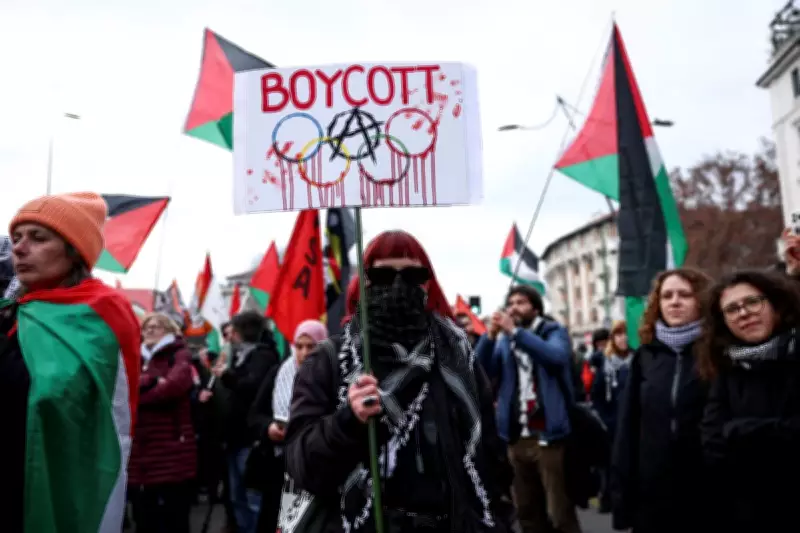
Winter Olympics: Palestine's Absence and Israel's Participation Explained
The International Olympic Committee maintains that both Israel and Palestine should have equal opportunity to compete at the Games, yet geopolitical realities create starkly different outcomes. Over 3,500 athletes from 93 nations are vying for 195 medals across 16 disciplines at this Winter Olympics, but global politics continues to overshadow sporting competition.
While the IOC strives to remain apolitical, the very composition of participating nations raises difficult geopolitical questions. For yet another Winter Olympics, no athletes will represent Palestine, while Israel fields a full delegation despite its ongoing military actions in the Gaza Strip.
Why Palestine Is Not Competing at the Winter Olympics
Palestine has maintained a National Olympic Committee since 1993, when it received formal IOC recognition. This status enables the nation to send delegations to Olympic Games and organize training for athletes and coaches. Palestinian competitors have participated under their flag at every Summer Olympics since 1996, with a record eight-strong delegation at the Paris Games in 2024.

However, no Palestinian athlete has ever competed at a Winter Olympics. The conflict between Israel and Hamas, combined with widespread destruction of Palestinian infrastructure including sports facilities, has made athletic training nearly impossible. The country also lacks sufficient funding to develop elite-level athletes.
Winter sports have historically been dominated by Nordic nations and countries with cold climates. While the Olympic Movement has attempted to expand winter sports beyond traditional regions, Palestine's warm climate presents an additional barrier to developing competitive winter athletes.
Why Israel Is Allowed to Compete at the Olympics
The International Olympic Committee has determined that the Israel-Hamas conflict is "not comparable" to the situation between Russia and Ukraine. Russia and its ally Belarus were suspended by the IOC in October 2023 following Russia's invasion of Ukraine, specifically due to Russia's attempt to take over sporting authorities in occupied Ukrainian regions.
This formal suspension severed the Russian Olympic Committee from all Olympic funding and prevented Russian or Belarusian athletes from representing their countries at the Paris Games. Some individuals competed as neutral athletes under a neutral flag, with their medals not counting toward official national totals.
An IOC spokesperson clarified before the Paris Games that the Israel-Palestine situation differed fundamentally: "The relevant National Olympic Committees did not extend their area of jurisdiction over that of another NOC or outside their own area of jurisdiction. It is beyond our remit to react to any conflict or war situation between countries. This is the pure realm of politics."
The Palestinian National Olympic Committee expressed anger at this decision, sending a letter to the IOC prior to the Paris Olympics accusing the organization of "double standards." In September 2025, the IOC confirmed Israel would face no similar ban from the Milano Cortina Olympics this February.
An IOC statement emphasized: "The IOC deeply believes that differences between nations must be resolved through dialogue, not violence. The IOC is concerned by the disruption of competitions across the world, the restriction of access to host countries for athletes, and the boycotting and cancellation of competitions due to political tensions. These actions deprive athletes of their right to compete peacefully and prevent the Olympic Movement from showing the power of sport."
The Palestinian Football Association has reported devastating losses, with at least 800 athletes and sporting officials killed since the war began in October 2023, including more than 100 children. Hostilities were formally paused when a ceasefire took effect in October, but strikes and killings have continued, leaving over 90 percent of Gaza's population displaced.






