

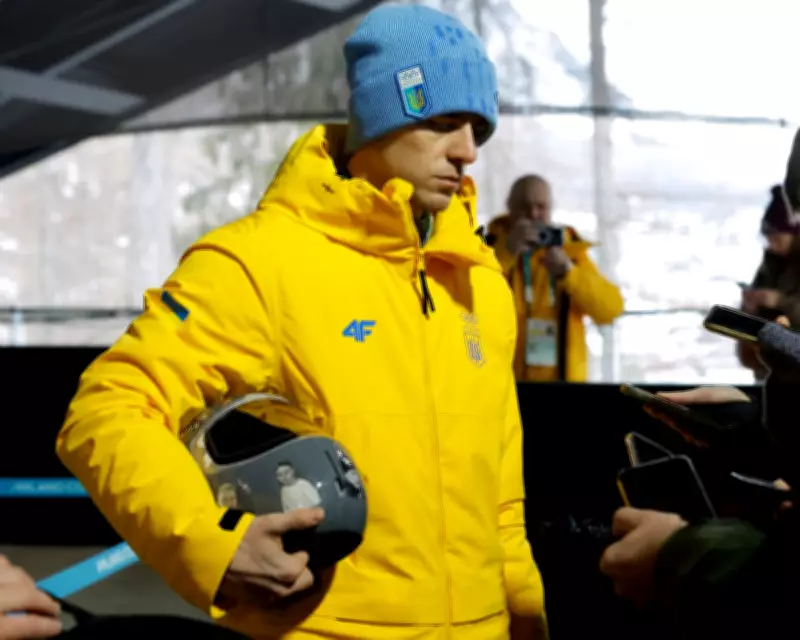
Ukrainian Skeleton Star's 'Helmet of Memory' Triggers IOC PR Crisis at Winter Games
Vladyslav Heraskevych, the Ukrainian skeleton racer, stood firm with his 'helmet of memory' after being disqualified from the Winter Olympics event, creating a public relations nightmare for the International Olympic Committee. His helmet, adorned with images of Ukrainian athletes and coaches killed in the war with Russia since 2022, became a symbol of defiance and remembrance, forcing the horrors of the conflict back into the global spotlight.
A Sacrifice for a Higher Purpose
To compete at an Olympic level in skeleton demands immense courage and unshakeable nerve as athletes navigate treacherous corners at breakneck speeds. Few doubted that Heraskevych would waver under pressure, especially not the IOC, which alternated between threats of expulsion and diplomatic overtures over two weeks without swaying his resolve. In conversations with journalists, Heraskevych emerged as a man fully prepared to forfeit his dream of a Winter Olympic medal for a cause greater than sport.
His message, conveyed both publicly and privately, was unwavering: he would not retreat. If the IOC barred him from competing with his helmet, he would accept the consequences. When the moment arrived just before 8:30 AM on Thursday, he responded with a poignant statement, "This is price of our dignity," accompanied by a photograph of his helmet. For the IOC, it was akin to witnessing an unavoidable public relations disaster unfold in real-time.

Clever Messaging and Inconsistencies
Heraskevych's approach was notably strategic and precise. Rather than focusing on direct condemnations of Russian aggression, he emphasised honouring his fallen friends, arguing that this did not violate the IOC's rules against political expression on the field of play. While not universally accepted, this reasoning provided a deft sidestep around official restrictions.
He further highlighted perceived inconsistencies in the IOC's application of its own regulations. For instance, at the opening ceremony, Israeli skeleton racer Jared Firestone wore a kippah commemorating victims of the 1972 Munich massacre, inscribed with the words, "We remember. We endure. We rise." Similarly, US skater Maxim Naumov displayed a photograph of his parents, who died in a recent air collision, after his performance. Heraskevych questioned why his case was treated differently, especially given the IOC's purported commitment to consistent enforcement across all Olympic events.
IOC's Attempts and Historical Context
The IOC did make efforts to prevent this contentious moment. Historically rigid on athlete expression, they permitted Heraskevych to use his helmet during practice and even offered the rare concession of allowing a black armband in competition. In a last-ditch move, IOC President Kirsty Coventry traveled to Cortina to resolve the standoff, leaving in tears afterward—a display that underscored her compassion and leadership style, contrasting sharply with her predecessor, Thomas Bach.
This incident also reflects a shift from the IOC's past, such as the 1968 expulsion of Tommie Smith and John Carlos for their black power salute under then-president Avery Brundage, who had previously defended Nazi Germany. However, the IOC continues to grapple with the outdated notion that sport and politics can be entirely separated, a stance complicated by recent overtures to reintegrate Russia into international sports despite its actions in Ukraine and past scandals like the state-sponsored doping at the 2014 Sochi Games.
Broader Implications and Aftermath
As discussions unfolded in Milan, many pondered whether the IOC could have handled the situation differently. The core issue revolved around the committee's insistence on keeping the field of play free from political or social protests, a principle many support to some degree. An insider noted that approving the 'helmet of memory' might have set a risky precedent, potentially leading to other nations mandating similar displays for controversial figures.

Yet, alternatives existed. The IOC could have established an independent panel to evaluate such cases, similar to the process for Authorised Neutral Athletes from Russia, or simply turned a blind eye to allow Heraskevych to compete. While this would have caused a temporary stir, the rapid pace of Olympic news might have quickly moved on to other stories. Regardless, Heraskevych achieved his primary goal: reigniting global attention on the war in Ukraine, likely delaying any reinstatement of the Russian Olympic team and shifting the public relations battle in his favour.





