

Ukrainian Sports Minister Condemns IOC Signals on Russian Athlete Restrictions
Ukraine's Minister of Youth and Sports, Matvii Bidnyi, has issued a strong condemnation of actions by the International Olympic Committee that his government interprets as indicating a potential softening of restrictions against Russian athletes. This shift could ultimately permit Russian competitors to represent their nation under the Russian flag in future Olympic Games, rather than continuing as "Individual Neutral Athletes."
Current Neutral Status and Ukrainian Opposition
At the ongoing Milan Cortina Winter Olympics, thirteen Russian athletes are participating under the "Individual Neutral Athlete" designation. This status prohibits them from displaying any Russian national symbols, and should they win a gold medal, the Russian national anthem will not be played. Athletes from Belarus, an ally of Russia, are subject to identical restrictions.
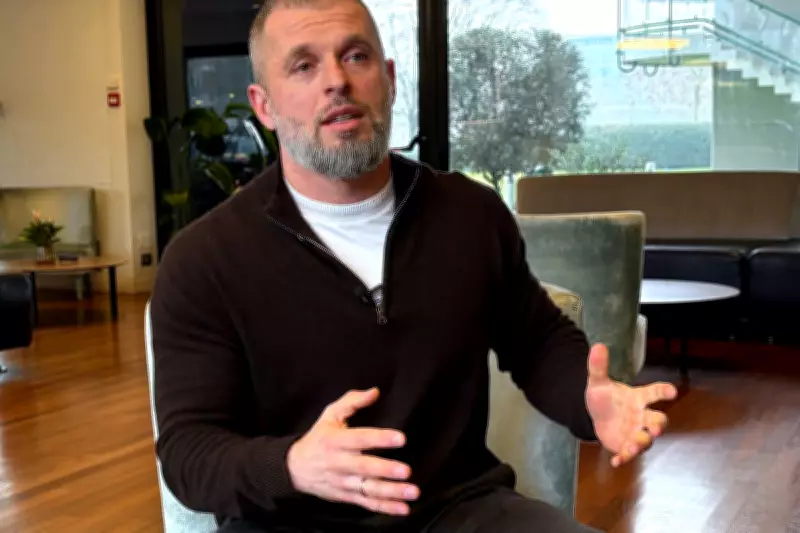
In an interview with The Associated Press on Sunday in Milan, Minister Bidnyi labeled any move to relax these conditions as "irresponsible." He argued that such a change, as the fourth anniversary of Russia's invasion of Ukraine approaches, would appear to condone the ongoing war. "It looks like you want to legitimize this evil," Bidnyi stated, referring to advocates for Russia's reintegration into the Games. "We must keep this pressure until this war ends."

IOC Policy Evolution and Recent Developments
The International Olympic Committee initiated a move toward relaxing its stance on Russia in December, advising international sports federations to permit Russian youth athletes to compete under their national flag and anthem ahead of the IOC's own Youth Olympics scheduled for later this year. Russia has persistently advocated for a complete removal of all restrictions.
The IOC defended this guidance in a statement, asserting that athletes possess "a fundamental right to access sport across the world, and to compete free from political interference or pressure from governmental organizations." In response, Russian fencers have already been competing in junior events this year under the Russian flag. A significant development occurred on Friday when World Aquatics, the global swimming governing body, lifted its restrictions on Russian youth and junior athletes.
Leadership Statements and Geopolitical Context
New IOC President Kirsty Coventry, while not directly addressing the issue of Russian athletes at the current Games, used her keynote speech earlier this month to emphasize a renewed focus on sport itself, rather than political engagement. "We are a sports organization," Coventry declared on February 3rd, identifying sport as the IOC's core priority. "We understand politics and we know we don't operate in a vacuum. But our game is sport." Her predecessor, Thomas Bach, was responsible for implementing the system allowing Russian athletes to compete as neutral individuals.
The IOC did not provide an immediate response to an AP inquiry on Monday regarding whether it is contemplating further steps to facilitate Russian participation ahead of the 2028 Summer Olympics in Los Angeles.
Sanctions as a Tool and Ukraine's Domestic Struggle
Minister Bidnyi emphasized that sports sanctions remain a crucial diplomatic tool for Ukraine. He noted that Russia takes immense pride in its athletic history and has long leveraged sporting success for propaganda purposes. This stance comes as Ukrainian President Volodymyr Zelenskyy revealed on Friday that the United States has set a June deadline for Ukraine and Russia to reach a peace agreement.
The minister also highlighted the severe domestic challenges facing Ukraine. As a harsh winter persists, Russian airstrikes continue to target the nation's power grid, causing widespread blackouts that leave millions without electricity and heating in freezing conditions. Bidnyi explained that when generators are available, they are prioritized for essential civilian needs over powering sports facilities for athlete training. "You must make a choice before keeping ice arenas or, for example, give electricity to the families in houses," he said.

Historical Context of Russian Participation
Russian athletes have not competed under their national flag at a Winter Olympics since the 2014 Sochi Games, which were marred by a state-sponsored doping scandal. The ensuing legal fallout led to Russian competitors participating in the 2018 Pyeongchang Games as "Olympic Athletes from Russia" and in the 2022 Beijing Games under the team acronym "ROC," both times without their national anthem. The World Anti-Doping Agency continues to list Russia's national testing body as "non-compliant," citing an inability to conduct in-person performance checks within the country. Russia has consistently denied state involvement in doping.
Following the Russian military incursion into Ukraine four days after the 2022 Winter Olympics, many international sports federations imposed bans on Russian athletes. In the lead-up to the 2024 Paris Summer Olympics, the IOC gradually established pathways for athletes from Russia and Belarus to qualify under neutral status. Fifteen Russians competed as neutral athletes in Paris, securing their sole medal in tennis, but were barred from participating in the opening ceremony parade.
Ukrainian Resilience and Athletic Representation
The war has inflicted a heavy toll on Ukrainian sports. Athletes have been displaced or conscripted into military service. Domestic soccer matches are frequently interrupted by air raid sirens, with attendance limited by bomb shelter capacity. Elite winter sports athletes, such as skaters, skiers, and biathletes, typically train abroad due to attacks and persistent blackouts that have forced the closure of local training facilities.
Despite these immense challenges, Ukraine has successfully brought a delegation of forty-six athletes to the Milan Cortina Olympics. The team includes a diverse range of competitors, from the nation's sole figure skater, Kyrylo Marsak, to six cross-country skiers and ten biathletes. Minister Bidnyi stated that these athletes aim to convey a powerful message to Russia and the international community. "We have the opportunity to raise our flag to show that Ukraine is resilient, Ukraine is still in power," he affirmed. "We have a will to win and we continue to be one of the most successful sport teams in the world because success in sports always was a part of the Ukrainian national brand."





