

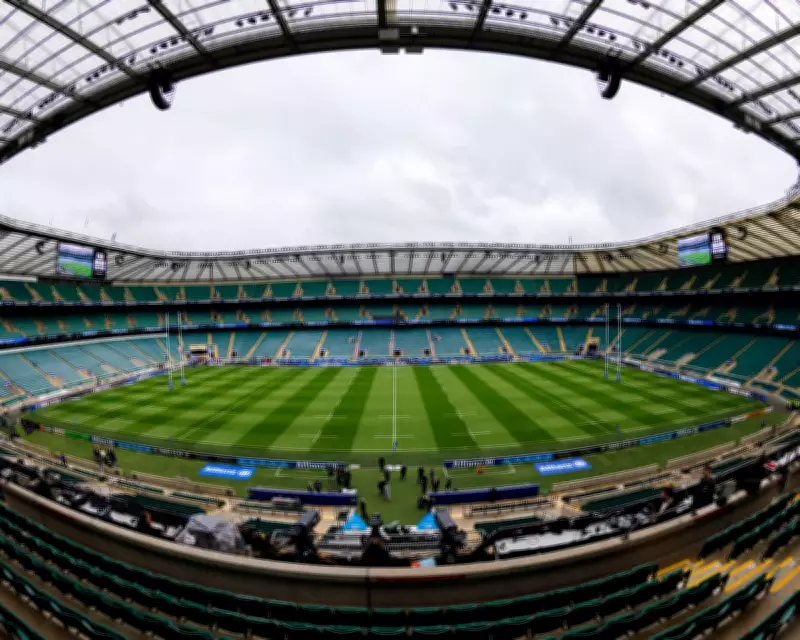
Twickenham Crackdown Sees 24 Fines for Public Urination After England-Wales Match
Unruly spectators at Twickenham faced a significant crackdown on antisocial behaviour during the recent England versus Wales Six Nations clash, with Richmond council issuing 24 fixed-penalty notices specifically for public urination. This revelation comes as the Rugby Football Union intensifies its efforts to persuade local residents to drop their opposition to plans that would increase the number of concerts held at the stadium each year from three to fifteen.
RFU's 'Good Neighbour' Strategy Amid Resident Concerns
The RFU is actively attempting to position itself as a 'good neighbour' to residents in the borough, aiming to alleviate concerns that have centred largely on the antisocial behaviour witnessed during England rugby matches. In a bid to demonstrate that resident worries are being taken seriously, the union recently hosted a drop-in event for the local community. Much of the resistance to the proposed concert expansion stems from firsthand accounts of misconduct, including public urination and other disturbances that occur on matchdays.
During the England-Wales game last Saturday, it is understood that the 24 fixed-penalty notices were handed out for urinating offences committed in various locations, such as front gardens, alleyways, main roads, and bushes. This occurred despite proactive measures to tackle the problem, including the installation of barriers in known hotspots and the deployment of plain-clothed officers and stewards to deter potential offenders. The standard fine for such an offence is £150, which reduces to £100 if paid within ten days.

Council Leader Issues Stern Warning to Rugby Fans
Councillor Gareth Roberts, leader of Richmond council, emphasised the council's stance, stating: "We love the fact that Twickenham is the home of English Rugby and that people come from round the world to visit our borough and watch a match, but rugby fans should take this as a warning. If we catch you using our borough as a toilet, we will fine you. No ifs, no buts." This firm message underscores the council's commitment to maintaining public hygiene and order in the area.
RFU's Broader Plans to Tackle Antisocial Behaviour
Last month, the RFU outlined comprehensive plans to address antisocial behaviour, focusing on strengthening coordination with relevant authorities. The union stated it is ensuring that such behaviour carries clear consequences, including collaboration with the Metropolitan Police, Transport for London, and Richmond council. This partnership aims to enable swift and appropriate handling of matchday issues, with fixed-penalty notices being issued for offences like public urination.
In a notable previous attempt to curb the problem, the RFU had considered using 'anti-pee paint' in its licence application. This specialised paint is designed to leave offenders covered in their own urine, serving as a deterrent. However, this measure was part of a broader application that faced setbacks.
Licensing and Planning Hurdles for Concert Expansion
When applying for a new licence in September, the RFU encountered resistance, as Richmond council decided that the current limit of three concerts per year—with only one not on a Saturday—must remain unchanged. The licensing subcommittee meeting heard 192 representations against extending the RFU's licence, compared to just 13 in favour. One representation highlighted: "The pavements and roads are unhygienic, and children are having to walk and scoot through dried urine and excrement," while another provided evidence of "urination and indecent exposure" on private property.
The RFU's push for more concerts is proceeding on two fronts: licensing and planning. After a setback with its planning application last summer, the union plans to reapply following the local elections in May, alongside a request for a new licence. In the interim, the RFU is on a charm offensive with local residents, pledging to "be the best neighbour we can be."

Upcoming Challenges and Key Dates
With only one more men's international match—against Ireland later this month—before the RFU resubmits its application to the council, the timing is critical. However, just five days before the local elections, Twickenham will host the annual Army versus Navy match, an event historically notorious for antisocial behaviour. This presents a potential challenge to the RFU's efforts to build trust and secure approval for increased concert activity at the iconic stadium.





