

Skiers Rally Behind Lindsey Vonn's Olympic Decision After Crash
Lindsey Vonn's fellow skiers have strongly defended her choice to compete in the women's downhill event at the Winter Olympics while managing a ruptured ACL. The American skiing legend crashed early in her run on Sunday, sustaining a fractured leg that necessitated an airlift from the course. While some social media users questioned her decision to race just a week after the knee injury, those within the skiing community have voiced unwavering support.
Understanding the Crash and Injury Context
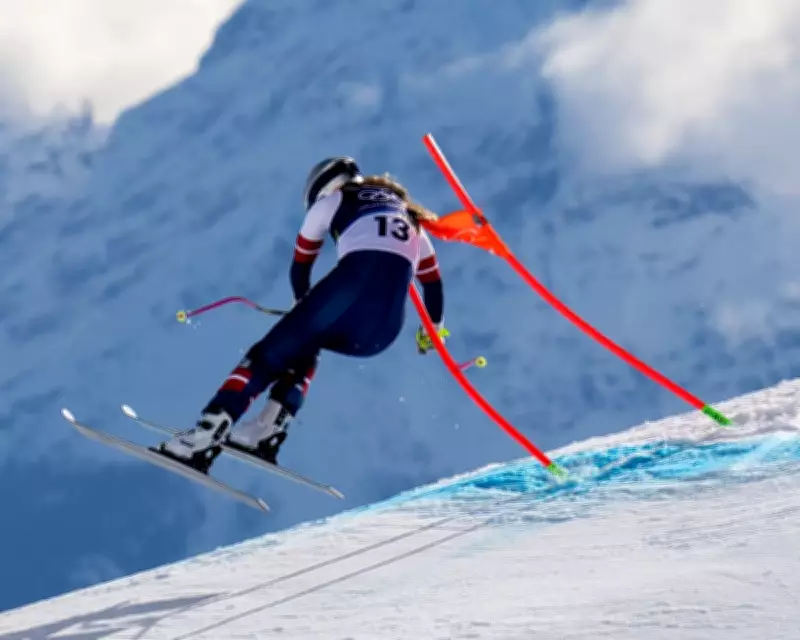
Vonn's US teammate, Keely Cashman, clarified the nature of the incident on Monday, stating, "People that don't know ski racing don't really understand what happened yesterday. She hooked her arm on the gate, which twisted her around. She was going probably 70mph, and so that twists your body around." Cashman, who experienced a severe crash herself five years ago, emphasized that the accident was unrelated to Vonn's ACL or knee, labeling contrary opinions as "totally incorrect."
This crash marked a violent conclusion to Vonn's unprecedented Olympic comeback bid. After a six-year retirement following knee replacement surgery, the 41-year-old had returned in 2025, achieving podium finishes in all five World Cup downhill races leading up to the Olympics, including two victories. However, the ACL rupture from a late January crash raised concerns about her safety as she pursued a second Olympic gold medal.

Support from the Skiing Community
Italy's Federica Brignone, a two-time world champion, dismissed the criticism, asserting, "It's her choice. If it's your body, then you decide what to do, whether to race or not. It's not up to others. Only you." Similarly, US teammate Kyle Negomir, a downhill specialist, supported Vonn's decision to aim for replicating her gold medal performance from the 2010 Olympics.
Negomir explained, "Lindsey's a grown woman and the best speed skier to ever do this sport. If she made her decision, I think she should absolutely be allowed to take that risk. She's obviously good enough that she's capable of pulling it off. Just because it happened to not pan out yesterday doesn't mean that it definitely wasn't a possibility that she could just crush it and have a perfect run."
Official Perspective on Athlete Autonomy
Johan Eliasch, president of the International Ski and Snowboard Federation, highlighted that competing with injuries is common among athletes. He stated on Monday, "I firmly believe that this has to be decided by the individual athlete. And in her case, she certainly knows her injuries on her body better than anybody else. And if you look around here today with all the athletes, the athletes yesterday, every single athlete has a small injury of some kind."
Eliasch further contextualized the accident, noting, "What is also important for people to understand, that the accident that she had yesterday, she was incredibly unlucky. It was a one in a 1,000. She got too close to the gate, and she got stuck when she was in the air in the gate and started rotating. No one can recover from that, unless you do a 360 ... This is something which is part of ski racing. It's a dangerous sport."
The defense from peers and officials underscores a broader principle in elite sports: athletes' autonomy in assessing their own risks and capabilities, especially in high-stakes competitions like the Olympics.






