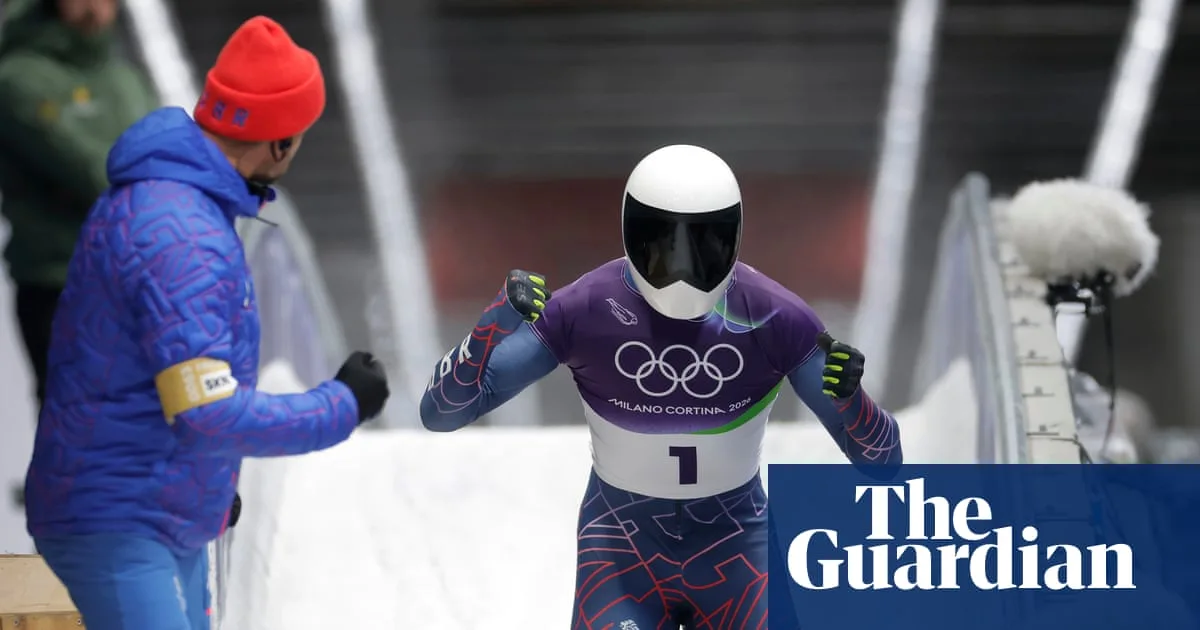
Secret Tech, Espionage and Marginal Gains: Why Team GB Are World-Beaters in Skeleton
In winter sports where a fraction of a second can mean the difference between winning and losing, staying a technological step ahead of the competition is vital. Former Olympic champions reveal British hopefuls for the 2026 Winter Games, highlighting how marginal gains—a concept popularised in cycling—apply equally to the high-octane world of winter sports.
The Cold War of Winter Sports
Dr Kate Baker, UK Sport’s director of performance, describes the battle to get ahead in sports like skeleton and bobsleigh as something of a Cold War. “It isn’t quite to the extent of hiding in bushes to spy on other teams, but espionage between nations is very real,” Baker told The Independent on the eve of the Games. “It's big business for some people, and we know how powerful sporting success is for a nation.”
She added, “We are an extraordinary nation in the way that we have consistently punched above our weight. Everyone wants to know what we're doing. The challenge for us as Great Britain is to evolve again and do something different and surprise everybody.”
Remarkable Success Against the Odds
This behind-the-scenes work has resulted in Team GB—a squad without its own sliding track—becoming the most successful nation in skeleton history, with 11 medals, five of them gold. At the recent Games, 29-year-old Matt Weston made history twice, becoming Britain’s first men’s skeleton Olympic champion and the first Briton to win two medals at a Winter Olympics, with mixed team gold.
His partner, Tabby Stoecker, is an Olympic champion on her first appearance, finishing fifth in the women’s event, with GB’s three female athletes all in the top 10. This marks the first time Britain has qualified three female athletes, showcasing the squad’s strength and depth.
Innovative Training and Equipment
British athletes spend only around two hours every year training on a sliding track, with the rest of the work done on the push track at the University of Bath and in the gym. Amy Williams, the Vancouver 2010 gold medallist, explained, “Yes, we do not have that obvious thing in front of us, an ice track, so we have always gone out and tried to get the world's best pushers, so we will get the best sprinters.”
She continued, “We do so much hard training in the summer months for that pure speed, power, explosiveness off the block, and then with really good equipment, with good coaching, trying to get as much ice time as you can. The combination of already being powerful and fast at the top gives you that good edge.”
Funding and Strategic Overhauls
After a disappointing outing in Beijing, where the team failed to bring home a medal for the first time in the sport’s Olympic history, GB revolutionised its skeleton programme. UK Sport invested £25.5m across winter sports for the 2022-26 cycle, with skeleton’s funding initially slashed to £4.7m before rising to £5.8m.
Key changes included bringing in radically superior equipment and investing in the expertise of Latvia’s six-time world champion Martins Dukurs as performance director. The GB squad also has its own wind tunnel at a secret location in Manchester, replicating the benefits seen in British Cycling.
The Expertise Race and Safe-to-Fail Approach
Baker emphasised that while it’s not an arms race, it is definitely an expertise race. “Our ability to spot things and opportunities and get on quickly is a super strength of Great Britain,” she said. “We have a safe to fail approach: have a go, if it doesn't work, rapidly iterate. And that's been a real step on for us, particularly in the winter sports space this cycle.”
She cited the new mixed team event, which made its debut in Milano-Cortina, as an area where GB quickly spotted potential to get ahead. “It's a fundamentally different skill set that the athletes will require. We spotted it. We got on it early, we invested, and we've built some systems that are enabling them to capitalise on that.”
Camouflage and Competition Tactics
The camaraderie within the close-knit team is also a major strength. Between them, Weston and teammate Marcus Wyatt won all seven rounds of the World Cup circuit. However, Baker was wary of revealing too much, noting, “You will notice that we've not been talking openly about what we've been doing for the last 18 months. We are working incredibly hard to create another step change for our nation – and we should talk about that another time!”
Skullduggery and espionage have been in the headlines, with incidents like an American skater accusing a Canadian coach of manipulation. Baker acknowledged, “I'm not aware of anyone being caught in the bushes around the push track in Bath. But there's a reality that when those athletes are competing on the World Cup circuit, if you look at that starting area, all of the sleds have to be lined up against each other. Everybody can see everything.”
She added, “We've been caught in previous Games where someone, another nation usually, has said, ‘hang on a minute, they're doing something interesting over there, we want that pulled into the marshal's office’, and then ensues some kind of investigation.” In the 2018 Games, other teams objected to GB’s aerodynamic skinsuits, but they were approved.
Looking Ahead
Now Britain has the edge in skeleton over nearly all other teams, and that advantage looks set to only grow. Imagine what Weston could have done in the controversial helmet banned on the eve of competition. As Baker concluded, while there’s no evidence of extreme espionage like drones over training, after GB’s peerless performances in Cortina, that may be the next step in this high-stakes winter sports arena.