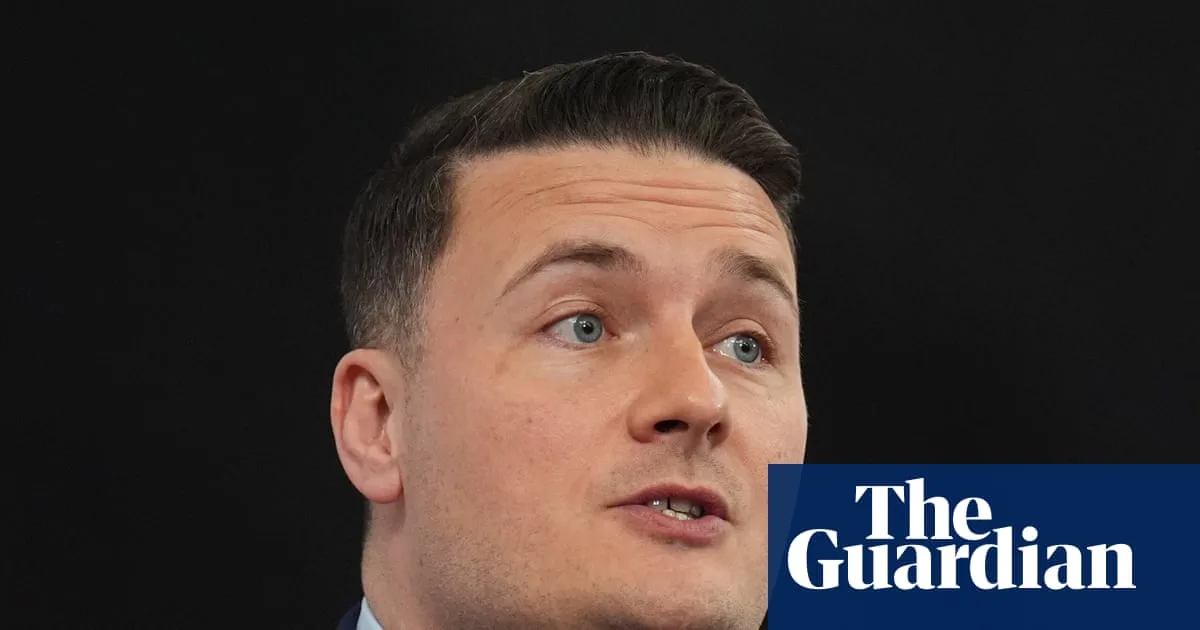
Dozens of MPs are opposing Wes Streeting’s decision to award himself the power to dictate what the NHS pays for drugs, amid growing concern the move may be illegal and benefit big pharmaceutical companies.
Cross-Party Opposition
Thirty-one MPs have signed a House of Commons motion voicing their disapproval of the health secretary being handed the power to override the National Institute for Health and Care Excellence’s (Nice) judgment on how much the NHS should spend on individual medicines. The signatories include members from Labour, Green, Liberal Democrat, Independent, Scottish Nationalist, and Plaid Cymru parties.
The MPs fear that the change is a “power grab” that undermines the role Nice has played since its creation in 1999 as the arbiter of which medicines constitute value for money for the NHS to buy – and thus which patients can receive – in England and Wales. Nice is widely viewed internationally as a model of how to protect against drug companies charging excessive prices.
Statutory Instrument and US Trade Deal
The motion, tabled by former Labour shadow chancellor John McDonnell, is a “prayer” that allows MPs to express disagreement with a statutory instrument – secondary legislation that does not require a vote. This statutory instrument recently gave Streeting the power to “direct Nice as to the applicable cost-effectiveness threshold to apply to a health technology undergoing appraisal” as part of the government’s drug-pricing deal with the Trump administration.
McDonnell said: “One of the express purposes of establishing Nice was to insulate the NHS from the powerful and well-resourced lobbying of the pharmaceutical industry. The changes the government are making to Nice as a result of the US pharmaceutical deal undermine the independence of Nice giving US big pharma the potential of immense influence over our drugs policies. This risks precious NHS resources being diverted away from life-saving practices and handed to drug companies instead, to the harm of patients.”
Helen Morgan, the Liberal Democrat health spokesperson, said Streeting had been given the power to direct Nice because Prime Minister Keir Starmer had caved in to “the bully in the White House”. She stated: “This change to Nice rules is clearly coming at the behest of Trump, not because the government thinks it will help patients.”
Government Defense and Concerns
Ministers have defended the deal as a way of helping British drug exports to the US avoid tariffs and providing patients access to potentially life-extending drugs that would otherwise be denied. However, the MPs have been joined in their concern by an unlikely ally: Andrew Lansley, the Conservative former health secretary, now a peer. He has tabled a “motion of regret” in the House of Lords warning that the regulations risk undermining Nice’s independence and appear to be incompatible with the Health and Social Care Act 2012, “which provides that a direction by the secretary of state must not relate to the substance of recommendations by Nice.”
The overall UK-US deal has caused growing alarm among health experts. The Health Foundation thinktank has warned that higher NHS spending on drugs will force it to make “difficult cuts” to other services that improve patients’ health more cheaply.
Economist Eric Yang said in a recent blog: “Given worsening funding pressures from higher demand and demographic changes, the NHS can ill afford to sacrifice resources for a higher drugs bill in the short term. Spending the NHS budget has always involved making difficult trade-offs, but the UK-US drug-pricing deal means trade-offs will now be even more difficult in the future.”
In a scathing editorial, Kamran Abbasi, the British Medical Journal’s editor-in-chief, stated that the deal would mean “the UK taxpayer will end up harming vulnerable people to boost the profits of already obscenely profitable drug companies. The UK’s Labour government is sacrificing the health and wellbeing of its population, and inevitably the most vulnerable in that population, to make trade deals that most benefit US companies and the US economy … This is sacrificing population health for corporate wealth, and it flies in the face of the government’s claim to be doing the best for the British people.”
Those remarks echo concerns raised last year by Dr Samantha Roberts, Nice’s then chief executive, who warned: “There are only so many taxpayer pounds. If you spend more money on medicines, it means something else is foregone. It could be a hip replacement, it could be a nurse.”
Official Responses
The Department of Health and Social Care denied that Nice’s freedom would be compromised. A spokesperson said: “There is a revolution taking place in medical science, and the secretary of state is determined to secure the fruits of this revolution for many, not just those who can afford to pay. We have taken action to make it easier to bring innovative medicines to the NHS, meaning thousands of patients will gain improved access to life-changing treatments. This includes recently approving a brain cancer drug for patients as young as 12. Nice’s independence is protected. It will continue to make its guidance and recommendations entirely free from political interference, as it always has, balancing the clinical effectiveness of a treatment with the cost to ensure taxpayers get a good deal.”
The Association of the British Pharmaceutical Industry (ABPI) also defended the change. An ABPI spokesperson said: “This change does not give any government minister the power to tell Nice what decisions to make. It does, however, make it clear that the government is responsible for setting the parameters within which Nice operates. Nice’s independence is retained, and this is critically important.”