

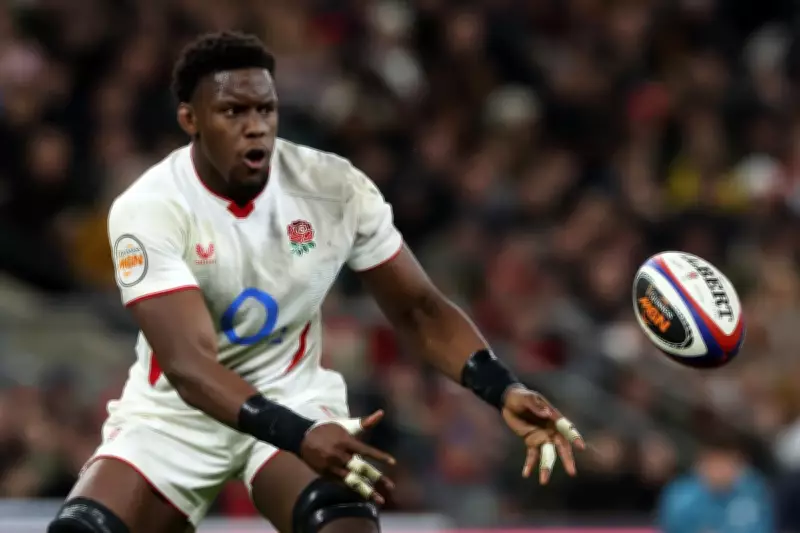
Maro Itoje Issues Stark Warning on Social Media's 'Corrosive' Effects Following Racist Abuse Incident
England rugby captain Maro Itoje has delivered a powerful warning about the profoundly damaging impacts of social media, describing it as "corrosive" for athletes and society at large. His comments come in response to the racist abuse targeted at Ireland lock Edwin Edogbo, which Itoje labelled "incredibly sad" and unacceptable.
Edwin Edogbo Targeted After International Debut
The Munster forward Edwin Edogbo, aged 23, faced a barrage of racist comments on social media platforms following his debut for Ireland in their Six Nations match against Italy. The Irish Rugby Football Union (IRFU) has launched an investigation into the abusive messages, with Ireland head coach Andy Farrell condemning them as "disgusting" in a public statement.
In response to the abuse, replies were disabled on a post celebrating Edogbo's first international cap on X, formerly known as Twitter. This incident highlights the ongoing challenges sports professionals face in the digital age, where public figures become vulnerable to anonymous online harassment.

Parallel Incidents in Football Highlight Wider Problem
Meanwhile, in European football, Real Madrid star Vinicius Junior was allegedly subjected to racial abuse by Benfica defender Gianluca Prestianni during a Champions League encounter. These parallel incidents across different sports demonstrate that racial discrimination remains a persistent issue in athletics, despite increased awareness and anti-racism campaigns.
Itoje reflected on these developments, noting that while such abuse is "terribly sad" and must be "condemned with full force," there has been some progress in how society addresses these issues. "Thirty years ago, that probably wouldn't have even made the press," he observed regarding the Vinicius incident. "The referee would have told him to get on with it. His teammates probably would have said that to him."
Itoje's Advice to Athletes on Social Media Use
Ahead of earning his 100th cap for England, Itoje offered candid advice to fellow athletes about navigating social media. While acknowledging that platforms can be "a force for good in many ways," he emphasized their potential for negativity and psychological harm.
"I would advise all top level athletes not to spend too much time on social media because it's really corrosive," Itoje stated. "Both from the negativity that's on there but as well as what it does to our brains. I think we're going to see in the coming years a huge amount of damage that has been done to us as humans and as a society as a result of social media in terms of brains and brain development."
The England captain described the "bipolar nature" of social media discourse, where "positive news tends to be extremely positive and negative news seems to be extremely negative." He warned against becoming "a slave to what other people say about you" through excessive engagement with these platforms.
Tools and Strategies for Athletes
Both England and Ireland's rugby squads have access to filtering tools that can help screen out abusive messages on social media. However, Itoje suggests a more fundamental approach: maintaining a healthy distance from these platforms while still maintaining a professional presence.
"As a modern athlete, you probably hurt yourself if you don't have a presence on it," he acknowledged. "It is up to you ultimately, but you should definitely have some form of presence on it but not to be governed by it, that is the thing. All of these tools we have at our disposal are not inherently bad in and of itself. It is how you use it."
Broader Context of Online Criticism in Rugby
Ireland head coach Andy Farrell had earlier in the week issued an emotional plea to what he termed "keyboard warriors" regarding their criticism of fly-halves Sam Prendergast and Jack Crowley. This broader context of online criticism affecting multiple players underscores the systemic nature of the problem.

Itoje concluded with a call for continued vigilance and effort: "We as a community need to keep on stamping this type of thing out. But I do also believe that we are moving in somewhat the right direction. But moving in somewhat the direction is not a given. It takes work and I think we all need to constantly remind ourselves of the work that we need to do."
The incidents involving Edogbo and Vinicius, combined with Itoje's warnings, highlight the complex relationship between professional sports, social media, and mental wellbeing in contemporary athletics.





