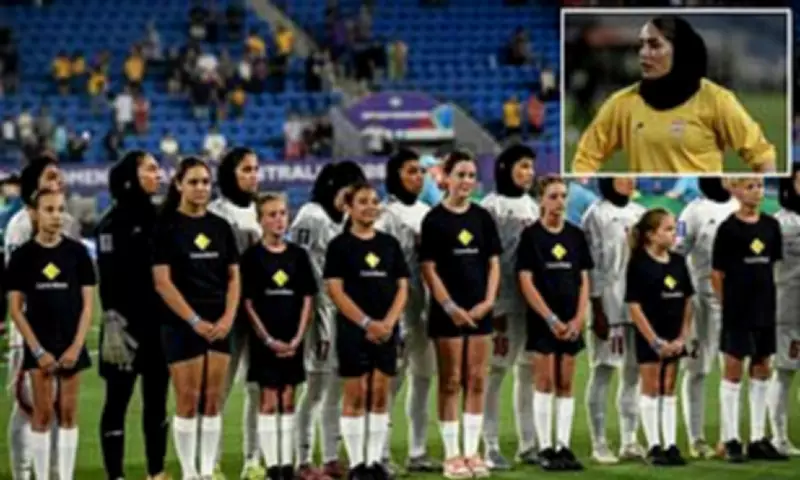
Iranian Women's Football Team Stages Silent Protest During Asian Cup Anthem
The Iranian national women's football team has made a powerful political statement by refusing to sing their country's national anthem before their opening match in the Asian Cup tournament. The incident occurred on Monday night at Cbus Super Stadium on Australia's Gold Coast, where the team faced South Korea in their first group stage game.
A Defiant Silence Before the Match
Clear video footage has emerged showing the entire Iranian squad standing in complete silence as the national anthem 'Mehr-e Khavaran' played through the stadium speakers. The players maintained their quiet protest throughout the anthem's duration, with some appearing to be holding back tears during the emotional moment. This act of defiance came just days after US-Israeli air strikes confirmed the killing of Iran's Supreme Leader Ayatollah Ali Khamenei, who had led the Islamic Republic since 1989.
Iranian coach Marziyeh Jafari was observed with a subtle smile on her face as her players remained silent during the anthem ceremony. The team went on to lose their match against South Korea 3-0, but the pre-game protest has drawn significant attention away from the football result itself.

Political Context and Press Conference Incident
The silent protest follows a recent press conference where team management abruptly shut down questions regarding the killing of Ayatollah Khamenei. The development comes amid escalating regional tensions, with Tehran launching counterattacks against several countries including Israel, the United Arab Emirates, and Bahrain in response to the strike that eliminated their supreme leader.
Veteran sports journalist Tracey Holmes commented on the protest, stating 'They have obviously taken strength from events unfolding in their country.' Holmes also noted the presence of Iranian supporters at the match flying the pre-Islamic Revolutionary flag featuring the traditional golden lion and sun symbol.
Football Community Reaction and Support
The Iranian team's silent protest has garnered widespread attention and praise from football commentators and the broader sporting community. Football analyst Lucy Zelic expressed solidarity with the players, adding 'Strength to their arms' in recognition of their courageous stance.
Australian Matildas captain Sam Kerr, whose team is scheduled to face Iran in their next match, acknowledged the difficult circumstances facing the Iranian players. 'Obviously it's really tough what's going on around the world,' Kerr told Channel 10. 'But you know, they're just young girls and young footballers. We'll treat the game like any other game, show the team the utmost respect and prepare properly.'
Historical and Cultural Context of the Anthem
Iran's current national anthem was adopted in 1990, composed by renowned musician Hassan Riahi with lyrics written by Sa'ed Bagheri. The anthem protest represents a significant symbolic challenge to the Islamic Republic's authority, particularly coming from a women's national team competing on an international stage.
Despite the ongoing conflict in the Middle East and the political tensions surrounding their participation, Iran remains committed to continuing in the Asian Cup tournament. Their next match against Australia's Matildas is scheduled for Thursday night on the Gold Coast, where all eyes will be watching to see if the team repeats their silent protest during the pre-match ceremonies.
The Asian Cup organizers have been contacted for comment regarding the political dimension of the tournament, but have not yet issued an official statement about the Iranian team's anthem protest or how they plan to address similar situations that may arise during the competition.