

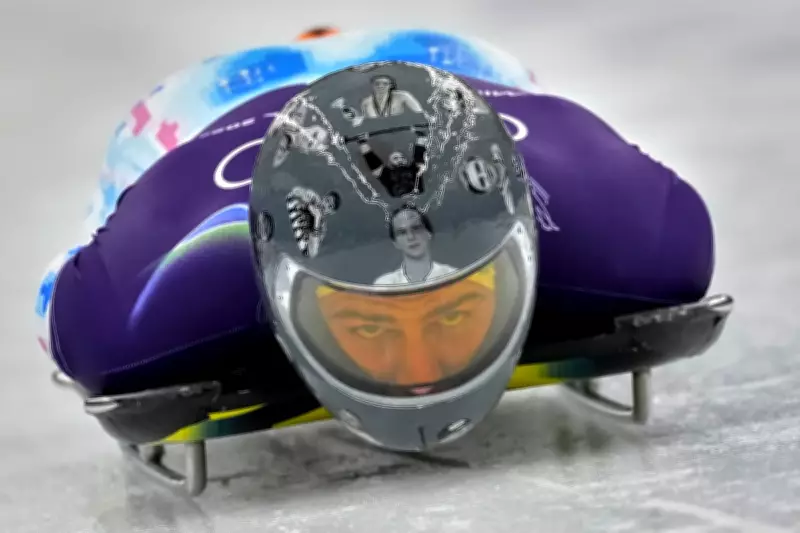
IOC Compromise Allows Armband but Bans Tribute Helmet for Ukrainian Skeleton Athlete
Ukrainian skeleton athlete Vladyslav Heraskevych has been granted permission to wear a black armband during competition at the Milan Cortina Winter Olympics, the International Olympic Committee announced on Tuesday. However, the IOC has firmly prohibited him from wearing a custom-painted helmet designed to honor Ukrainian athletes who have lost their lives in the ongoing war with Russia.
IOC Spokesman Defends Decision as Compassionate Compromise
IOC spokesman Mark Adams described the ruling as a balanced compromise, stating, "I think what we've tried to do is to address his desires with compassion and understanding." He emphasized that Heraskevych would still be free to express his views in other settings, such as press conferences and the mixed zone after events. "We feel that this is a good compromise in the situation," Adams added, noting that the armband exception is specific to Heraskevych's case and not a blanket allowance for all athletes.
Heraskevych Defies Ban in Training, Questions IOC Consistency
Despite the ban, Heraskevych wore the tribute helmet during his first training run on Tuesday, indicating that Ukraine may have filed an appeal. The helmet features the faces of several Ukrainian athletes killed since 2022, including figure skater Dmytro Sharpar, boxer Pavlo Ishchenko, and hockey player Oleksiy Loginov. Heraskevych expressed confusion over the decision, telling The Associated Press, "I cannot understand how this helmet hurt anyone. It's to pay tribute to athletes and some of them were medalists in the Youth Olympic Games. That means they're Olympic family."

He also raised concerns about inconsistency, noting that Russian flags, which were supposed to be banned, have been seen in the stands at some events. "We didn't violate any rules, and it should be allowed for me to compete with this helmet," he asserted.
Rule 50 Cited as Basis for Helmet Prohibition
The IOC cited Rule 50 of the Olympic Charter, which prohibits political, religious, or racial propaganda in Olympic venues, as the reason for banning the helmet. In a letter to the Ukrainian Olympic Committee, the IOC stated that Heraskevych would not be able to compete in the personalized helmet, though it did not specify rules for training runs. Adams clarified that if Heraskevych chooses to wear the armband, it must not include any text, and the exception is not intended to set a precedent for widespread use.
Ukrainian President and Past Protests Add Context
Ukrainian President Volodymyr Zelenskyy publicly supported Heraskevych's efforts, posting on Instagram to thank the athlete for "reminding the world the price of our struggle." Heraskevych, who served as a flag bearer for Ukraine at the opening ceremony, has a history of activism; at the 2022 Beijing Olympics, he displayed a sign reading "No War in Ukraine" after his final run, just days before Russia's invasion.
As Heraskevych prepares for more training runs on Wednesday and the men's skeleton race on Thursday, the debate over athlete expression and Olympic neutrality continues to unfold, highlighting the complex intersection of sports and global conflicts.






