

Household Items Become Curling Stones in Creative Winter Olympics Trend
Social media platforms are currently ablaze with a delightful and inventive trend, as people worldwide are transforming everyday household items into makeshift curling gear. This surge in creativity coincides with the ongoing Winter Olympics, where top curlers are showcasing their skills on the international stage.
From pots and pans to mop buckets and even babies in car seats, individuals are demonstrating that almost anything can serve as a curling stone with a bit of imagination. American curler Tara Peterson noted, "Every four years, it blows up. Everyone's like, 'We want to do it,' and then, yes, they get creative with things, so it's awesome."
Viral Videos Showcase Unconventional Curling Attempts
In one particularly amusing video, two adults clad in jackets enthusiastically push a baby in a car seat across an icy surface, celebrating with a chest bump. Another clip features popular Swedish comedian Mans Moller, who dons a wig reminiscent of Swedish mixed doubles champion Isabella Wrana, sliding pans into each other while shouting "CUUUURL!" His outdoor setting adds a nostalgic touch, harking back to the traditional origins of curling.

Further examples include Italian grandmothers in the Puglia region maneuvering a silver pot along a stony courtyard using broomsticks as makeshift sweepers. In a hair salon in Sundsvall, Sweden, a stylist tosses hair products toward a colleague, yelling "Curl!" only to express mock frustration when the colleague approaches with a curling iron instead of a broom.
Essential Equipment for Proper Curling
Despite these valiant and humorous efforts by the public, professional curlers emphasize that specialized equipment is crucial for performing the sport correctly. This includes a sheet of pebbled ice and specific gear designed for optimal performance.
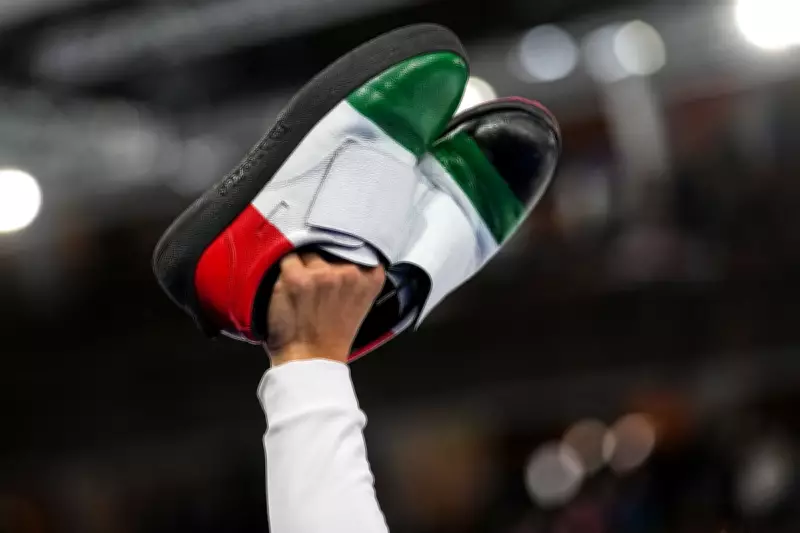
- Curling Shoes: Normal sneakers are unsuitable as they cause slipping on ice. Curling shoes feature grips integrated into the soles or as attachable straps. Costs can reach up to $700, with styles ranging from plain black designs to more casual sneaker-like options, such as those worn by American curler Taylor Anderson-Heide.
- Curling Brooms: Unlike household brooms, curling brooms utilize carbon fiber rods and nylon pads instead of wooden or plastic rods and straw bristles. Olympic-level models cost between $200 and $250. The lightness of the broom directly affects a curler's control over the stone's speed and trajectory, with lighter brooms enabling faster sweeping and more effective ice pebble melting.
Sweeping technology has advanced significantly, leading to the "Broomgate" scandal in 2015. High-tech brooms that granted excessive control to sweepers, diminishing the importance of the thrower's skill, were subsequently banned by World Curling. The organization now enforces strict regulations on permissible broom designs.
The Real Curling Stones: A Legacy from Scotland
While household items can serve in a pinch, they pale in comparison to the official curling stones used at the Olympics. All stones in the current Games are crafted from super-dense granite sourced from the uninhabited isle of Ailsa Craig, located 10 miles off the coast of Scotland. Manufactured by Kays Curling, these stones have a storied history dating back to the first Winter Olympics in Chamonix, France, in 1924, initially thought to be an exhibition event but later confirmed as official. The company has continued producing stones for the Games since curling's return as a medal sport in Nagano in 1998.
This trend highlights the public's enthusiasm for curling, blending humor with a genuine appreciation for the sport's intricacies and traditions.






