

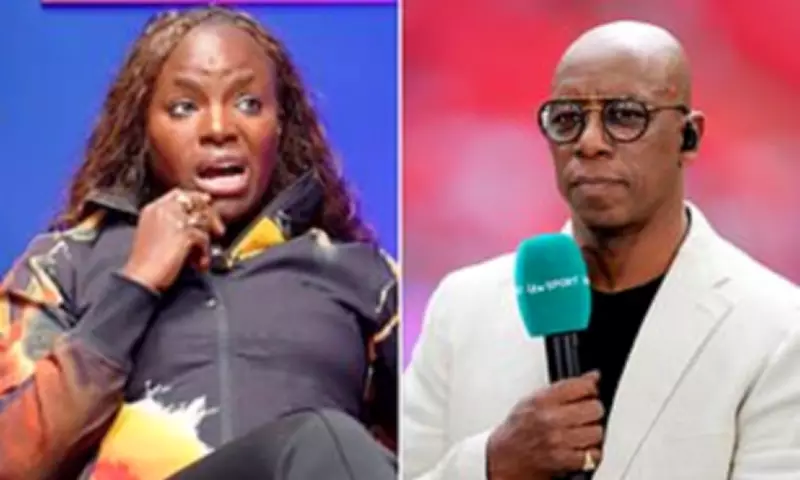
Eni Aluko Escalates Feud with Ian Wright Over Alleged Lack of Support
The ongoing public dispute between former England footballer Eni Aluko and broadcasting colleague Ian Wright has intensified dramatically this week. Aluko has launched fresh accusations against the Arsenal legend, claiming he failed to act as a genuine ally during what she describes as "the most difficult time" in her broadcasting career.
Contract Controversy and Alleged Betrayal
During the second part of her appearance on the 90s Baby Show aired on Monday, Aluko revealed specific details about her contract situation with ITV. She explained that following the men's European Championship, the broadcaster informed her they could not extend her punditry contract. According to Aluko, ITV officials told her Wright's contract was their priority, and she would only receive "call-up" opportunities when he was unavailable.
"I met with Ian's agent face-to-face," Aluko recounted. "I was vulnerable. I said 'Listen, I need your help, I need Ian's influence.' I fully expected Ian to use his influence to keep me in the game. I've seen him do it with others, he did it with Gary Lineker at the BBC."

Aluko claims that after waiting a month for follow-up, she received a dismissive response from Wright's agent indicating nothing could be done. This experience, she argues, contradicts Wright's public image as an advocate for women's football and racial equality in broadcasting.
The Core Complaint: Sacrifice Versus Self-Interest
Central to Aluko's criticism is her belief that true allies should demonstrate willingness to sacrifice opportunities for others. "That's what I expect from an ally - sacrifice," she stated. "You can't have it both ways, you can't have this brand that says ally, that's not my experience of you. When it comes down to it, you never really tried."
The 38-year-old former striker expressed particular frustration that Wright continued working regularly while she remained off-screen. She suggested he could have voluntarily stepped back from some broadcasts to create space for her, especially given her significance to women's football representation.
Gatekeeping Debate Divides Broadcasting Community
Aluko's comments have sparked wider debate about gender representation in football punditry. Her assertion that "the women's game should be by women, for women" has drawn criticism from fellow broadcaster Laura Woods, who described the phrase as "one of the most damaging" she's heard.
Woods, who hosted ITV's coverage of England Women's successful European Championship defence last summer, argued that such thinking "will drag women's sport backwards." She emphasized the importance of male engagement, stating: "We want to encourage little boys and men to watch women's football too, not just little girls and women. And when they see someone like Ian Wright taking it as seriously as he does - they follow suit. That's how you grow a sport."
Historical Context and Previous Apology
This latest controversy follows Aluko's initial criticism of Wright ten months ago, when she suggested he needed to be more aware of "how much he's doing in the women's game." She subsequently apologized publicly and privately for those comments, describing them as a "mistake."
However, Aluko now claims Wright's response to her apology lacked the "grace and allyship" he has shown others. She revealed on Instagram that she hasn't worked alongside Wright since their public fallout began, despite being open to reconciliation.
Representation Statistics Highlight Systemic Issues
Aluko provided specific examples to illustrate her concerns about representation. She noted that during last year's Women's European Championship final, two of six main punditry positions across ITV and BBC were occupied by men - Wright and former Manchester City defender Nedum Onuoha.
Meanwhile, she and fellow former England international Fara Williams, who together hold nearly 300 international caps, watched from the stands. "I have never done a final," Aluko lamented, "and I am probably going to struggle to think of any woman, female pundit, who has done a men's major final."

Industry Response and Future Implications
The broadcasting industry now faces difficult questions about representation, opportunity, and what constitutes genuine allyship. While Aluko insists she isn't advocating for complete exclusion of men from women's football coverage, she believes roles need clearer definition and women should dominate coverage of their own sport.
Wright's representatives have been contacted for comment regarding Aluko's latest allegations. The former striker has yet to respond publicly to the specific claims about his alleged failure to support her contract negotiations with ITV.
This ongoing dispute highlights broader tensions within sports broadcasting as women's football continues its rapid growth. Questions about who should tell women's football stories, how opportunities are distributed, and what responsibilities established figures have to support emerging talent remain unresolved and increasingly contentious.





