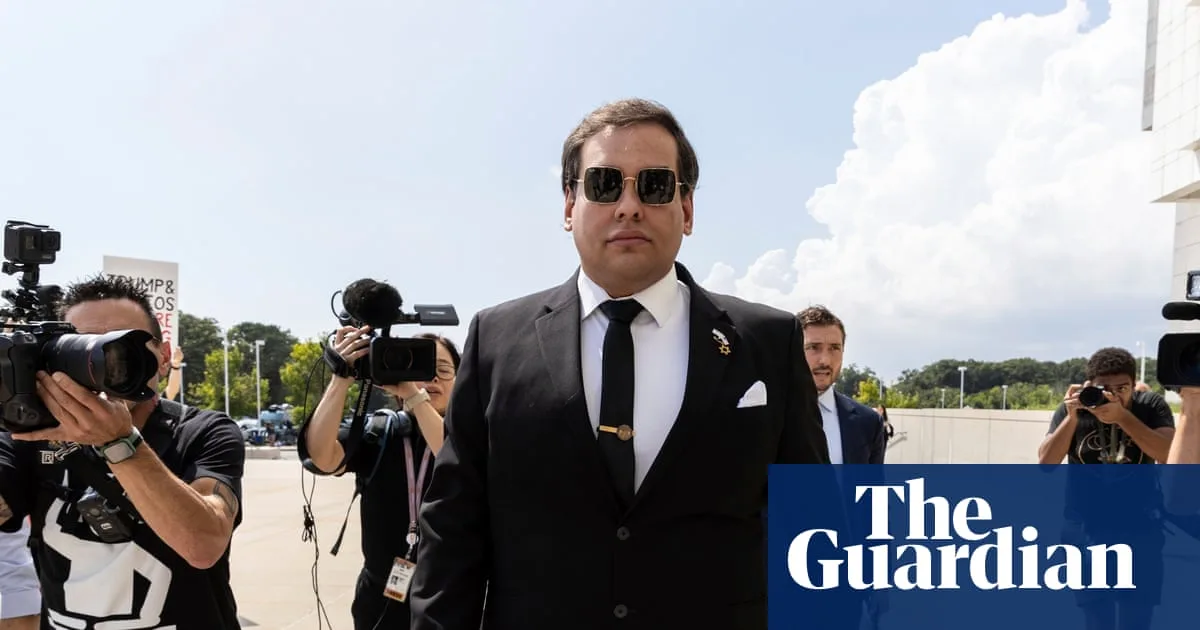
Federal authorities are investigating whether former US congressman George Santos engaged in insider trading by betting on his own attendance at President Trump's State of the Union address, according to multiple news outlets. The probe focuses on a wager Santos allegedly placed on Kalshi, an online prediction market, over whether he would attend the February speech.
Santos had publicly stated his intention to attend the event on social media before later claiming travel issues prevented him. Kalshi flagged the trade to the Commodity Futures Trading Commission (CFTC), and the Department of Justice is now investigating, anonymous sources confirmed.
The investigation comes amid broader scrutiny of prediction markets like Kalshi and Polymarket over concerns about insider trading. In April, Kalshi fined three congressional candidates for betting on their own races, and a US soldier was arrested for bets on Polymarket regarding the capture of Venezuelan President Nicolás Maduro.

When asked by NPR if he had a Kalshi account, Santos replied: 'I'm not saying yes. I'm not saying no.' He later dismissed the reports on social media, writing: 'Business as usual on my end haters!'
Santos, who represented New York's third district, was expelled from Congress in December 2023 after a House ethics report found he misused campaign funds. In April 2025, he was sentenced to seven years in prison for wire fraud and identity theft, but had his sentence commuted by President Trump months later.