

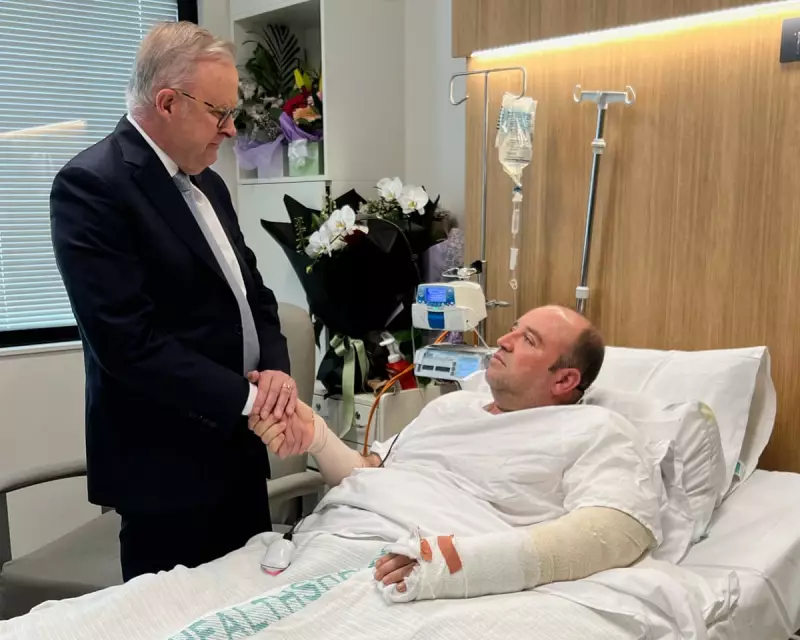
Prime Minister Anthony Albanese has met with one of the heroes of the Bondi beach terror attack, Ahmed al-Ahmed, at St George Hospital in Sydney. The visit came as the political fallout from Sunday's deadly shooting intensifies, sparking a fierce national debate on gun control and antisemitism.
Hospital Visit Highlights Bravery and Political Challenge
On Tuesday, a visibly moved Albanese visited the hospital room of Ahmed al-Ahmed, 44, who was shot after heroically tackling one of the gunmen during the attack at Westfield Bondi Junction. The Prime Minister praised al-Ahmed's strength, telling him "Your heart is strong," despite the victim facing serious surgery for his bullet wounds.
This act of bravery stands in stark contrast to the political challenges now confronting the Albanese government. The attack, described as Australia's deadliest massacre since Port Arthur in 1996, has exposed deep political divisions. The usual bipartisan spirit following a national tragedy has been notably absent, with the Coalition criticising the government's pace in responding to antisemitism.

Gun Law Reform Becomes Immediate Priority
In the wake of the violence, Albanese has made tightening firearms laws an immediate priority. This includes plans to establish a national gun register by 2026, a measure called for since the Hoddle and Queen street massacres 35 years ago. Proposed changes would see limits on the number of firearms an individual can own, with licences restricted to Australian citizens and not issued in perpetuity.
However, the path to reform is fraught. Former Prime Minister John Howard, who ushered in sweeping changes after Port Arthur, has labelled the current push "a diversion". The Coalition, led by Opposition Leader Sussan Ley, has focused criticism on the government's handling of antisemitism, offering only qualified support for the gun law changes. One Nation leader Pauline Hanson publicly opposed the move, posting a photo of herself shooting a gun on Tuesday.
Antisemitism Report and Security Questions Loom
The government is also under pressure regarding antisemitism. The Coalition has attacked Albanese for not yet formally responding to a review by special envoy Jillian Segal, presented five months ago. Critics, including former treasurer Josh Frydenberg and Israeli Prime Minister Benjamin Netanyahu, argue the PM was too slow to act after the 7 October 2023 Hamas attacks, leaving Jewish communities feeling exposed.
Segal's report proposes a government definition of antisemitism, monitoring media for "false or distorted narratives," and cutting funding to institutions failing to tackle antisemitism as a last resort. Meanwhile, serious security questions are being asked. Reports suggest the alleged gunmen may have travelled to the Philippines for military-style training, and police are investigating how someone previously interviewed by authorities over radical links allegedly accessed a cache of weapons.
As Bondi mourns, Albanese's political strength in navigating gun reform and community cohesion will be tested as severely as the physical bravery shown by citizens like Ahmed al-Ahmed during the attack itself.






