

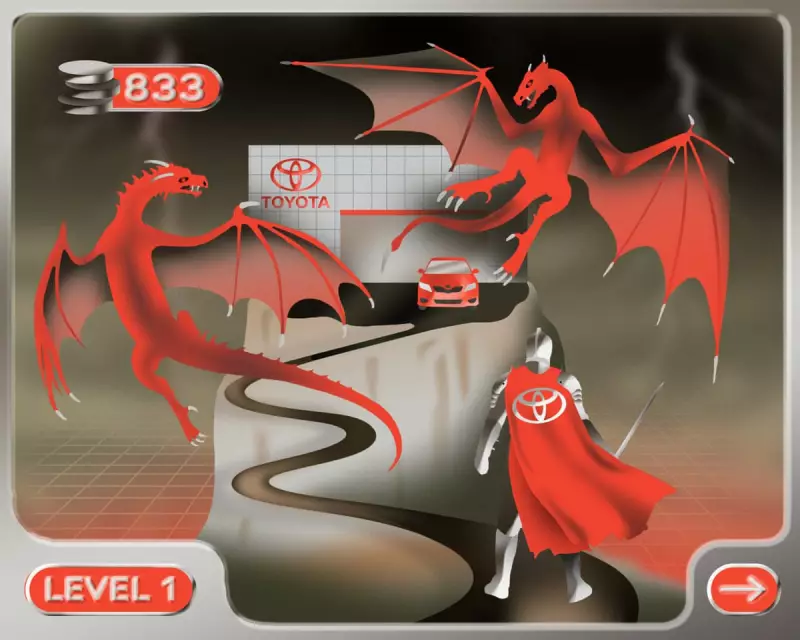
In a striking blend of corporate advocacy and digital entertainment, Toyota, the world's largest automaker, is deploying retro-style video games to mobilise its American workforce to lobby politicians, primarily against stricter environmental regulations. An investigation by the Guardian reveals the existence of an internal platform called 'Toyota Policy Drivers', where employees earn points and prizes for engaging with company political messaging and contacting lawmakers.
The Gamified Lobbying Platform
The platform features games with names like Star Quest, Adventure Quest, and Dragon Quest, which resemble popular 1990s graphic adventures. Through these games, tens of thousands of workers across Toyota Motor North America, including those at its 11 US manufacturing plants and its finance arm, are encouraged to participate. Points are awarded for tasks such as listening to corporate recordings from company lobbyists and taking quizzes on policy. These points can be redeemed for rewards ranging from stickers and T-shirts to grand prizes like trips to Washington DC.
"By joining forces, we can do a better job of telling Toyota's story," the company states on the platform, urging 'Policy Drivers' to contact members of Congress, state lawmakers, and other officials. The initiative is presented as a voluntary programme, with Toyota asserting that participation does not affect job performance reviews.

Targeting Environmental Regulations
The corporate goals promoted through this gamified system are clear. Toyota has used Policy Drivers to rally workers against key Biden-era environmental policies. This includes urging them to demand changes to strengthened auto emissions targets, which the company labels "unrealistic and unfair" to hybrid vehicles—a market it dominates. In April, Politico reported the platform was also used to push back against California's pioneering 2035 ban on new petrol-powered car sales.
Stephen Ciccone, Toyota's long-time vice-president of public affairs for North America, features prominently in platform content. In a speech shared with workers, he called a zero-emission vehicle mandate "totally absurd" and described himself as a "wartime consigliere" for the company. He credited dealer and employee advocacy with helping to "soften" federal emissions rules for the years 2027-2030.
"The government has more ability to disrupt our business than our competitors," Ciccone told an audience at a dealer conference in Las Vegas.
Contradiction and Criticism
This aggressive lobbying stands in stark contrast to Toyota's public image as a green automaker committed to the Paris Agreement and a 2050 carbon-neutral pledge. Greenpeace found Toyota's 2023 emissions exceeded those of the entire nation of Australia. Furthermore, watchdog InfluenceMap in 2021 ranked it the third-most obstructive company globally on climate policy, behind only Chevron and Exxon.
Climate campaigners have reacted with dismay. "It is surprising and sickening and dystopian to see an automaker operating like this, literally making a game out of poisoning communities and accelerating climate change," said Adam Zuckerman of the non-profit Public Citizen. Katherine Garcia from the Sierra Club accused Toyota of "greenwashing," stating its lobbying "undermines some of the most important regulations of our day."
The Wider Trend of Employee Mobilisation
Toyota's tactics are part of a decades-long trend termed "employee mobilisation," where US corporations enlist their workers in political advocacy. With the rise of the internet, platforms like Policy Drivers allow for coordinated, nationwide campaigns. Experts note such employee advocacy is considered highly effective by corporate managers, often ranking above political donations in perceived influence.
Alexander Hertel-Fernandez, author of *Politics at Work*, noted that while the practice began in the 1970s, the gamification element is novel. He expressed concern that despite company assurances, workers' structural dependence on their employer may create implicit pressure to participate. "In the absence of public policy, I worry that workers may feel pressure to participate," he said.

When approached for comment by the Guardian, Toyota declined to respond. The company maintains its support for "practical and sustainable" emissions reduction through a vehicle mix including hybrids, and says its advocacy aims for "predictable, technology neutral" regulations.





