Michael Dell's $6.25bn 'Trump Accounts' Donation Sparks Influence Debate
Dell's $6.25bn gift to Trump Accounts raises lobbying concerns

The intersection of vast wealth, political access, and charitable giving was thrust into stark relief this week following a monumental announcement at the White House.

A Record Donation Amid Political Fanfare

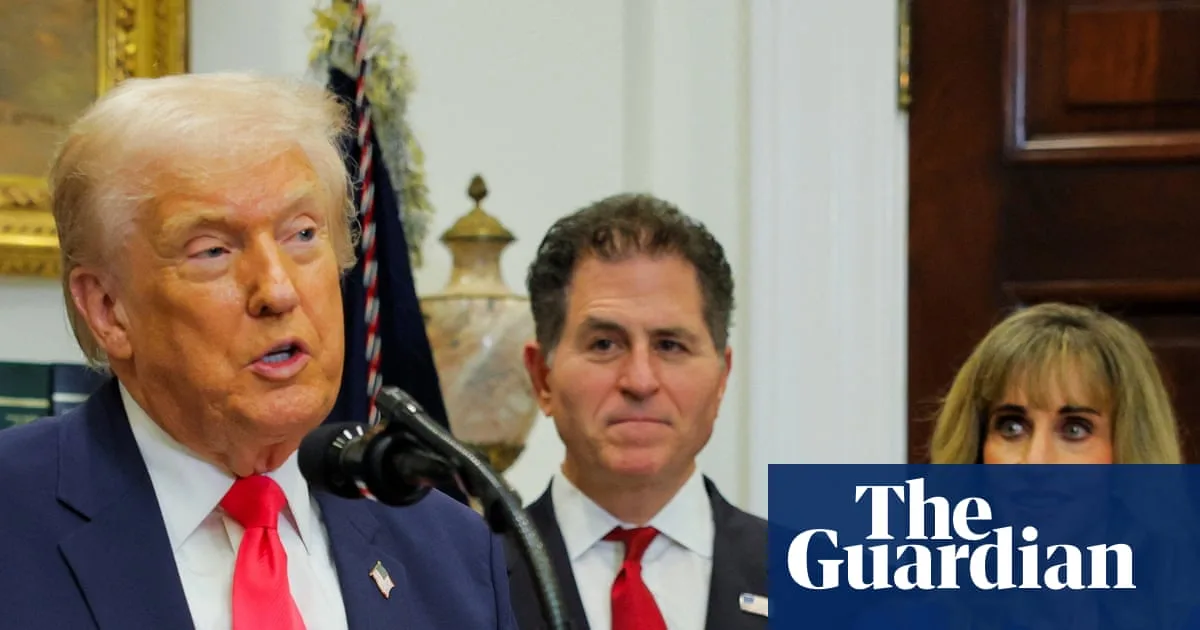
On 2 December 2025, former President Donald Trump, flanked by Michael Dell, the CEO of Dell Technologies, and his wife Susan Dell, unveiled a staggering philanthropic pledge. The Dells committed $6.25 billion to the so-called "Trump Accounts," a federal programme established under Trump's Big Beautiful Bill Act. The scheme deposits $1,000 into an account for every child born during his presidency.

This contribution, earmarked for 25 million children, stands as one of the largest single philanthropic donations in American history. Despite its scale, Michael Dell was quick to assert its non-partisan nature, telling the New York Times, "I don't think this is in any way a partisan activity."

Philanthropy or Political Currency?

However, the gargantuan gift has intensified scrutiny over whether modern philanthropy, particularly from the ultra-wealthy, functions less as pure charity and more as a sophisticated tool for gaining access, favour, and influence with those in power.

The move follows a familiar pattern among Trump's billionaire backers. It recalls Timothy Mellon, who donated $130 million to pay troops during a government shutdown and was hailed as a "patriot" by Trump. Similarly, a cohort of tech executives contributed $1 million each towards Trump's inauguration, and crypto magnates helped finance a $300 million White House ballroom.

This trend is not a Trump-era invention. Academic research has long documented the strategic alignment of corporate charity with political objectives. A pivotal study titled Tax-Exempt Lobbying: Corporate Philanthropy as a Tool for Political Influence found that large corporations often direct donations to charities linked to members of Congress, particularly those on committees relevant to their business.

The evidence is compelling:

  • Corporate foundations donate more in districts where their Political Action Committees (PACs) also contribute.
  • Giving increases when a district is represented by a member on a key committee and decreases when that member leaves Congress.
  • A non-profit is over four times more likely to receive grants if a politician sits on its board.

The Systemic Subsidy of Influence

This mechanism is underpinned by the US tax code, which provides substantial breaks for charitable giving. Critics argue this amounts to a public subsidy allowing the wealthy and corporations to funnel money into pet projects that offer returns—be it prestige, regulatory goodwill, or political access—free from democratic oversight.

With total US charity hovering around $592 billion annually (roughly 2% of GDP), the scale of this tax-advantaged influence is significant. The issue is magnified as giving becomes dominated by the ultra-rich, who increasingly fund speculative, long-term ventures over immediate, measurable public good.

Mark Zuckerberg's recent pivot of his philanthropic arm towards the intersection of biology and AI, abandoning earlier work in housing and education, exemplifies this "effective altruism" trend favouring distant, sci-fi futures over present crises.

While Dell's $250 per child is a present-day donation, analysts question its transformative potential compared to bolstering existing mechanisms like the child tax credit. Ultimately, the debate ignited by this $6.25 billion gift is less about the donor's intent and more about a system that permits philanthropy to be seamlessly dressed as generosity while functioning as a powerful channel for political influence.




