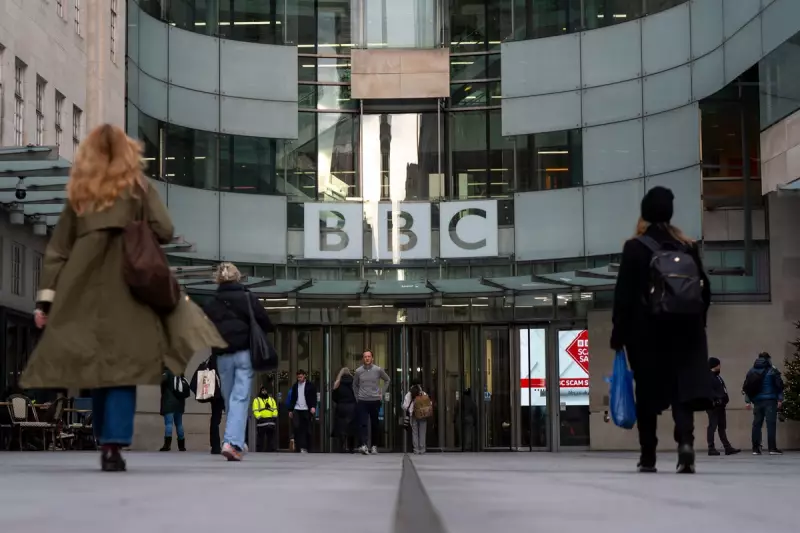
Former US President Donald Trump has initiated a staggering $10 billion lawsuit against the BBC, marking the latest media organisation to be targeted by his litigious strategy. The case, filed in a Florida court, centres on claims of defamation and violations of trade practices related to a Panorama episode broadcast in October 2024.
The Core of the Legal Dispute
The legal action stems from a Panorama episode that included a misleadingly edited clip of Trump's speech from 6 January 2021. The BBC has acknowledged that the footage spliced together two segments of his address that were originally delivered 50 minutes apart. The fallout from the programme was significant, leading to the resignation of two BBC executives. Trump had previously threatened a $1 billion suit if the broadcaster did not retract the episode.
To succeed in a defamation claim, Trump would need to prove the broadcast contained false allegations that damaged his reputation. However, legal experts point to considerable obstacles. Trump's existing reputation is cited as a major hurdle, given past court findings on fraudulent conduct, a sexual assault allegation (subject to ongoing litigation), and impeachment for inciting an insurrection, albeit followed by an acquittal.

Furthermore, proving reputational harm is complicated by the fact that Trump won the 2024 US presidential election just two weeks after the Panorama broadcast aired. Both English and US law also offer 'truth' defences, which can protect a defendant if the core allegation – in this case, that Trump's speech contributed to the Capitol storming – is substantially true.
Jurisdictional Hurdles and Legal Frameworks
The choice of where to sue is critical. While English defamation law is often considered more claimant-friendly, Trump's claim is now time-barred in the UK. Claims must be brought within one year of publication, and the October 2024 broadcast deadline has passed. Trump has previously attempted, unsuccessfully, to use data protection law in the UK to circumvent this shorter limitation period.
By filing in Florida, Trump faces the formidable free speech protections entrenched in US law, especially for public figures. The landmark 1964 Supreme Court case, New York Times v. Sullivan, established that public officials must prove 'actual malice' – meaning the defendant knew the statement was false or acted with reckless disregard for the truth. This high bar makes defamation cases notoriously difficult for politicians to win.
The BBC has stated in correspondence to Trump's lawyers that it did not distribute the Panorama episode on its US channels and that the film on iPlayer was geo-restricted to UK audiences only, potentially challenging the Florida court's jurisdiction.
The Reality of Strategic Lawsuits Against Public Participation
Beyond the letter of the law, the case exemplifies the use of Strategic Lawsuits Against Public Participation (SLAPPs). These are legal actions, often with dubious merit, filed to burden, intimidate, and silence critics through the threat of overwhelming legal costs. Experts note that such threats serve as potent public relations tools for politicians, undermining public trust in journalism.
Trump has a documented history of deploying this tactic, having sought enormous sums from outlets like the New York Times, Wall Street Journal, CBS, and ABC. CBS and ABC reportedly paid millions to settle their cases. The threat places the BBC in a precarious position, forcing it to weigh a strong legal defence against the immense financial and operational strain of a protracted lawsuit, especially amid political pressures and constrained public funding.
Ultimately, while the BBC may have a robust defence on paper, the practical reality of SLAPP suits means the corporation must make a critical decision: whether to stand firm and fight the claim or seek an early settlement to avoid the draining costs of litigation.