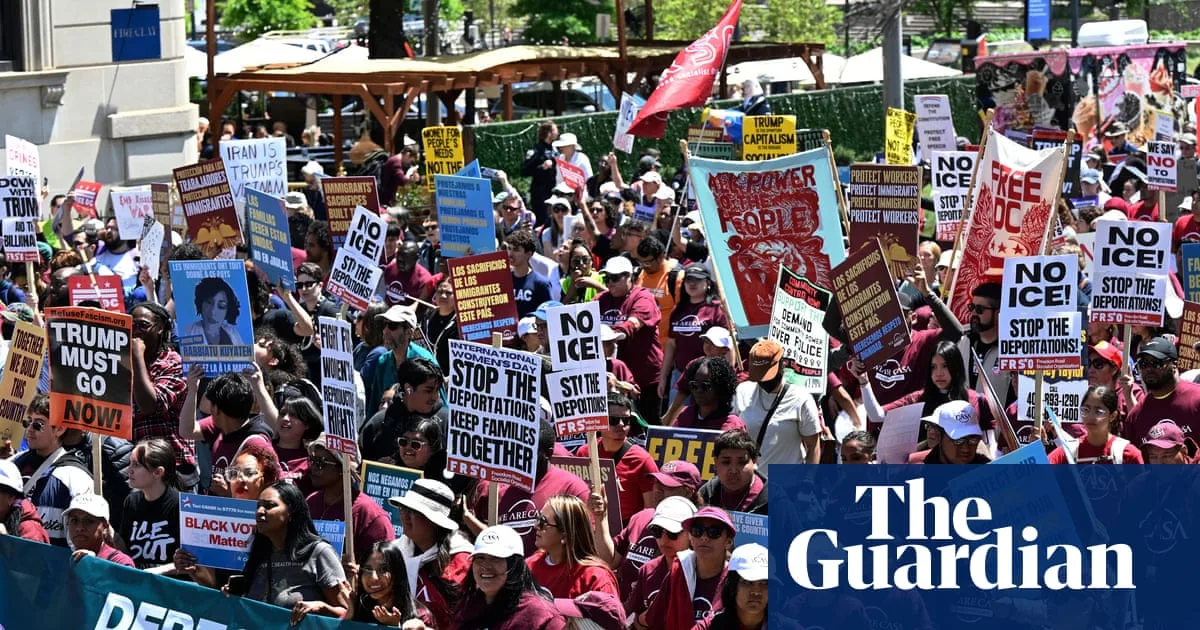
Minnesota Economic Blackout: 'No Work, No School, No Shopping' Protest Against ICE
A powerful economic blackout protest, dubbed the 'Day of Truth & Freedom', was initiated across Minnesota on Friday, as community leaders, faith groups, and labor unions united in a bold demonstration against the activities of Immigration and Customs Enforcement (ICE) in the state. The protest, organised under the slogan 'no work, no school, no shopping', aims to bring daily life to a standstill in a dramatic show of solidarity and dissent.
Demands for Accountability and ICE Withdrawal
The protestors have issued a series of clear and uncompromising demands to federal authorities. These include:
- The immediate withdrawal of ICE from the state of Minnesota.
- Legal accountability for the ICE officer responsible for the killing of Renee Good, an unarmed woman shot by a federal immigration officer in Minneapolis earlier this month.
- An end to additional federal funding being allocated to ICE.
- A full and independent investigation into ICE for alleged human rights abuses and constitutional violations.
This action has gained significant momentum in the wake of Good's death, which has galvanised local communities and sparked widespread outrage.
Widespread Community and Institutional Support
The protest has garnered substantial backing from a diverse coalition of local institutions and businesses. Dozens of Minnesota businesses have announced temporary closures in solidarity with the blackout. Furthermore, the Minneapolis City Council has formally endorsed the day of action and the accompanying general strike, lending official weight to the grassroots movement.
The day's events are set to culminate in a major march through downtown Minneapolis, scheduled for 2pm local time. Organisers have emphasised their commitment to braving the extreme weather conditions, with forecasts predicting dangerously cold temperatures of around -10°F and wind chills as low as -20°F.
'We are a northern state, and we are built for the cold, and we are going to show up,' stated Chelsie Glaubitz Gabiou, president of the Minnesota Regional Labor Federation, AFL-CIO. She urged observers to pay attention not just to the march itself, but to the countless individual stories of solidarity unfolding across the community.
Labour Unions and Worker Solidarity
The protest has received a major endorsement from the Minnesota AFL-CIO, the state's federation representing over 1,000 affiliated local unions, alongside dozens of other labour organisations. This institutional support underscores the depth of feeling within the workforce.
Kieran Knutson, president of Communications Workers of America Local 7250 in Minneapolis, explained the motivation behind the action. 'I think what generated the idea for this action comes out of the need to figure out what we can meaningfully do to stop it,' he said, criticising the state government for failing to provide a path to halt what he described as ongoing 'attacks and violence'.
This sentiment is echoed on the ground. A childcare worker in Minneapolis, who requested anonymity to protect the immigrant families they serve, detailed their decision to shut down for the day. After consulting with the families of the children in their care, they received overwhelming support for the action, even from those who rely on their services to work.
Federal Response and Escalating Tensions
The protest occurs against a backdrop of heightened federal immigration enforcement in Minnesota. The Department of Homeland Security (DHS) claims to have made approximately 3,000 arrests in the state over the past six weeks. In a significant escalation, the Trump administration has dispatched 3,000 immigration officers to Minnesota, and the US Army has placed 1,500 soldiers on standby for potential deployment.
A DHS spokesperson responded critically to the economic blackout, questioning the motives of the labour leaders involved. 'This is beyond insane. Why would these labor bosses not want these public safety threats out of their communities?' the spokesperson said in an email, accusing the organisers of attempting to protect criminals.
The 'Day of Truth & Freedom' represents a profound and coordinated civic response to federal immigration policy, testing the limits of peaceful protest and economic pressure in one of America's northern states.




