Minneapolis ICE Observers Persist Despite Arrests and Violence
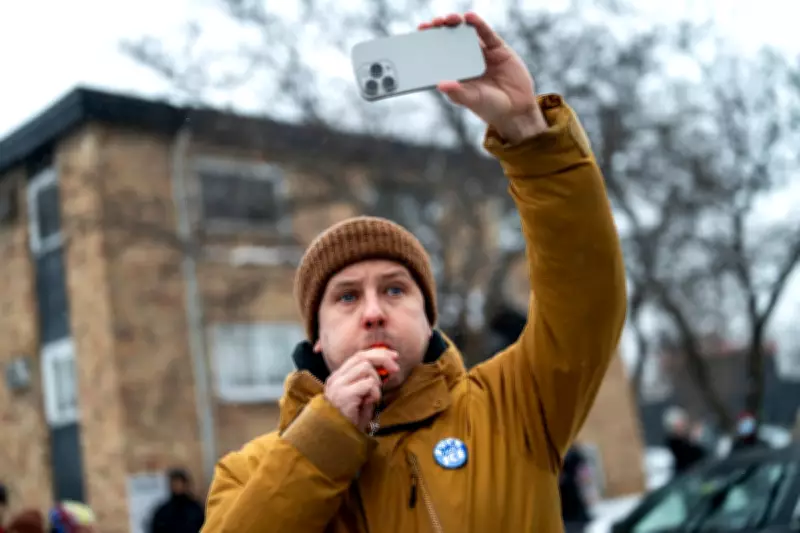
In south Minneapolis on 21 January 2026, an observer blew a whistle as border patrol agents arrested two teenagers following a car crash. This incident underscores the ongoing presence of volunteer monitors who document federal immigration enforcement actions, despite facing significant risks including arrest and violence.
Determined Documentation in the Face of Danger
Brandon Sigüenza experienced his first encounter with a federal immigration agent mere moments before being arrested. Alongside his friend Patty O'Keefe, Sigüenza was tracking ICE officers after receiving an alert about nearby agent activity. Upon arriving to observe the scene, an agent approached their vehicle, sprayed chemicals into the front vents, and began shouting commands.
Sigüenza, a US citizen, recounted how the agent declared him under arrest. When he raised his hands awaiting instructions, instead of being told to exit the car, agents smashed both front windows, pulled him through an unlocked door, and slammed him against the vehicle. "I told him, 'Sir, my passport is in my pocket.' He said, 'Shut the fuck up,'" Sigüenza told the Guardian.

Both Sigüenza and O'Keefe were transported to the BH Whipple federal building, a facility south of the Twin Cities where agents detain individuals—including US citizens and immigrants targeted for deportation. They were held for several hours before eventual release.
Escalating Tactics Against Observers
The recent killings of Alex Pretti and Renee Good by federal officers have drawn heightened attention to the brutality faced by observers in Minneapolis. Volunteers monitoring immigration enforcement since the start of Operation Metro Surge in early December report increasing violence and intimidation.
Federal agents have adopted more aggressive approaches against onlookers, employing so-called "less lethal" weapons such as chemical irritants and projectiles during immigration raids. One observer, identified as RM to protect their identity due to fear of retaliation, described being at a raid scene on the same day Good was killed when agents smashed their car window and sprayed chemicals directly inside.
RM recalled being handcuffed with a pain-inducing restraint that crushed their wrist during removal from the vehicle. At the Whipple building, when RM commented on an agent's youthful appearance, they were pushed face-down into the ground while agents shouted transphobic slurs. "The whole incident was painful and humiliating," RM stated, noting they waited over an hour for water to clear irritants from their eyes.
Systemic Issues in Detention Practices
Observers detained and released without charges report being denied access to medical care, phone calls, and legal representation. Jac Kovarik, a volunteer observer for nearly two months, described multiple intimidation attempts by agents, including photographs taken of their former residence and vehicle.
During a December arrest, Kovarik was taken to Whipple, subjected to a pat-down, forced to remove jewelry, cuffed at the ankles, and placed in a cell without phone access. They were released after seven hours without any criminal charges. On another occasion following Good's death, agents routed Kovarik from a friend's home at gunpoint, marking what they called "a huge escalation."
Attorneys report regular denial of access to clients held at the Whipple building, which has become a central hub for thousands of immigration officers in the Twin Cities area. A recent class action lawsuit filed by the Advocates for Human Rights challenges detention practices, alleging systematic denial of confidential attorney-client communication at Minnesota facilities including Whipple.
Disorganization and Coercion in Detention
Accounts from detainees reveal concerning practices within the Whipple facility. Wes Powers, arrested on 8 January, witnessed agents accessing Facebook and personal social media accounts on cellphones used to photograph detainees and their identification documents.

Sigüenza described being placed in a cell with three men identifying as Homeland Security Investigations agents who insinuated he faced serious trouble unless he provided names of protest organizers or undocumented neighbors. They offered assistance with family immigration matters in exchange for information, despite Sigüenza's Mexican heritage and US citizenship.
Meanwhile, Tippy Amundson and Heather Zemien experienced unusual treatment during their detention. After alerting residents to federal agent presence by honking car horns in Brooklyn Park on 22 January, they were arrested when agents accused them of calling police. During transport, an agent suffered seizures, and the women provided emergency assistance before being taken to Whipple.
Amundson's husband alerted her state representative, leading to expedited release. The women received water, bathroom access, and heating during their three-hour detention, contrasting sharply with other observers' experiences. They were cited for impeding federal officers.
The Critical Role of Witness Documentation
Despite the risks, observers remain committed to their monitoring work. Sigüenza emphasized the essential nature of documentation: "If we don't document and film federal agents, then they can shoot you 10 times and then say that you're brandishing a firearm and it ends there." He pointed to bystander footage of the Good and Pretti shootings that contradicted official narratives as evidence of witnessing power.
"There will be absolutely no accountability unless people are documenting," Sigüenza asserted, capturing the determination driving Minneapolis observers to continue their work despite escalating federal tactics designed to intimidate and deter community monitoring of immigration enforcement activities.