

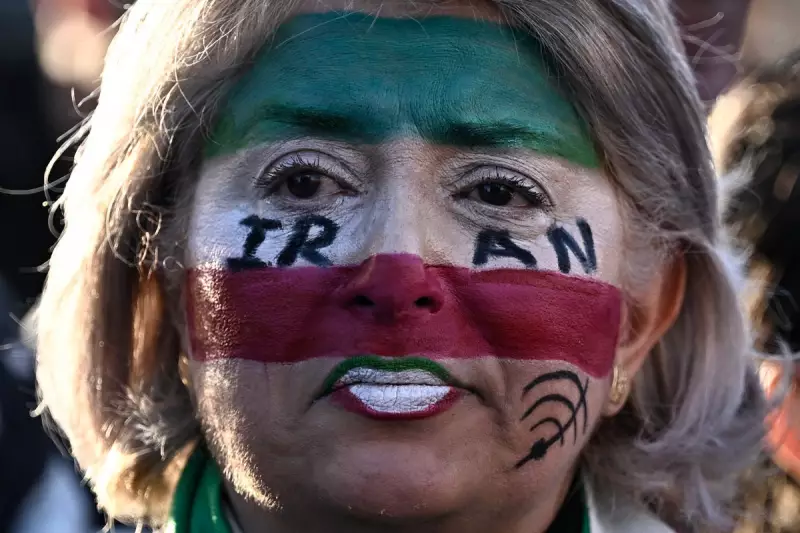
For over a fortnight, British-Iranian NHS doctor Nima Ghadiri has stared anxiously at the undelivered messages on his smartphone, each one a silent plea to reach his family in Iran. The 41-year-old physician, based at Royal Liverpool University Hospital, has uncles, aunts and young cousins scattered across Tehran and Isfahan, Iran's two largest cities. Within the sterile confines of his clinic, Dr Ghadiri repeatedly checks WhatsApp, Signal and Instant Messenger, hoping for a connection that never comes.
Total Communication Blackout Imposed by Regime
On January 8, at approximately 8:30pm local time, the Islamic Regime of Iran executed a complete shutdown of all internet and mobile signals within the country, simultaneously blocking incoming communications from abroad. Human rights organisations, including Amnesty International, assert this digital blackout represents a deliberate attempt by Iranian authorities to conceal the scale of violence during crackdowns against anti-government protesters on January 8 and 9.
Heavy military and security deployments have been documented across numerous Iranian towns and cities where demonstrations previously occurred, creating an atmosphere of intense repression. The internet shutdown has made accurate casualty counts virtually impossible to verify, though Supreme Leader Ayatollah Ali Khamenei acknowledged in a Saturday address that "several thousand" protesters had been killed.

Devastating Human Toll Emerges
Medical reports compiled by The Sunday Times from hospitals throughout Iran suggest the actual death toll ranges between 16,500 and 18,000 individuals, with an additional 330,000 to 360,000 people reportedly injured. When information manages to escape the country through border crossings or satellite internet connections, it typically conveys tragic news.
"My cousin's wife got shot and died," reveals Dan Vahdat, a healthcare CEO speaking from his London office. "She was only about 30 years old. What do you do with that information? Her crime was nothing more than walking peacefully in the street."
Psychological Trauma Compounds Physical Danger
Psychotherapist Shirin Amani Azari, originally from Tehran but now residing in London, has been providing counselling to young Iranians since the "Women, Life, Freedom" protest movement emerged in 2022 following the police killing of Mahsa Amini. Ms Azari expresses profound concern for her clients' safety, noting: "They understand that leaving home to chant and protest might mean never returning."
Before the communications blackout, the psychotherapist conducted sessions via a special landline, as her clients distrusted video conferencing software that could potentially be monitored by regime authorities. It remains uncertain when Ms Azari might resume her counselling work, or how many of her clients have survived the violence. What appears inevitable is that survivors of this brutal chapter in Iran's history will require extensive psychological support.
Families Endure Unbearable Uncertainty
For British-Iranian illustrator Roshi Rouzbehani, nearly all her family members and friends remain in Iran. Prior to the shutdown, daily conversations with her mother provided essential reassurance. When communications were severed entirely, this vital connection disappeared. "Even under normal circumstances, that kind of silence would be difficult," Ms Rouzbehani explains. "But when you're terrified, not knowing whether loved ones are alive or dead, it becomes completely unbearable."
As days of silence extended into weeks, anxiety permeated every aspect of her existence. She experienced nightmares and struggled to concentrate, finding it "impossible to separate my personal life from what was unfolding in Iran." Her response involved creating illustrations shared on social media to maintain international attention on Iran's situation when official channels remained muted.
After several days without contact, her mother eventually managed a direct call confirming that no one in their immediate circle had been killed or injured. Another relative visiting from Germany reported witnessing unprecedented brutality against protesters.

Blackout as Instrument of Control
"The internet shutdown is experienced as part of the violence itself," observes Dr Hossein Dabbagh, an assistant philosophy professor at Northeastern University with relatives in Iran. He explains that the communications blackout isolates individuals, prevents external assistance, and forces families to anticipate the worst possible outcomes.
Despite the grim circumstances, Dr Dabbagh maintains some optimism. While fear may temporarily clear streets and reduced visibility might obscure events, he suggests this strategy ultimately proves self-defeating for the regime because fear underscores its inability to govern through genuine consent. "That gap between control and legitimacy keeps reappearing, and each crackdown tends to widen it further," he adds.
Regime Maintains Repressive Measures
The Iranian regime shows few indications of relaxing its oppressive tactics. Eyewitness accounts describe security forces raiding hospitals to apprehend and arrest wounded protesters. Online activity monitored on Monday suggests authorities are testing a more heavily filtered internet system, according to watchdog NetBlocks, as the Ayatollah's government perceives any external influence as threatening.
Anti-regime activists are currently lobbying the Trump administration to permit US satellite internet coverage over Iran. Yet many Iranians, including Dr Nima Ghadiri, dread what revelations might emerge when information eventually flows freely from the country. Even if millions of blocked messages eventually reach their destinations, thousands of intended recipients will no longer be alive to read them.





