Iranian Pastor's Harrowing Imprisonment and Call for Global Action
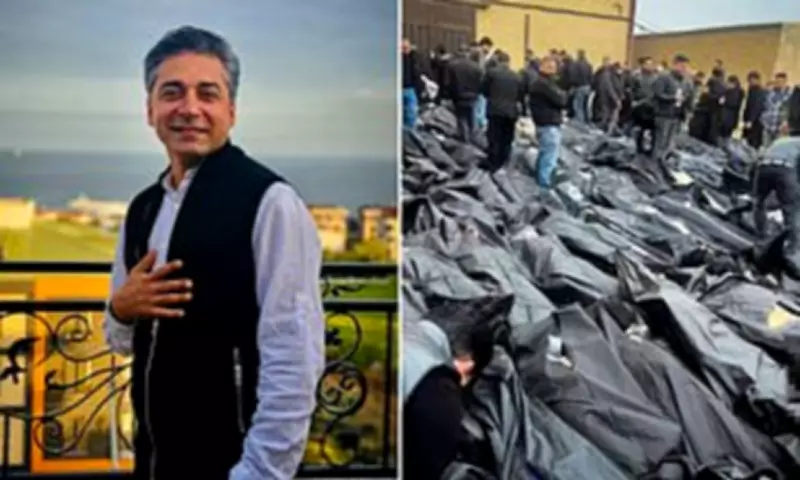
An Iranian Christian pastor who suffered a broken leg during brutal beatings over a five-year prison sentence has issued a desperate appeal to international leaders, urging them not to abandon protesters currently detained in the regime's notorious jails. Farshid Fahti, 46, endured what he describes as a hellish incarceration where he faced constant threats of execution simply for practicing his Christian faith.
361 Days in Solitary Confinement
For 361 consecutive days, Fahti was confined to a two-meter cell in solitary confinement, part of a five-year imprisonment that included multiple violent assaults. "I have seen the worst things - I was tortured, and my friends were executed," the father-of-two revealed from an undisclosed location outside Iran. "Now I fear for the ones I left behind."
His arrest occurred in December 2010 at his mother-in-law's home, leading to his detention in the feared Evin Prison where he wrote what he believed would be his final words amid constant execution threats. Guards would cruelly torment prisoners by suggesting imminent release before violently dragging them back to their cells.

Violent Raids and Broken Bones
After solitary confinement, Fahti was transferred to a ward crowded with political prisoners where guards conducted violent raids searching for phones and notes. "My leg was broken," he recounted of one particularly brutal incident. "Another prisoner's skull was fractured. One of the men was executed days later."
The psychological torture extended to watching state television broadcasts that falsely claimed no injuries occurred during these raids, while prisoners sat with broken bones, stunned by the regime's blatant dishonesty. At another point, Fahti was deliberately placed in a cell with an Al-Qaeda terrorist for two weeks, putting his life at constant risk due to his religious identity.
Secret Transfer to Notorious Prison
Fahti was later secretly moved to Rajai Shahr Prison, described as one of Iran's harshest detention facilities. "For a year I was held with dangerous criminals," he explained. "Many prisoners around me were executed. One day we were playing chess together — the next day he was gone."
The uncertainty proved unbearable for many inmates, with some begging for execution just to end the agonizing wait. Fahti described how prisoners' reactions varied when facing execution: some became exhausted and wished for quick resolution, while others desperately sought legal assistance or connections to prevent their deaths.
Current Crisis: Swelling Prison Populations
Today, those same notorious prisons have swelled with thousands more detainees arrested during anti-regime protests last December and January. Although the protests began organically and grew in response to exiled Crown Prince Reza Pahlavi's calls, they were also encouraged by former US President Donald Trump's promises of assistance.
Since capital punishment resumed on March 18, over 150 political prisoners—primarily young men and teenagers arrested during protests—have been executed. Among them were 18-year-old musician Amirhossein Hatami, 19-year-old Mohammad Amin Biglari, and 19-year-old Iranian wrestler Saleh Mohammadi.
Families Searching for Loved Ones
The human cost extends beyond prison walls, with families gathering at facilities like the Kahrizak Coroner's Office, confronting rows of body bags as they search for relatives killed during the regime's violent crackdown on January protests. By some estimates, Tehran slaughtered over 30,000 protesters in January alone, yet their plight remains conspicuously absent from current peace proposals.
Critical Diplomatic Juncture
Fahti's intervention comes at a critical diplomatic moment as US-Iranian peace talks in Pakistan remain on a knife-edge following Vice President JD Vance's dramatic walkout on Saturday. The regime has become emboldened after blistering US-Israeli strikes failed to immediately destroy the theocracy, leading to a significant escalation in executions.

"Iranians feel abandoned after the ceasefire," Fahti stated. "We worry the world will move on and leave them to die." His message to world leaders is straightforward: prioritize prisoners' plight in negotiations. "At any moment, something tragic can happen," he warned. "That's why so many people are ready to die for freedom."
Personal Devastation and Continued Hope
Even after his 2015 release, Fahti's life was shattered when his wife and their two children—a toddler son and seven-year-old daughter—were forced to flee Iran, leading to their eventual divorce. He didn't see his children for ten years, and despite living abroad, he still fears the regime could reach him.
Nevertheless, he maintains hope following the January uprising and military campaign that assassinated Ayatollah Ali Khamenei and eliminated significant regime leadership. He echoes opposition leader Reza Pahlavi's recent call for world powers to "finish the job" and believes ultimate change must come from within.
"I truly believe the prison doors will open soon," Fahti concluded. "The question is who will open them. If the Iranian people open them, it will lead to freedom. If the regime opens them, it will lead to more executions."