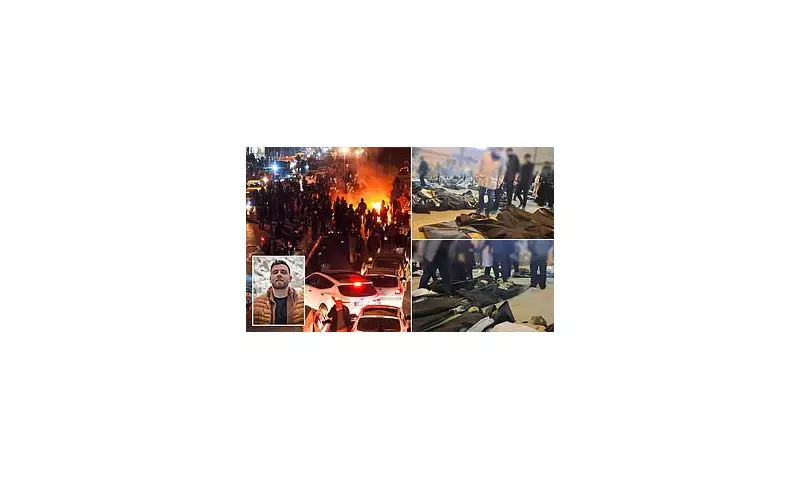
An Iranian opposition website has made the explosive claim that the regime has killed approximately 12,000 protestors, a figure dramatically higher than previous official admissions. This allegation surfaces as human rights groups warn of the imminent execution of a young man arrested during demonstrations.
Stark Discrepancy in Death Toll Figures
The editorial board of the opposition outlet Iran International stated that 'at least 12,000 people were killed in the largest massacre in contemporary Iranian history,' with many deaths occurring on the nights of January 8 and 9. They assert this massacre 'will not be buried in silence.'
This claimed death toll stands in stark contrast to figures from Iranian authorities. In a report to Reuters, an Iranian official admitted that around 2,000 people had been killed during the unrest, blaming 'terrorists' for the deaths of both civilians and security personnel.

Iran International insists its number is based on cross-referenced information from multiple insider sources, including individuals close to the Supreme National Security Council and the presidential office. The website alleges the killings were carried out by the Revolutionary Guards and Basij forces on orders from Supreme Leader Ali Khamenei, describing them as a coordinated action rather than the result of 'unplanned' or 'scattered clashes.'
Imminent Execution and Escalating Threats
Amid this backdrop, a grave new development has emerged. Sources informed the National Union for Democracy in Iran and Iran Human Rights that the government plans to execute 26-year-old Erfan Soltani on Wednesday.
Soltani was arrested last Thursday during a protest in Fardis, Alborz Province, and swiftly sentenced to death for his participation. Disturbingly, reports indicate he has been denied access to legal representation.
The threat of capital punishment for protesters was starkly underscored by Tehran's attorney general, Mohammad Movahedi Azad. On Saturday, he warned that anyone taking part in protests would be considered an 'enemy of God' – a charge that carries the death penalty.
A Nation Descended into 'Warzone'
The protest movement, fuelled by frustration over economic collapse and currency devaluation, has met with severe state violence. Witnesses describe scenes resembling armed conflict.
'It's like a warzone, the streets are full of blood,' one anonymous Iranian told BBC Radio 4. 'They're carrying out a massacre here - it's officially a massacre.' Another young woman from Tehran recounted how security forces 'only killed and killed and killed,' turning Friday into a 'bloody day.' She poignantly added, 'In war, both sides have weapons. Here, people only chant and get killed. It is a one-sided war.'
Graphic videos circulating online appear to show dozens of bodies in body bags at the Kahrizak Forensic Medicine Centre south of Tehran, with distressed individuals attempting to identify loved ones.
The scale of the state's response is vast. Alongside the thousands reportedly killed, almost 10,700 people have been arrested since the protests began late last year, with thousands more injured.
International Condemnation and Response
The escalating crisis has drawn sharp international criticism. German Chancellor Friedrich Merz declared on Tuesday that Iran's theocratic regime was living out its 'last days.'
'When a regime can only hold on to power through violence, then it is effectively finished,' Merz stated, adding he believed 'we are now witnessing the last days and weeks of this regime.'
Meanwhile, in the United States, President Donald Trump has reportedly been briefed by the Department of Defense on a spectrum of covert and military options targeting Iran. These are said to include potential long-range missile strikes, cyber operations, and psychological campaigns, according to sources speaking to CBS News.
As the world watches, the situation in Iran remains critically tense, with the regime facing unprecedented internal dissent and growing external pressure over its brutal crackdown on civilian protestors.