Constitutional Crisis Emerges as ICE Bypasses Judicial Warrants for Home Entries
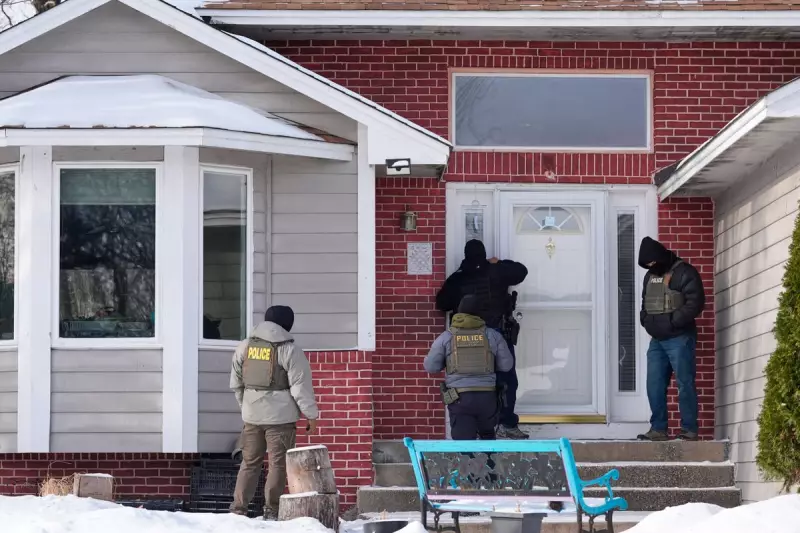
A startling revelation has emerged from Immigration and Customs Enforcement (ICE) that threatens to undermine one of America's most fundamental constitutional protections. According to an internal memo obtained by the Associated Press in January 2026, ICE agents have been operating under guidance that permits them to enter private residences without obtaining judicial warrants. This policy represents what experts describe as "a sharp reversal of longstanding guidance meant to respect constitutional limits on government searches."
The Fourth Amendment: America's Bedrock Protection Against Government Overreach
At the heart of this controversy lies the Fourth Amendment to the U.S. Constitution, which states: "The right of the people to be secure in their persons, houses, papers, and effects, against unreasonable searches and seizures, shall not be violated, and no Warrants shall issue, but upon probable cause, supported by Oath or affirmation, and particularly describing the place to be searched, and the persons or things to be seized."
Former federal judge John E. Jones III, appointed by President George W. Bush and confirmed unanimously by the Senate in 2002, explains the amendment's significance: "Since the beginning of the republic, it has been uncontested that in order to invade someone's home, you need to have a warrant that was considered, and signed off on, by a judicial officer. This mandate is right within the Fourth Amendment; it is a core protection."

Judge Jones emphasizes that this protection extends to all individuals within United States territory, including noncitizens, through settled jurisprudence that has evolved since the amendment's adoption.
Administrative Versus Judicial Warrants: A Critical Distinction
The ICE directive centers on the agency's assertion that it only requires administrative warrants rather than judicial warrants to enter homes and make arrests. Judge Jones clarifies this crucial distinction:
- Administrative warrants are essentially internal documents generated by ICE headquarters without judicial review. As Jones describes them: "It's a piece of paper that says 'We want you arrested because we said so.'"
- Judicial warrants require review and approval by a neutral arbiter – typically a U.S. magistrate or district judge – who must find probable cause before authorizing entry into someone's residence.
"The key distinction is that there's a neutral arbiter," explains Jones. "An administrative warrant has no such protection. It is not much more than a piece of paper generated in a self-serving way by ICE, free of review to substantiate what is stated in it."
Historical Context and Modern Implications
The Fourth Amendment was originally designed to establish what Judge Jones calls "a sort of zone of privacy for people" – a direct response to British practices where authorities could invade homes at will. Over centuries, this protection has expanded rather than contracted, adapting to technological advancements from automobiles to cell phones and electronic surveillance.
While there are limited exceptions to warrant requirements – such as consent searches or exigent circumstances where someone is in immediate danger – the general trajectory of Fourth Amendment jurisprudence has been toward greater protections and expanded privacy zones.
Judge Jones expresses particular concern about how this ICE policy might play out in practice: "What I fear here – and I think ICE probably knows this – is that more often than not, a person who may not have legal standing to be in the country, notwithstanding the fact that there was a Fourth Amendment violation by ICE, may ultimately be out of luck."
He notes the practical dilemma: even if an arrest is declared illegal due to constitutional violations, the individual has already been apprehended, creating significant challenges for meaningful remedy.

Broader Constitutional Ramifications
This development raises profound questions about the balance between immigration enforcement and constitutional protections. The ICE policy, according to legal experts, essentially "turns the Fourth Amendment on its head" by allowing administrative convenience to override fundamental rights.
As the situation develops, observers worry that this approach could establish dangerous precedents for other law enforcement agencies, potentially eroding the constitutional safeguards that have protected American homes from government intrusion for more than two centuries.
The controversy highlights the ongoing tension between security concerns and civil liberties, with the Fourth Amendment serving as the crucial buffer against government overreach in what should be the most private of spaces – the American home.