

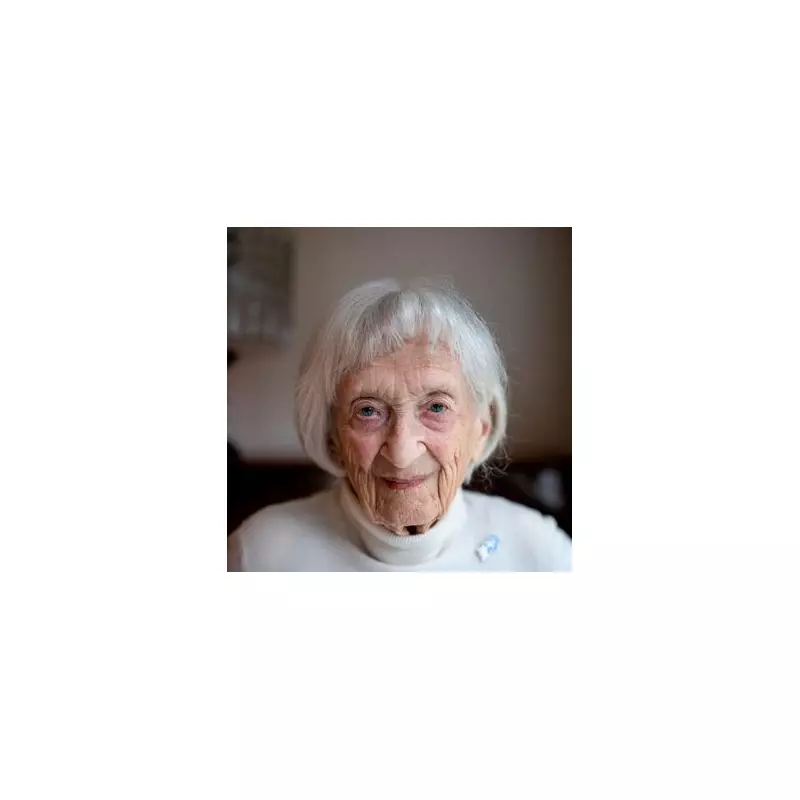
Speaking ahead of Holocaust Memorial Day on January 27, Annelis Callender, known as Ann, reflects on her remarkable life from a carefree childhood in Berlin to becoming one of the oldest survivors of the Nazi persecution. Now 106 years old, Ann shares her poignant story of loss, resilience, and survival, emphasising the enduring importance of remembrance.
A Childhood Shattered by Anti-Semitism
Born in 1919, Ann enjoyed a privileged upbringing in Berlin during the early 1930s, with loving parents, a good education, and family holidays. Her world began to crumble at the age of 14 when no friends attended her birthday party. "I couldn't understand it," Ann recalls. "That's when my parents explained to me that we were Jewish and things in the country had changed." In retrospect, she believes her friends' parents forbade them from associating with Jewish families, marking the start of the Nazis' tightening grip on her life.
Expulsion and Disorientation
Shortly after, Ann was expelled from her grammar school simply for being Jewish, despite previously being held up as an ideal 'perfect' German child due to her blonde hair and blue eyes. "It was very disorientating," she says. Her family, not particularly religious and apolitical, initially struggled to comprehend the escalating danger. However, witnessing SS and Brownshirts marching outside their home, singing loud songs, began to crystallise the grim reality.

Parental Sacrifice and the Night of Broken Glass
Ann's parents, Friedrich and Alice Kassel, acutely felt the regime's brutality. Friedrich, a civil engineer and decorated WWI veteran, was forced to abandon his career and work as a paint salesman. The family witnessed the horrors of Kristallnacht in November 1938, when Nazi-coordinated violence saw thousands of Jewish properties destroyed. Friedrich was arrested and detained in Dachau concentration camp, an experience he documented in a diary that Ann still possesses.
He wrote of being herded onto the streets in his pyjamas and the despair within Dachau, where illness often meant death. His release, which he attributed to his war record, allowed the family to eventually relocate, but the trauma was indelible.
The Life-Saving Decision
As the situation deteriorated, Ann's parents made a crucial decision: they sent her to a Housekeeping College in Geneva. "That decision saved my life," Ann states. "I was upset that my life was being changed so completely, but they knew something had to be done." With war looming, family contacts helped her secure work in Britain, where entry for women fleeing Fascism was often through nursing or domestic service.
Building a New Life in Britain
Ann's initial experiences in the UK were mixed; she worked for an elderly lady in Cambridge who treated her kindly, but a subsequent position with a university professor involved menial tasks like emptying chamber pots. "I absolutely hated it," she admits. Her parents and sister later joined her in Britain, arriving with few resources. Ann eventually met and married RAF pilot Maurice Callender in 1941, building a family that now includes two sons, four grandchildren, and four great-grandchildren.
She reflects on how her teenage experiences shaped her: "I became more ambitious and I tell young people now to grab any opportunity that comes their way." Ann worked delivering writs, a job her husband disliked due to its occasional danger, showcasing her resilience. "I accept what comes my way without too much grumbling," she says.
Remembrance and Moving Forward
Ann, the oldest member of the Association of Jewish Refugees (AJR) and one of only 18 centenarians in the organisation, stresses the importance of learning from history. "What happened to me as a teenager in Berlin absolutely shaped me. It is important for our future to learn the lessons of the past," she asserts. She contacted the AJR only three years ago after seeing an advertisement for survivors' testimonies and was presented with membership at the German Embassy in 2023.

While a visit to Germany in 1979 was initially difficult, she found solace in meeting younger generations disconnected from the past. On Holocaust Memorial Day, Ann says simply, "I will remember." Michael Newman OBE, CEO of the AJR, adds: "Ann Callendar’s story reminds us that Holocaust memory does not end with the eyewitnesses. Through the UK's largest community of descendants, AJR is committed to carrying remembrance forward."
Now living in north London, Ann keeps a journal, follows the Beckham family saga, and jokes about her driving—she only stopped last year. "I don’t feel 106 up here," she laughs, pointing to her head. "The body is a different story!" Her sharp wit and vivid memories serve as a powerful testament to a life shaped by horror but defined by strength and hope.





