Filming ICE Agents: A Legal Right with Hidden Digital Perils
Documenting immigration raids and law enforcement actions through filming represents a crucial democratic safeguard, yet this practice carries substantial risks that extend far beyond immediate physical confrontation. The tragic shooting of Renee Nicole Good by an Immigration and Customs Enforcement agent in Minneapolis on January 7, 2026, highlighted how quickly bystander footage can challenge official narratives, but also revealed the complex surveillance landscape that now surrounds such recordings.
The Legal Landscape of Recording Enforcement Actions
Across much of the United States, courts have consistently recognized a First Amendment right to record police officers performing their duties in public spaces. This constitutional protection allows citizens to film law enforcement activities, including ICE operations, provided they do not physically interfere with official actions or violate reasonable restrictions. However, this right remains unevenly applied across different jurisdictions and is frequently undermined in practice when authorities claim interference or invoke distance requirements that effectively discourage filming.
The fundamental tension lies in the dual nature of modern recording technology: while smartphone cameras can serve as powerful tools for governmental accountability, they simultaneously function as data collection devices that increase ordinary citizens' visibility to state surveillance systems. This creates a paradoxical situation where the very act intended to monitor power structures may inadvertently expose individuals to enhanced scrutiny.

Targeting Those Who Document: Physical and Digital Risks
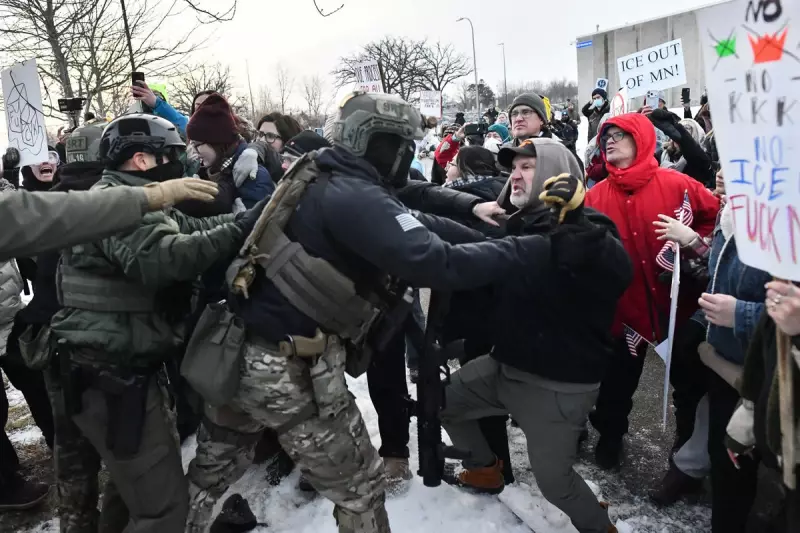
Following Good's killing, Minneapolis witnessed multiple incidents where individuals documenting immigration enforcement and related protests faced forceful engagement from agents. These encounters underscore that filming authorities is far from risk-free, with documented cases including journalists being shot with crowd-control munitions, tackled, or arrested while recording ICE facility protests in Illinois during late 2025.
Beyond physical dangers, digital exposure presents a significant concern that many overlook. The legal right to record offers no protection against your footage becoming searchable, linkable data that various entities can purchase, analyze, and repurpose. This digital vulnerability introduces additional safety considerations that extend well beyond the immediate recording situation.
Smartphones as Dual-Purpose Devices: Camera and Tracking Tool
Modern smartphones generate at least three distinct types of digital exposure when used for recording law enforcement:

- Identification Risks Through Facial Recognition: Posted footage often contains identifiable elements including faces, tattoos, distinctive clothing, license plates, or other markers. Law enforcement agencies increasingly employ facial recognition technologies like ICE's Mobile Fortify application, while online crowds may use the same visual information for doxxing or harassment campaigns. Crucially, these technologies demonstrate uneven accuracy across demographic groups, with studies showing reduced recognition reliability for individuals with darker skin tones.
- Location Exposure Through Multiple Channels: Digital recordings contain metadata with timestamps and geographical coordinates, while smartphones continuously emit location signals. Agencies can access this information through various means including warrants, court orders, geofence warrants that collect data from all devices in specific areas, and commercial purchases from data brokers. ICE has specifically invested in area monitoring systems capable of tracking phones across entire neighborhoods over extended periods.
- Device Seizure Consequences: If authorities confiscate your phone, they potentially access not just your recording but your entire digital footprint including message histories, contact lists, synchronized cloud accounts, location histories, and personal photographs. Civil liberties organizations consistently recommend disabling biometric unlocking features and using strong passcodes, as law enforcement can often compel biometric access more easily than demanding memorized passwords.
Practical Strategies for Safer Documentation
While no approach eliminates all risks, several practical measures can help balance accountability benefits against digital exposure:
- Before filming, determine whether your priority is evidence preservation or traceability reduction, as these objectives may conflict
- Strengthen device security with lengthy passcodes, disabled biometric unlocking, turned-off message previews, and removal of unnecessary applications
- Consider using secondary devices and logging out of sensitive accounts before recording
- Plan secure backup methods through encrypted applications or offline storage
- During filming, utilize camera-from-lock-screen features, avoid livestreaming when identification risks are high, and focus on contextual documentation rather than viral content
- After recording, edit footage to blur identifiable features, remove metadata, and consider distributing through journalists or legal organizations rather than public platforms
The Surveillance Ecosystem's Evolution
The contemporary reality of filming law enforcement exists within a maturing surveillance infrastructure that interconnects video documentation, facial recognition systems, and location tracking technologies in ways most citizens neither consented to nor fully comprehend. Since Minneapolis became a global reference point for bystander footage following George Floyd's murder in 2020, camera systems have become increasingly entangled with wider monitoring networks.
In 2026, documenting official actions remains vitally important for democratic oversight, particularly when governmental accounts diverge from observable reality. The ongoing challenge involves ensuring that acts of public witnessing do not inadvertently transform into new forms of personal exposure within an increasingly sophisticated surveillance environment.